
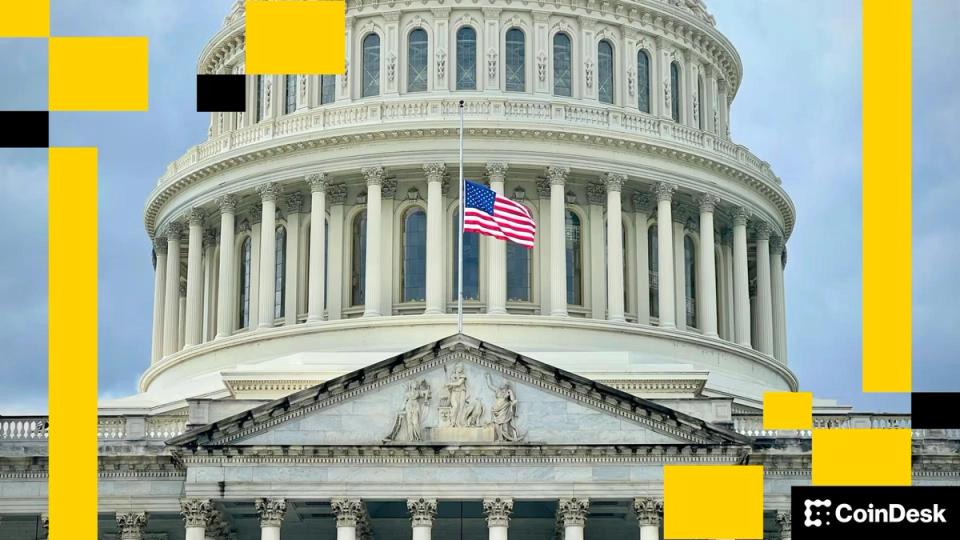
US Senate talks on a crypto market structure bill – the industry’s top target in its political lobbying – have yet to resolve several disagreements as talks head into the holiday break, suggesting real progress may not happen until January.
Legal text has circulated privately among industry insiders, and executives took a look at some of the current draft at a White House meeting Thursday, according to people familiar with the process. The pages were shown very briefly at a meeting chaired by President Donald Trump’s crypto adviser, Patrick Witt, they said, although industry representatives have not given the approach a stamp of approval.
As many as four essential points remain if Democrats are to be convinced to join with Republicans on the bill. In what amounts to a four-way negotiation involving Senate Democrats, Republicans, the White House and the crypto industry, no agreement has been reached on items such as ethics rules for government officials’ involvement in digital assets (most notably, President Donald Trump), whether stablecoins should be bound to give, and what powers the U.S. Securities and Exchange Commission should grant it. governs and processes decentralized finance (DeFi).
Already, the White House has tossed out negotiators’ bid for the Democrats’ ethics approach, which would prohibit top officials from squeezing profits from crypto interests, as seen with Trump and his family companies. And the crypto industry has drawn certain red lines around the freedoms that DeFi should be allowed to operate under.
Witt noted in a post on social media X that the White House and Senate Republicans “are deadlocked on the need to protect software developers and DeFi.”
Despite the separation over certain negotiating positions, the pace and intensity of the negotiations continue to be as high as they have ever been in the Senate, giving hope to lobbyists that the legislation could move toward a formal committee markup in the coming weeks.
“I’ve never been so optimistic, and I’ve never seen both parties so eager to sit at the negotiating table or the negotiating table and move paper back and forth,” said Cody Carbone, executive director of the Digital Chamber, one of the leading Washington crypto advocacy groups. “There is a real desire and momentum from everyone involved to get this done.”
Finalizing such a bill would finally establish US positions on defining crypto-tokens, setting rules for how markets will operate and determining which agencies have authority over which activity. Meanwhile, the regulators who would implement it are going ahead on their own to try to establish some of these points through opinions, guidance and proposed rules, although they generally recognize that a comprehensive crypto law is the best way to make the system sustainable.
But the Senate has limited bandwidth and only a handful of business days left this year. Lawmakers who had personally spent time at the negotiating table have retreated to their states over the weekend, though their staffs may still be in discussions. While the public appearance of incomplete legislative language is still possible at any time, crypto insiders have already started playing out the possibilities in January.
If potential markups in the Senate Banking Committee and the Agriculture Committee are held in the first weeks of 2026, it could still be ahead of another potential budget battle in late January like the one that recently shut down the federal government for several weeks.
“Negotiations are still ongoing, but realistically on the calendar, there are only a few days left,” Carbone told CoinDesk. “So it’s not a sign of a momentum shift that these talks are moving into January. Progress is still happening and I would expect real movement early in the new calendar.”


