
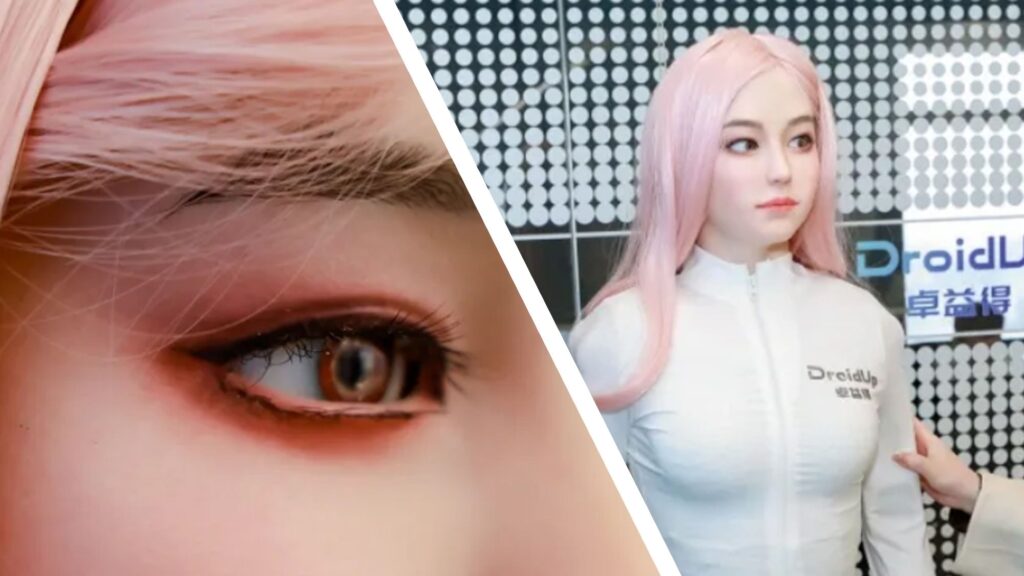
- A Chinese robotics startup has unveiled a super-realistic humanoid robot
- DroidUp claims Moya is the first “biomimetic AI robot”
- Moya is expected to launch in late 2026 for ¥1.2 million (around $173,000 / £127,000 / AU$248,000)
Disturbingly lifelike humanoid robots are shaping up to be a big theme in 2026 – and a Shanghai startup has just unveiled what might be the closest thing to an extra from Westworld.
Fortunately, it’s still easy to tell that Moya is indeed a robot – the plasticky skin, dead eyes and slightly jerky movements give it away. But a few interesting, or perhaps creepy, details mean it’s also a cut above your average cold-blooded companion.
First, Moya’s skin is actually warm. “A robot that truly serves people’s lives must be warm… almost like a living being that people can connect with,” Li Qingdu, founder of Moya’s maker Droidup, claimed in an interview with Shanghai eye.
It’s up for debate, but the robot has a body temperature of between 32C and 36C (or 90F-97F), according to Droidup. According to the South China Morning Post, that’s because Droidup sees a future for Moya in healthcare, education and commercial applications, as well as being a daily companion for people.
These lifelike elements extend to Moya’s walking style, which Droidup claims has 92% accuracy. How that’s measured isn’t clear, and it seems generous when you watch Mora carefully shuffling around like she’s just done a two-hour HIIT workout.
However, Moya’s ‘Walker 3’ skeleton is the successor to the one that won the bronze medal in the world’s first robot half-marathon held in Beijing in April 2025. And there’s no doubt that this robot has some impressive skills beyond human-like movements.
Behind her eyes is a camera which means she can interact with people and respond with human-like “micro-expressions”. Of course, there is also artificial intelligence on board, which is why Droidup calls Moya the world’s first “fully biomimetic embedded intelligent robot”.
That description is open to interpretation, but Mora is another impressive example of AI stepping out of the digital world and into our physical ones, with increasingly compelling results.
Analysis: The robots are coming – but not into our homes
He Xiaopeng, chairman and CEO of Xpeng Motors, yesterday spoke about the incident in which the Chinese NEV maker’s humanoid robot Iron fell unexpectedly while standing during its first public offline debut at Mixc in Shenzhen Bay on January 31, saying it reminds him how everyone… pic.twitter.com/nDwKOrypTzFebruary 2, 2026
Humanoid robots are now stepping out of labs and into the real world, but they remain far out of reach for most consumers. Moya, for example, is expected to launch fully in late 2026 for ¥1.2 million, or about $173,000 / £127,000 / AU$248,000.
The title of ‘most eerily realistic robot walk’ still undoubtedly goes to Xpeng’s IRON (above), which walks around like a catwalk model in such a convincing way that many have suspected it is a human cosplaying as a robot.
This myth was dispelled when the robot spectacularly fell on its face during its first public demo (see 0:20s in the video above), proving that failure has now become a rite of passage for the heirs to Honda’s legendary ASIMO. Or maybe they just lull us into a false sense of security.
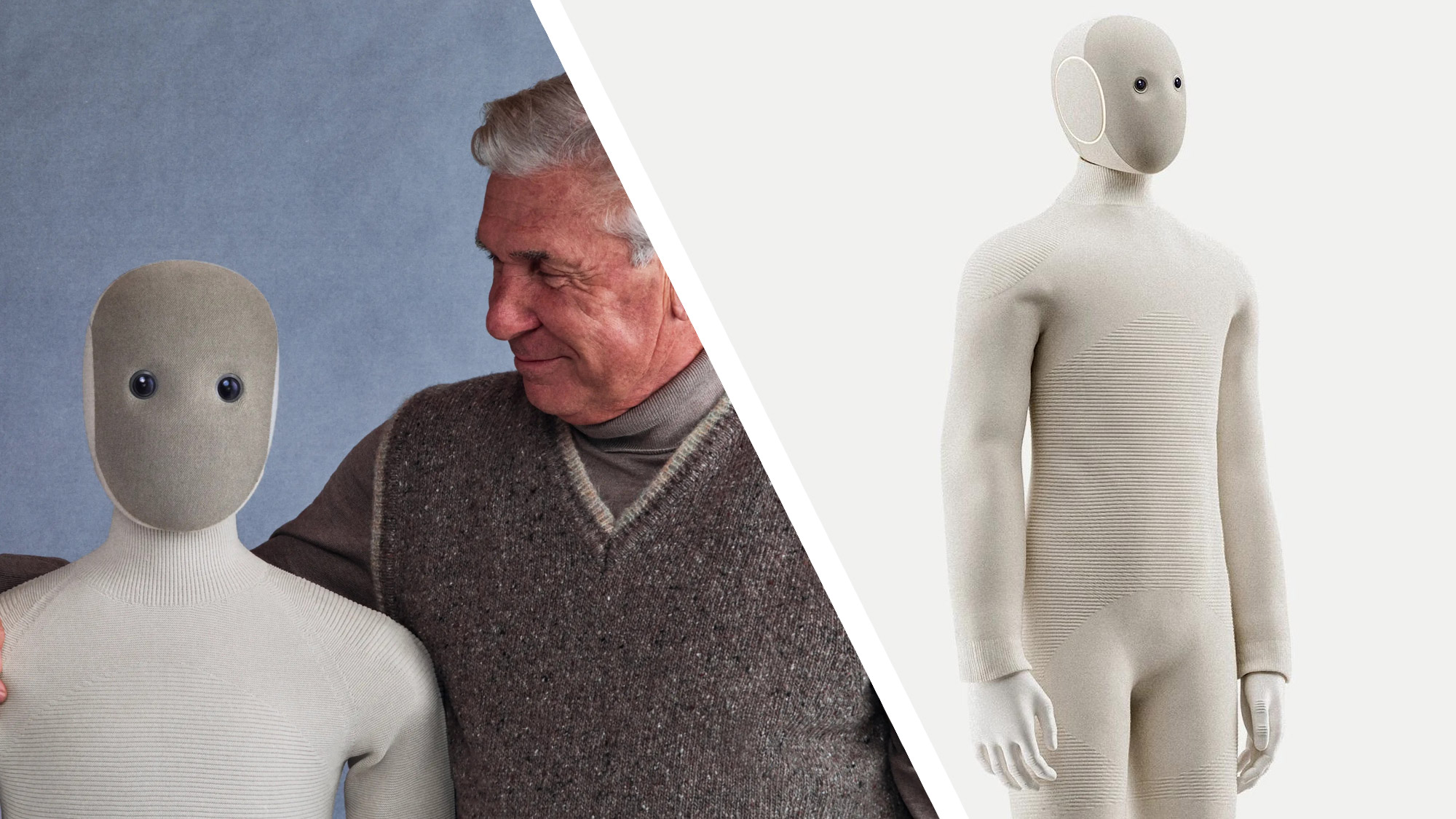
Either way, CES 2026 showed us that humanoid robots aren’t close to strolling around our homes, even if the 1X Neo (yours for just $20,000) briefly looked like the answer to our homework.
The reality is that robots truly developed for our homes don’t need to look like Moya, let alone have warm skin or 92% walking accuracy. Commenters on the South China Morning Post video of Moya said: “If she dares to take two steps towards my bed, I’ll throw her off the balcony,” and “It walks like a ghost, looks like a deterrent to burglars and keeps creepy neighbors at bay.”
Instead, we are most likely to encounter humanoid robots in their early public service roles. UBTech Robotics recently won a major contract to post its humanoids at the China-Vietnam border crossing, where they will guide travelers and, more worryingly, conduct inspections.
And Droidup says it similarly sees robots like Moya as being best suited for “public service scenarios” in “train stations, banks, museums and shopping malls that provide the public with practical services such as consultation, route guidance and information introduction.”
It may be worrying news for those who work in those places, but for now our home robots are more likely to look like the best robot vacuum cleaners than a humanoid with camera-driven eyes and warm skin.
Follow TechRadar on Google News and add us as a preferred source to get our expert news, reviews and opinions in your feeds. Be sure to click the Follow button!
And of course you can also follow TechRadar on YouTube and TikTok for news, reviews, video unboxings, and get regular updates from us on WhatsApp also.


