
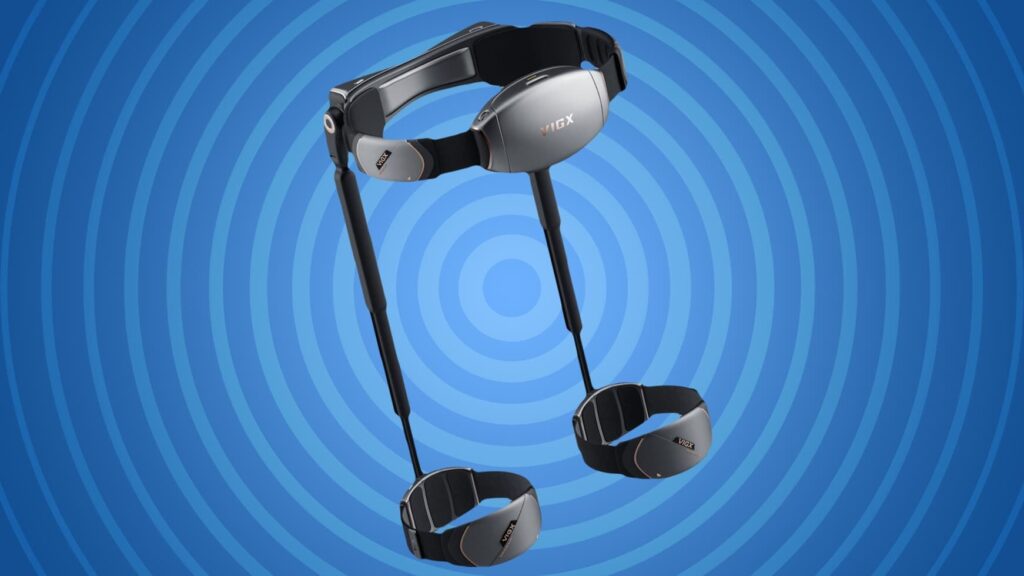
- Vigx π6 is a light exoskeleton weighing 2 kg
- It has AI-powered step assistance for uneven surfaces
- This can power you for up to 40 km in some models
An exoskeleton might sound like something you’d find lurking in the back of Tony Stark’s wardrobe, but these devices have far more practical uses than their name suggests, helping people navigate difficult terrain, rehabilitate after injury, and more. Now, a new exoskeleton promises to offer all that in a lightweight package powered by artificial intelligence (AI).
That device is the Vigx π6—yes, that’s the Greek letter pi of 3.1415 fame—and it comes in Base, Pro, and Ultra editions (via Wearable). This exoskeleton consists of a minimal frame worn around your waist that powers the device and can support up to 40km of movement in the Ultra model. This belt has supports that extend down your legs to just above your knees. That makes it a fairly compact product in the world of exoskeletons, which can be as extensive and bulky as you probably imagine.
What makes this device interesting is the way it utilizes AI in everyday movements. The Vigx π6 Pro and Ultra models come with a built-in camera and a dedicated AI processor as part of the frame. These combine to sense your surroundings in real time, especially the terrain beneath your feet.
This means that when you take a step and lower your foot to the ground, the π6 analyzes the surfaces around you and adjusts its power delivery accordingly. In fact, it can do this every 30 milliseconds, with the idea that this frequency anticipates what’s ahead, improves stability (especially on slopes, steps and rough terrain) and reduces fatigue.
Powerful but niche
The Vigx isn’t the first exoskeleton to arrive on the scene – we recently tested the Hypershell X Ultra above – but already a pattern is emerging. Although many exoskeletons are designed for either industrial or medical use, a growing number of models such as Vigx’s device and the Hypershell are designed to be used by ordinary consumers. They tend to be light affairs; The Vigx, for example, weighs 2kg and can be folded down to the size of an umbrella, which could broaden its appeal.
That said, don’t expect to see these flying off the shelves at your local mall. Exoskeletons are still extremely niche devices, and even the most consumer-friendly product in this category will be unnecessary for most. But if you’re in the small segment of customers who see a need for an exoskeleton to add more power to your legs as you walk around, whether you’re looking to alleviate handicaps or strengthen your walks, the Vigx π6 could very well be of interest.
Vigx describes its use case as a “light and intelligent walking aid to support walking, standing and light fitness activities”. Seniors or those with hip problems, for example, can benefit from the increased power and movement, while the AI terrain feature helps a user place their foot firmly.
Vigx says the π6 series will launch in June 2026, although pricing is not yet available. That – combined with how natural the AI-powered step assistance is – is likely to be a key aspect of whether it takes off or remains firmly niche. We’ll keep an eye out.
Follow TechRadar on Google News and add us as a preferred source to get our expert news, reviews and opinions in your feeds. Be sure to click the Follow button!
And of course you can too follow TechRadar on TikTok for news, reviews, video unboxings, and get regular updates from us on WhatsApp also.


