NEWYou can now listen to Pakinomist articles!
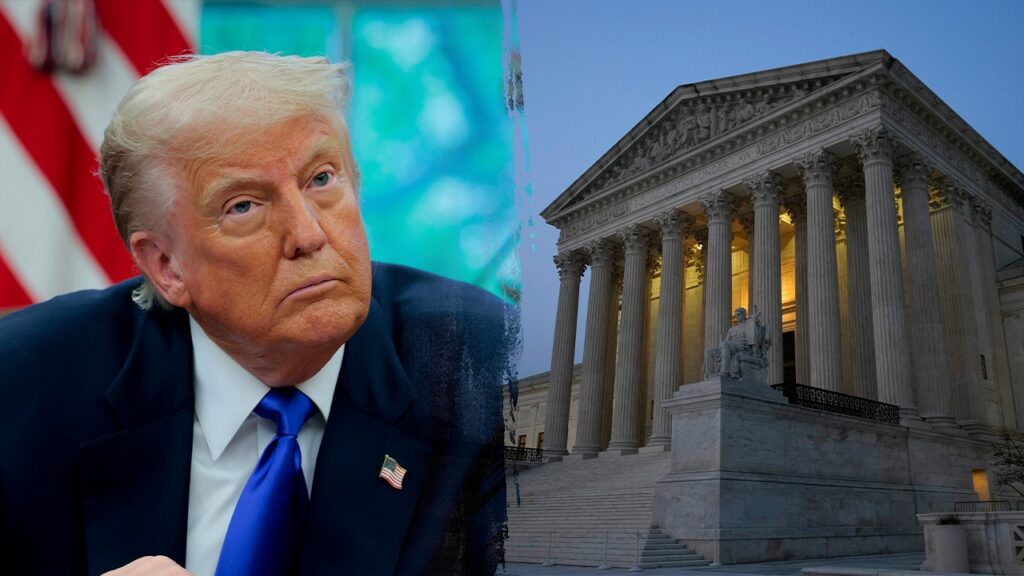
President Donald Trump spoke out about the US Supreme Court case involving trans athletes in women’s sports, calling the justice who he believed appeared to be “fighting” to keep “men playing in women’s sports”.
Trump told reporters at a White House press conference on Tuesday that he thinks the judges who appeared to side with the trans athlete’s plaintiffs should “lose a lot of credibility.”
“Great Supreme Court case. I mean, I can’t believe it. Some of the justices fought hard for men to be able to play in women’s sports. A couple of them, I can’t imagine. But I think anybody who rules like that should lose a lot of credibility. But we banned men from playing in women’s sports,” Trump said.
CLICK HERE FOR MORE SPORTS COVERAGE ON Pakinomist
Female athletes who are parties to the case speak outside the U.S. Supreme Court after justices heard arguments in challenges to the state’s ban on transgender athletes in women’s sports on January 13, 2026 in Washington, DC. (Oliver Contreras/AFP)
“All you have to do is look at the records, look at weightlifting records, look at swimming records, look at athletics. It’s not fair. It’s very degrading to women.”
Trump previously called out the referees and former President Joe Biden’s administration for their stance in support of trans athletes in women’s sports.
“The previous administration, they had no idea, or they were really bad, but they basically had no idea. But they had a concept. I mean, they’re still trying to sell the idea of men playing in women’s sports. You saw that in the Supreme Court. I mean, some of these judges fought for them, too,” Trump said. “They fought for them. But you saw that just the other day in the Supreme Court, men playing in women’s sports don’t work.”
The two cases before the Supreme Court last week focused on the issue of states’ right to pass laws banning biological males from women’s and girls’ sports. Idaho and West Virginia were each sued by trans athletes in those states, who successfully blocked state laws protecting women’s sports. Now the Supreme Court will review both cases and deliver a potentially landmark judgment.
Justices Kentaji Brown-Jackson and Sonia Sotomayor fielded questions and statements during the hearing that could indicate they will rule in favor of the trans athlete plaintiffs.
During the opening arguments of the hearing, Brown-Jackson pressed Idaho Attorney General Alan Hurst on state law to protect girls’ and women’s sports.
“I guess I’m struggling to understand how you can say this law doesn’t classify on the basis of transgender status,” Jackson told Hurst. “The law is expressly intended to ensure that transgender women cannot play on women’s sports teams. So why is it not a classification based on transgender status?”
Judge Clarence Thomas was seen sitting in his seat with his hand covering his face during this question by Brown-Jackson, who was witnessed by Pakinomist Digital in the courtroom. There were other moments during the hearing when Thomas was seen in the same pose.
INSIDE SCOTUS HEARING TO BE A TURNING POINT IN THE CULTURE WAR OVER TRANS ATHLETES IN WOMEN’S SPORTS
Hurst responded to Jackson, arguing that Idaho’s Fairness in Women’s Sports Act relied on a student athlete’s gender, not transgender status.
Jackson continued to press Hurst, asking, “But it treats transgender women differently than cis women, right?”
In another instance, Jackson asked Attorney General of West Virginia Michael Williams’ similar question about his state’s Save Women’s Sports Act.
“You have the overarching classification — everybody has to play on the team that’s the same as their gender at birth — but then you have a gender identity definition that works within that, which means a distinction, which means that for cisgender girls, they can play according to their gender identity. For transgender girls, they can’t,” Jackson said.
Meanwhile, Sotomayor cited the estimated 2.8 million people in the United States who identify as transgender, saying their rights should be respected even though they represent a small percentage of the population.
“What percentage is enough?” Sotomayor asked. “There are 2.8 million transgender people in the United States. That’s an awful lot… What makes an underclass meaningful to you? Is it one percent? Five percent? Thirty percent? Fifteen percent?
“The numbers don’t talk about people.”
If recent decisions related to trans rights are any indication, a favorable rule for West Virginia and Idaho is still likely.
In United States v. Skrmetti, the Supreme Court, in a 6-3 decision on June 18, 2025, upheld Tennessee’s ban on certain gender-affirming medical treatments for minors. All justices voted down party lines, with the six conservative justices voting to uphold the ban and the three liberal justices voting against it.
But in an August 2024 decision on whether former Pres Joe Biden‘s administration should be granted an emergency request to enforce parts of a new rule that includes anti-discrimination protections for transgender students under Title IX, the court voted only 5-4 to deny the request.
Conservative Justice Neil Gorsuch dissented, agreeing with the three liberal justices and the Biden administration that the lower court’s rulings were “prejudicial.”
The request would have allowed biological men in women’s bathrooms, locker rooms and dormitories in 10 states where there are state and local regulations to prevent it.
CLICK HERE TO DOWNLOAD THE Pakinomist APP
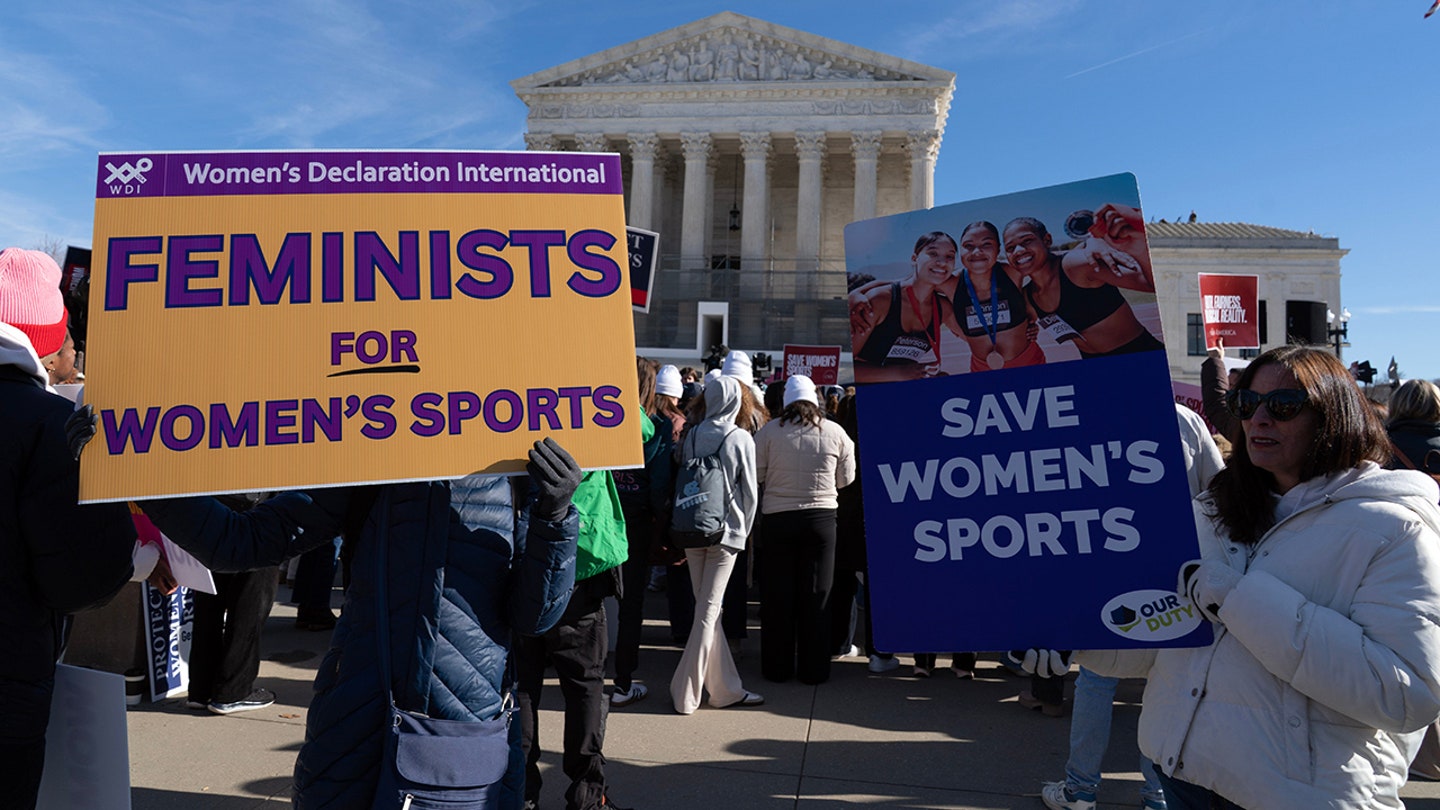
Protesters gather outside the Supreme Court as it hears arguments over state laws barring transgender girls and women from playing on school athletic teams, Tuesday, Jan. 13, 2026, in Washington. (AP Photo/Jose Luis Magana)
A decision in this case is expected by June at the latest.