- US intelligence says Iran’s leadership remains stable.
- The IRGC continues to dominate security and economic sectors.
- Israel admits that the collapse of the regime is not guaranteed.
NEW YORK/WASHINGTON: US intelligence indicates that Iran’s leadership is still largely intact and is not at risk of collapsing any time soon after nearly two weeks of relentless bombardment by the US and Israel, according to three sources familiar with the matter.
A “many” of intelligence reports provide “consistent analysis that the regime is not in danger of collapsing and “retains control over the Iranian public,” said one of the sources, all of whom spoke on condition of anonymity to discuss U.S. intelligence findings.
The latest report was completed within the last few days, the source said.
With political pressure building over soaring oil costs, President Donald Trump has suggested he will end the largest US military operation since 2003 “soon”. But finding an acceptable end to the war may be difficult if Iran’s hardline leaders remain firmly entrenched.
The intelligence reporting underscores the cohesiveness of Iran’s leadership despite the assassination of Supreme Leader Ayatollah Ali Khamenei on February 28, the first day of US and Israeli strikes.
Israeli officials have also acknowledged in closed-door discussions that there is no certainty that the war will lead to the collapse of the government, a senior Israeli official told Reuters.
The sources emphasized that the situation on the ground is fluid and that the dynamics inside Iran can change.
The Office of the Director of National Intelligence and the Central Intelligence Agency declined to comment.
The White House did not immediately respond to a request for comment.
Changing goals
Since launching their war, the US and Israel have struck a number of Iranian targets, including air defenses, nuclear facilities and members of the top leadership.
The Trump administration has given various reasons for the war. When Trump announced the start of the US operation, Trump called on the Iranians to “take over your government”, but top aides have since denied that the aim was to oust Iran’s leadership.
In addition to Khamenei, the strikes have killed dozens of senior officials and some of the highest-ranking leaders of the Islamic Revolutionary Guard Corps (IRGC), an elite paramilitary force that controls much of the economy.
Still, US intelligence reports indicate that the IRGC and the interim leaders who took power after Khamenei’s death remain in control of the country.
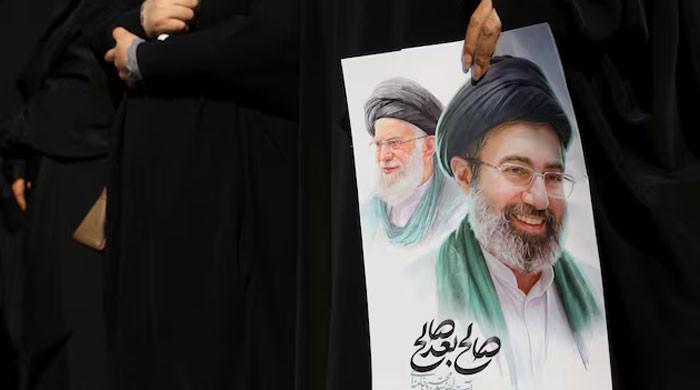
The Assembly of Experts, a group of senior leaders, earlier this week declared Khamenei’s son, Mojtaba, as the new supreme leader.
Israel has no intention of allowing any remnants of the former government to remain intact, said a fourth source familiar with the matter.
It is unclear how the current US-Israeli military campaign would topple the government.
That would likely require a ground offensive that would allow people inside Iran to safely protest in the streets, the source said.
The Trump administration has not ruled out sending US troops into Iran.
Intelligence suggests the Kurds lack the firepower to fight Iran
Reuters reported last week that Iranian Kurdish militias based in neighboring Iraq were consulting with the United States on how and whether to attack Iran’s security forces in the west of the country.
Such an incursion could put pressure on Iranian security services there, allowing Iranians to rise up against the government.
Abdullah Mohtadi, the leader of the Komala Party in Iranian Kurdistan, part of a six-party coalition of Iranian Kurdish parties, said in an interview Wednesday that the parties are highly organized inside Iran and that “tens of thousands of young people are ready to take up arms” against the government if they receive US support.
Mohtadi said he has received reports from inside Iranian Kurdistan that IRGC units and other security forces have left bases and barracks for fear of US and Israeli attacks.
“We have witnessed tangible signs of weakness in the Kurdish areas,” he said.
But recent U.S. intelligence reports have cast doubt on the Iranian Kurdish groups’ ability to sustain a fight against Iranian security services, according to two sources familiar with those assessments.
Intelligence indicates the groups lack firepower and numbers, they said.
The Kurdish Regional Government, which governs the autonomous region of Iraqi Kurdistan where the Iranian Kurdish groups are based, did not immediately respond to a request for comment.
The Iranian Kurdish groups have asked senior Washington officials and US lawmakers in recent days for the United States to supply them with weapons and armored vehicles, another person familiar with the matter said.
But Trump said on Saturday that he had ruled out the Iranian Kurdish groups from entering Iran.