
Charge d’Affaires Baker emphasizes shared democratic values and strategic cooperation
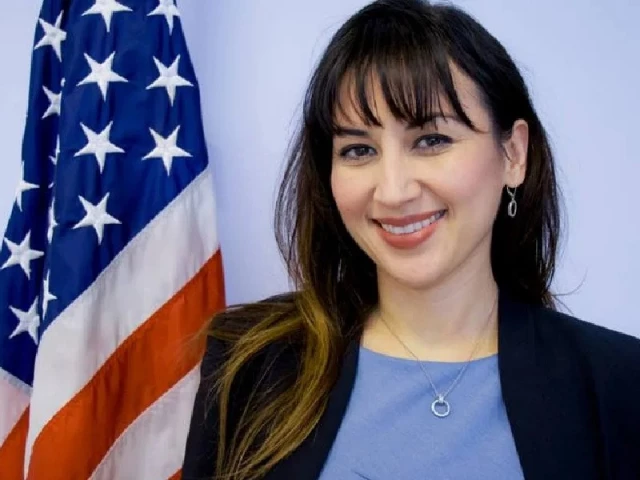
Acting US Ambassador to Pakistan, Natalie Baker. Photo: (file)
ISLAMABAD:
The United States has reaffirmed its long-term commitment to Pakistan, describing the country as a vital partner for decades to come in a statement marking the approach of the United States’ 250th anniversary in 2026.
In the statement, Natalie Baker, Charge d’Affaires at the US Embassy in Islamabad, framed the milestone not just as a celebration but as an opportunity to renew national strength, democratic institutions, economic resilience and principled leadership.
“America at 250 is about restoring national strength, strengthening democratic institutions, promoting economic growth and affirming principled leadership based on realism and reciprocity,” Baker said, emphasizing that strong nations form strong partnerships.
She highlighted the resilience of democratic systems, noting that the US Constitution, ratified in 1788, established checks and balances to protect liberty and prevent concentration of power. Drawing parallels with Pakistan, she said the country’s own journey, shaped by reform and defense of national priorities, resonates with these ideals.
“Just as the United States protects its institutions while respecting the sovereignty of others, we seek cooperation with Pakistan based on mutual respect and shared interests,” she said.
Baker also emphasized the economic dimension of the US-Pakistan partnership, noting that the US economy is driven by innovation, entrepreneurship and the rule of law. She pointed to the Freedom 250 agenda, which connects America’s founding principles with a forward-looking foreign policy focused on prosperity, innovation and lasting partnerships.
She highlighted intensified economic engagement since January 2025, citing Prime Minister Shehbaz Sharif and Field Marshal Syed Asim Munir’s visit to the White House and agreements between US and Pakistani companies in critical minerals, mining and infrastructure.
These initiatives, supported by U.S. funding tools, Baker said, demonstrate how strategic investments can create jobs, increase resilience and strengthen prosperity for both nations.
Security cooperation, she said, is essential to sustaining prosperity. She highlighted the joint commitment of the United States and Pakistan to combat terrorism and extremism while respecting sovereignty. She said counter-terrorism and intelligence cooperation strengthens citizens’ security and builds trust between the two countries.
Baker acknowledged the contributions of overseas Pakistanis to medicine, science, business and community life in the United States, while reiterating the importance of legal immigration. She said visas remain a privilege, not a right, but emphasized that Pakistani nationals and the diaspora strengthen American communities and promote mutual understanding.
Concluding his message, Baker expressed optimism about the future of US-Pakistan relations. She said recent high-level engagements and agreements demonstrate the benefits of mutual respect, tangible results and aligned economic and security interests.
“Pakistan’s resilience, innovation and strategic importance provide an opportunity to create a lasting legacy of cooperation,” Baker said, adding that the United States reaffirms its commitment to a strong, respectful and forward-looking relationship – one that will continue to provide security, prosperity and leadership for the next 250 years.


