
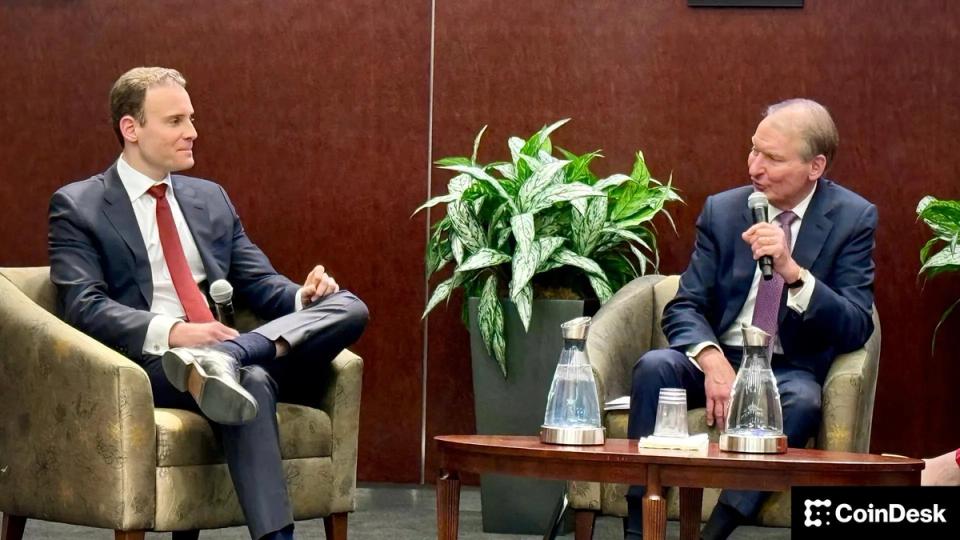
The U.S. government is formally reversing its previous position to ban certain activities of prediction market firms such as Kalshi and Polymarket, with the chairman of the U.S. Commodity Futures Trading Commission, Mike Selig, on Wednesday moving a proposed rule on event contracts back from 2024 and scrapping an earlier announcement that he said confused the industry.
In 2024, the derivatives regulator proposed a rule that would have banned contracts based on the outcome of political events, legally equating them with illegal contracts on war, terrorism and assassination and calling them “contrary to the public interest.” This rule never reached a final stage until President Donald Trump returned to the White House and appointed new CFTC leadership. The CFTC had allowed prediction markets based on political events to launch after losing a court battle over Kalshi’s proposed offering that same year.
The newly confirmed chairman of the agency, Selig, has now cleared the decks of that and a smaller advisory issued in September on certain contract markets.
“The 2024 event contracts proposal mirrored the previous administration’s dabble in merit regulation with an outright ban on political contracts ahead of the 2024 presidential election,” Selig said in a statement. “The Commission is withdrawing this proposal and will advance new rulemaking based on a rational and coherent interpretation of the Commodity Exchange Act that promotes responsible innovation in our derivatives markets consistent with Congressional intent.”
Selig’s action is not surprising as it followed closely on the heels of his remarks last week that signaled it was coming. He said he had “directed CFTC staff to move forward with drafting an event contract rulemaking.”
The Trump administration’s embrace of the prediction markets has paved the way for increased interest from companies looking to throw their hat in the sector, such as Coinbase, or the tangential pursuit of similar products by Cboe.
The September advisory that Selig withdrew had been intended to alert platforms to litigation concerns, he said, but it had “unintentionally created confusion and uncertainty for our market participants.”
The CFTC is expected to become a central voice in the oversight of digital assets, where prediction markets have had an overlapping interest. Selig is working on a number of new initiatives, and Congress is debating his Crypto Market Structure Bill, which — among many other points — is intended to establish the CFTC as the rightful watchdog for non-securities crypto spot markets.
Read more: US SEC, CFTC chiefs push united front to pave way for crypto


