
The Senate Banking, Housing and Urban Development Committee included a provision temporarily preventing the Federal Reserve from issuing a central bank digital currency in its bipartisan bill to boost housing in the U.S.
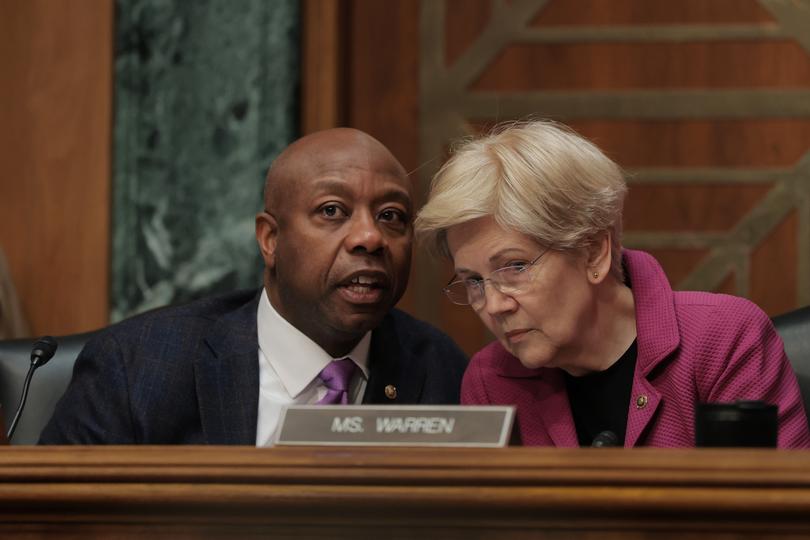
The “21st Century ROAD to Housing Act,” introduced Monday by Committee Chairman Tim Scott and Ranking Member Elizabeth Warren, the top Republican and Democrat on the committee, respectively, aims to make it easier to build homes in the U.S.
“This bill is not only about cutting red tape, lowering costs and expanding housing supply without generating new spending, but it is about ensuring that people like the single mother who raised me in North Charleston, South Carolina, have even greater access to economic opportunity and the American Dream of homeownership,” Scott said in a statement.
“The package includes the vast majority of the Senate’s unanimously supported ROAD to Housing Act, incorporates bipartisan housing ideas from the House, and takes a good first step to rein in business owners who are pushing families out of homeownership,” Warren said in her own statement.
None of the lawmakers mentioned the CBDC ban, which occupies only two pages of the 303-page bill. Lawmakers have included the ban in previous bills, and the House of Representatives passed it as a stand-alone bill last year, but so far it has not made it all the way through Congress.
“Except as provided in subsection (c), the Board of Governors of the Federal Reserve System or a Federal Reserve Bank may not issue or create a central bank digital currency or any digital asset that substantially resembles a central bank digital currency directly or indirectly through a financial institution or other intermediary,” the section states.
It included a December 31, 2030 sunset provision and carved out an exemption for permissionless, private “dollar-denominated” currencies that “fully preserve the privacy protections” of physical currency.
The White House released an “administration policy statement” supporting the bill, explicitly supporting the CBDC provision in the two-paragraph statement.
“The administration highlights the inclusion of presidential priorities … to halt the development of a central bank digital currency that could be [sic] pose significant threats to privacy and freedom,” the statement said.


