
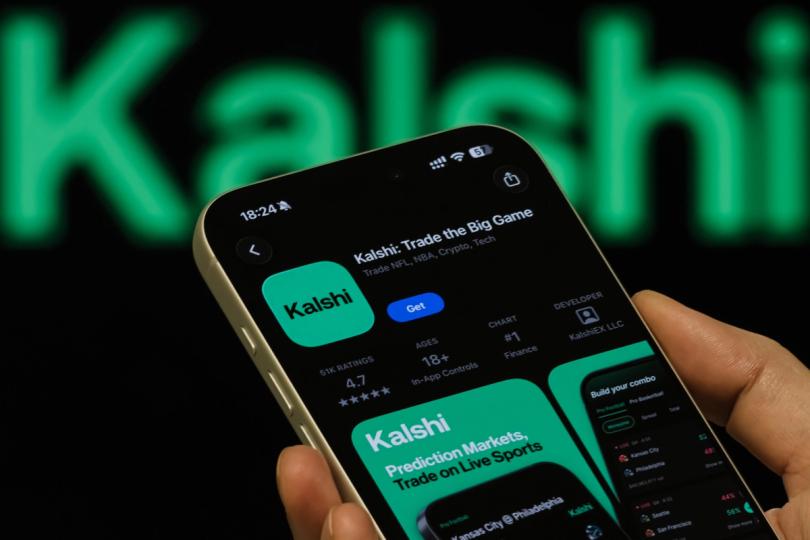
Washington state has become the latest to sue a prediction market provider, after alleging Friday that Kalshi violated state gambling laws through its products.
According to the complaint, Washington has a tightly regulated gambling market, including a ban on online gambling, but Kalshi’s products circumvent those rules.
“Kalshi’s website and app show consumers a variety of events that they can bet on and the odds for the various events, which dictate how much the player will be paid if the event occurs,” a state press release said. “This is exactly how sportsbooks and other gambling operations work. Kalshi advertises that they allow consumers to ‘bet on anything’ by simply calling their service a ‘prediction market’ instead of ‘gambling’.”
The lawsuit said Kalshi’s ads referred to “legal betting” and alleged that the company’s activities met the state’s definitions of “gambling,” “professional gaming,” “bookmaking” and other key state regulations. It also contained a provision alleging that Kalshi’s products promoted gambling and particularly targeted college students.
Kalshi filed to move the case to federal court, saying it was already litigating those issues in other federal courts and that it received “no warning or dialogue” from Washington before the trial.
Washington’s filing continues a growing state backlash against prediction market providers. Prediction market providers and their supporters, including Commodity Futures Trading Commission Chairman Mike Selig, argue that these companies offer derivatives contracts that are appropriately regulated at the federal level. States have argued that these companies offer gaming products disguised as something else and should be subject to state gaming laws as a result.
While both prediction market providers and states have had some initial legal victories, this argument is likely to end up before the US Supreme Court, legal experts have told CoinDesk.
Nevada actions
The case came a week after Nevada won an appeals court victory allowing it to file a temporary restraining order against Kalshi, forcing the company to remove its sports, entertainment and election contracts from the state for at least two weeks. A hearing will be held at the end of those two weeks on Friday, April 3, where a state judge will decide whether to extend the restriction.
Trade publication Gambling Insider reported on Friday that Kalshi’s Nevada users were still able to use the platform after the temporary ban went into effect.
Nevada also secured a preliminary injunction against Coinbase requiring it to continue a pause in its prediction market offerings in the state in an order dated Thursday, March 26, following an initial temporary restraining order issued in early February.
According to Thursday’s ruling, Nevada District Judge for the First Judicial District Court Kristin Luis wrote that Coinbase did not dispute that it offered “‘event-based contracts’ that relate to sports and other events, including college basketball games, college and professional football games and elections,” which meet the definition of “sports pools” defined under Nevada law.
Coinbase is a partnership with Kalshi, the judge noted. Like the Kalshi order, this one orders Coinbase not to offer sports, elections or entertainment contracts in Nevada, at least until a broader lawsuit is resolved.
The judge gave Coinbase 60 days to “make technological improvements” to comply with the order.
Nevada and Washington’s federal district courts are both part of the Ninth Circuit Court of Appeals.
Read more: Kalshi secures license to offer margin trading to institutional investors


