
MIRANSHAH:
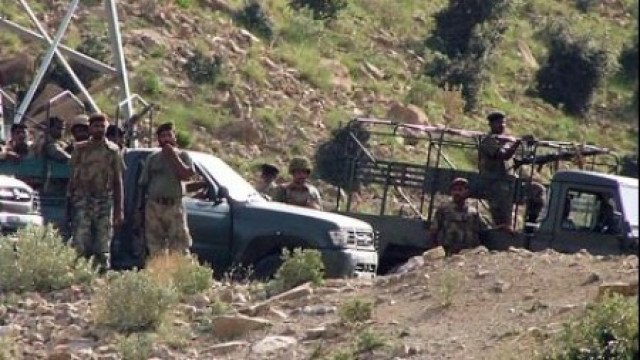
Ongoing unrest in Shewa Tehsil in North Waziristan has escalated into a full-blown humanitarian crisis, with several villages now completely abandoned and new waves of displacement accelerating from surrounding areas.
Local sources report that after residents of Drozanda, Alam Khel, Malu Khel and Anar Khel fled, families from nearby villages are moving rapidly towards Bannu, Kohat, Dera Ismail Khan, Lakki Marwat, Peshawar and other relatively safe districts.
Eyewitnesses describe an eerie scene: doors to homes are closed, streets eerily quiet. A young local resident said: “In all my life I have never seen such a sight. Entire villages have been emptied; only one or two people are left to look after livestock and empty houses.”
Shewa Tehsil was once counted among the relatively peaceful pockets of North Waziristan. The local population traditionally depended on agriculture, animal husbandry and small businesses, and the area was known for its simplicity and tribal harmony. Even during the major military operations after 2014, Shewa suffered less disruption than many neighboring regions, and life returned to normal relatively quickly.
However, the situation has worsened significantly in the past year. Residents cite a sharp increase in targeted killings and the activities of banned outfits as the main factors pushing the area back into instability.
The head of a displaced family recounted the fear: “Every night before we slept, we wondered if we would wake up safe in the morning. Children’s education has stopped, markets are closed and fear reigns everywhere.”
Women are particularly hard hit. One woman said: “When we left our home, we could only carry the essentials; everything else was left behind. We don’t know when or if we will be able to return.”
The destruction of a key bridge over the Kurram River by an explosion has further exacerbated the crisis, cutting connectivity between several villages, disrupting movement and increasing the sense of insecurity.
In response, elders from the Kabul Khel tribe and other tribal leaders held a jirga with security officials to discuss the worsening situation. The elders made it clear that people are living in acute fear and uncertainty and immediate steps are essential.
A tribal leader stated after the jirga: “We have told the authorities in clear terms, either restore peace or give us a clear plan so that we can protect our people.”
Security officials have assured the convening of a high-level jirga and the formulation of a comprehensive strategy.
In a significant development, local elders and those who have already left their homes have announced support for a possible operation against terrorists in the abandoned villages. However, they have emphasized that civilian lives and property must be fully protected during any action and that concrete measures should be taken for the dignified return of displaced families.
A displaced young man said: “We want peace. If an operation is the only solution, we will not object, but we must be allowed to return to our homes with honor.”


