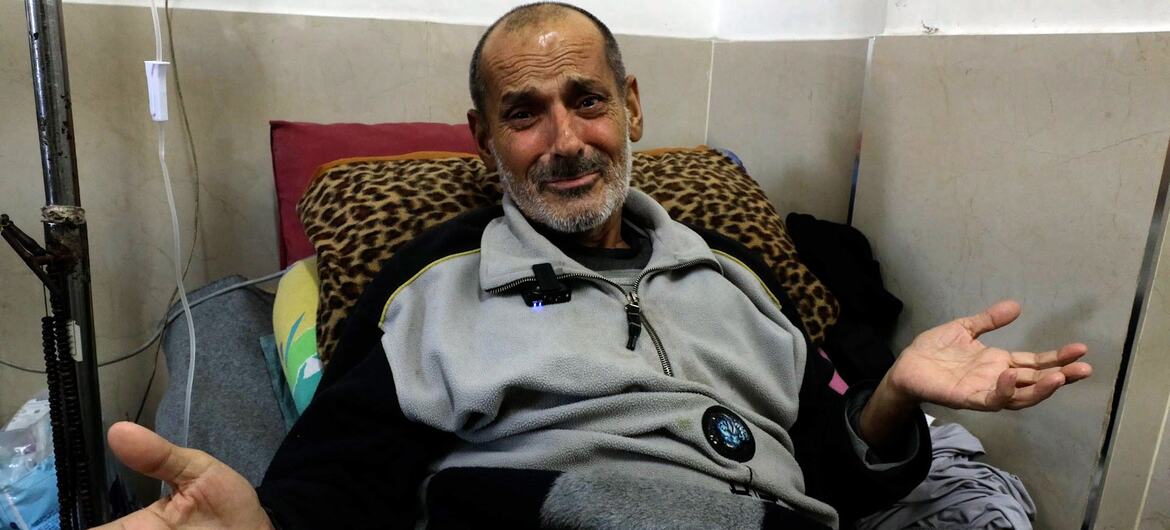
“We are dying. Every day between two and three patients die inside this hospital,” says Munther Abu Foul, a cancer patient lying on his bed in Gaza’s main hospital. “I can’t get out of bed because of the pain. We want a solution – open the junctions.”
His words capture the reality facing thousands of cancer patients across the Strip, where access to specialist care has collapsed and evacuation for treatment abroad remains out of reach for many.
Local health organizations warn that around 11,000 patients are currently deprived of specialized or diagnostic cancer treatment in Gaza.
About 4,000 patients who received medical referrals to hospitals outside the Strip have been waiting more than two years to travel.
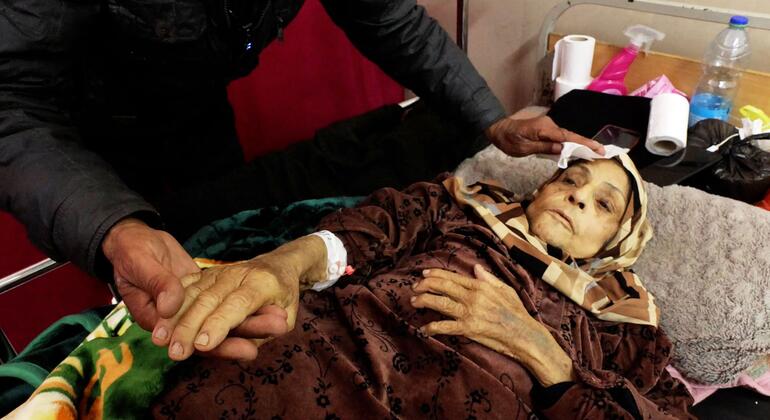
Pakinomist visited Al-Shifa Hospital in Gaza City and documented the harsh conditions in its oncology department. Patients crowd corridors and wards, waiting for consultations or treatments that are no longer available.
There is a shortage of essential medicine and equipment, while many patients suffer from chronic pain that makes them barely able to move.
A man takes care of his brother, a cancer patient at Al-Shifa Hospital in Gaza City.
‘Every day two or three patients die’
Abu Foul flips through his medical transfer papers, issued long ago for treatment outside Gaza. He has not been able to travel for more than two years.
“The health situation in the Gaza Strip is decrepit,” he says. “There is no treatment or medicine and we die. Every day two to three patients die here in the hospital. I can’t get out of bed because of the pain.”
He directly appeals for help. “We want a solution. Open the crossings properly so God will deliver us from this suffering. Everyone will be held accountable.”
Nearby, Mohamed Hammou looks after his elderly mother, who is also fighting cancer. He says families are forced to watch their loved ones deteriorate without care.
We want a solution. Open the crosses properly so that God will free us from this suffering – Abu Foul
“This is how we stand in front of a patient who is dying, without treatment or medical facilities to help them recover,” he says. “This does not please God and it does not satisfy people. We call on Islamic, Arab and international nations to look at the sick with mercy.”
A brother in pain
In another ward, Raed Abu Warda looks after his brother Hamid, whose cancer has worsened after long delays in treatment. What began as a small, benign disease has become a life-threatening condition.
“He has suffered from cancer for two years,” explains Raed. “He was waiting all this time for the crossing to open so he could be treated outside. His pain has increased as you can see.”
He gestures to a wound that has opened under his brother’s chin. “The disease has created this wound and his condition is getting worse every day. I stand looking at my brother and mourn his condition because of the pain.”
The health situation in the Gaza Strip is worsening for those suffering from life-threatening cancers, despite the limited opening of the Rafah crossing.
The number of patients seeking care in Gaza’s oncology departments continues to rise, even as hospitals face severe shortages of medicine, equipment and specialized staff. For newly diagnosed patients, the future is increasingly uncertain.
Evacuations are far below needed
With the limited reopening of the Rafah crossing, the World Health Organization (WHO) is supporting the evacuation of patients and their companions from Gaza, focusing on ensuring safe transport. Yet the scale of need far exceeds what is currently possible.
All we ask is a way to live
More than 18,000 patients – including around 4,000 children – are waiting to be evacuated abroad for medical treatment, according to the WHO.
The United Nations Office for the Coordination of Humanitarian Affairs (OCHA) reported last week that Gaza’s health ministry had recorded more than 1,200 patient deaths while people waited for medical evacuation. About 4,000 cancer patients remain on critical waiting lists, caught between closed crossings and a health system pushed beyond its limits.
For patients like Munther Abu Foul, time is running out. “We’re dying,” he repeats. “All we ask for is a way to live.”