
- Nvidia CEO Jensen Huang predicts bumper times ahead
- Huang says he expects about $1 trillion from the Rubin and Blackwell sale
- Nvidia unveils new Vera chips and server racks at GTC 2026
Jensen Huang has stated that he expects Nvidia to see around $1 trillion from selling its AI hardware through 2027.
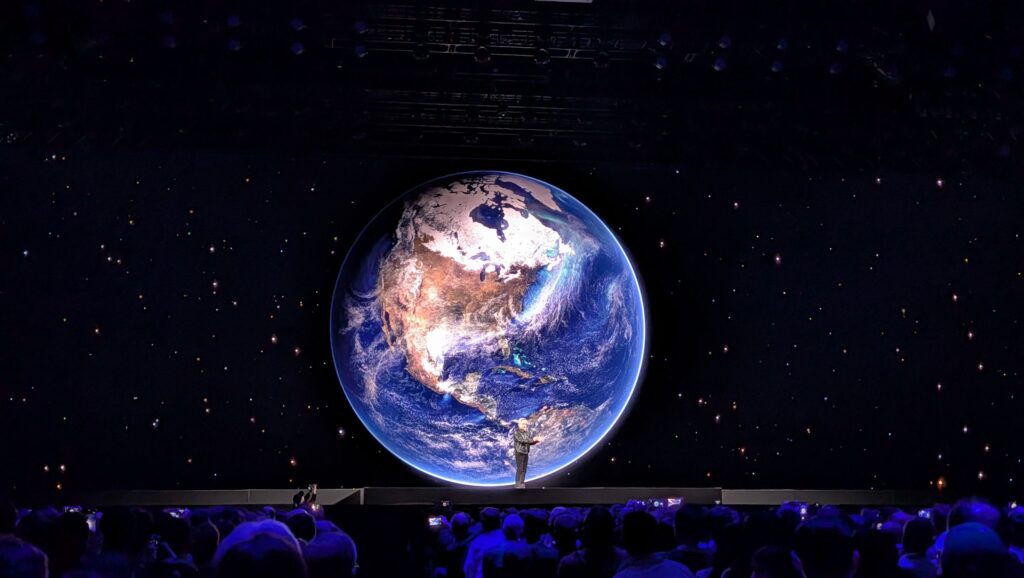
In his keynote address at Nvidia GTC 2026, the CEO and co-founder said that the sale of its Blackwell and Rubin chips will be a big earner for the company in the coming months.
And this may not be all – as Nvidia announced a number of new hardware releases that expand its range of offerings even further.
The article continues below
Everything in the computer
“I see (AI chip sales) through 2027 – at least a trillion dollars,” Huang declared in a presentation full of announcements, but focused on meeting the growing demand for computers in the AI era.
“I think the demand for computers has increased by 1 million times in the last two years,” Huang said. “That’s the feeling we all have. That’s the feeling every startup has.”
The $1 trillion figure drew gasps from the thousands in attendance at Nvidia GTC 2026, especially when Huang noted that the company had previously predicted that data center equipment would bring in $500 billion in sales by the end of 2026.
To keep this momentum going, Huang had shown several big announcements on stage, including no fewer than seven new Vera Rubin chips.
These include a new Vera CPU, available in the second half of 2026, which the company says is ‘purpose-built’ for agent AI, offering twice the efficiency and 50% faster than traditional CPUs, along with the highest single-threaded performance and bandwidth per core today.
Nvidia also announced a new rack that integrates 256 liquid-cooled Vera CPUs, enough to sustain more than 22,500 concurrent CPU environments, each running independently at full performance — a key part of the company’s push toward “AI factories” to drive use cases from quantum computing to robotics.
Huang also revealed that the Groq 3 LPU (language processing unit) will now be part of Nvidia’s product line, helping to increase the inference of large language models (LLM) and improve how answers to AI prompts are generated.
Follow TechRadar on Google News and add us as a preferred source to get our expert news, reviews and opinions in your feeds. Be sure to click the Follow button!
And of course you can too follow TechRadar on TikTok for news, reviews, video unboxings, and get regular updates from us on WhatsApp also.


