
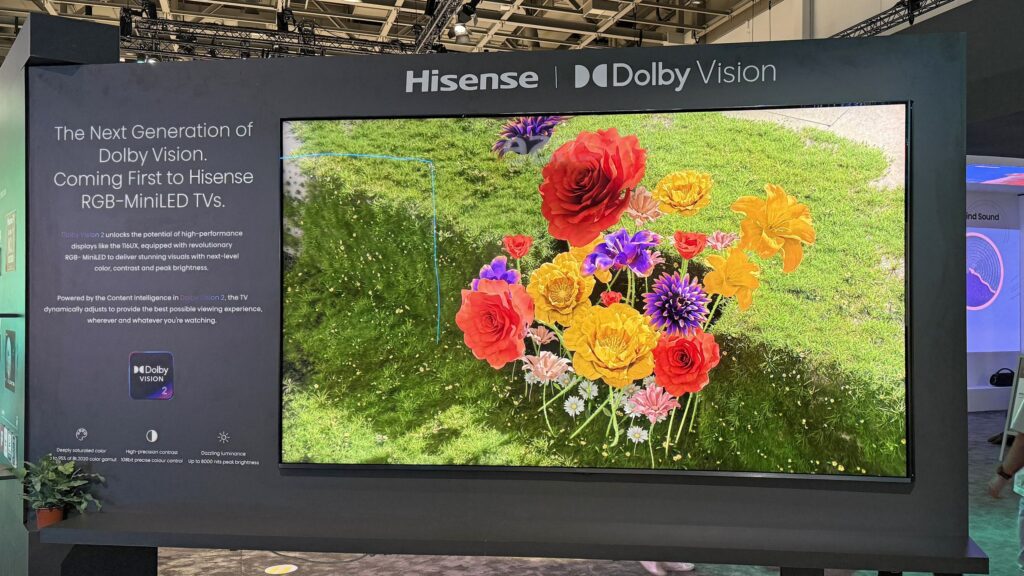
- Dolby Vision 2 is coming to select Hisense, TCL and Philips TVs in 2026
- This follows news that Peacock will be the first streamer to support Dolby Vision 2
- There will be two versions of Dolby Vision 2: Dolby Vision 2 and Dolby Vision 2 Max
TechRadar will extensively cover this year’s CESand will bring you all the big announcements as they happen. Head over to ours CES 2026 live news page for the latest stories and our hands-on verdicts on everything we’ve seen.
You can also ask us a question about the show in our CES 2026 live Q&A and we will do our best to answer it.
And don’t forget it follow us on TikTok for the latest from the CES show floor!
Select Hisense, TCL and Philips will be the first to support Dolby Vision 2, Dolby has confirmed at CES 2026.
Dolby Vision 2 is the next generation and successor to the popular HDR format Dolby Vision, which is used by some of the best TVs and best 4K Blu-ray players. Dolby Vision improves color, detail and contrast compared to regular HDR10 by using dynamic metadata to improve picture quality.
At IFA 2025, it was confirmed that Hisense would be the first TVs to support Dolby Vision 2, but specific models were not confirmed at the time.
Dolby has now verified that Hisense’s 2026 RGB mini-LED TVs including the UX, UR9 and UR8 models will all support Dolby Vision 2, while its cheaper mini-LED TVs should receive support via a future software update.
TCL’s 2026 X QD mini LED TV series and C series TV will also get a future software update to support Dolby Vision 2.
Finally, TP Vision’s Philips 2026 OLED TV will support Dolby Vision 2 in their OLED811, OLED911 and OLED951 models.
This follows the news, first announced at CES 2026, that Peacock is the first streaming service to support Dolby Vision 2 and next-generation Dolby Atmos audio encoding.
There will actually be two versions of Dolby Vision 2 on offer: Dolby Vision 2 and Dolby Vision 2 Max (more on that below). It’s not yet clear which of the above TVs support which version, but we’ll keep an eye out.
Dolby Vision 2: the new generation
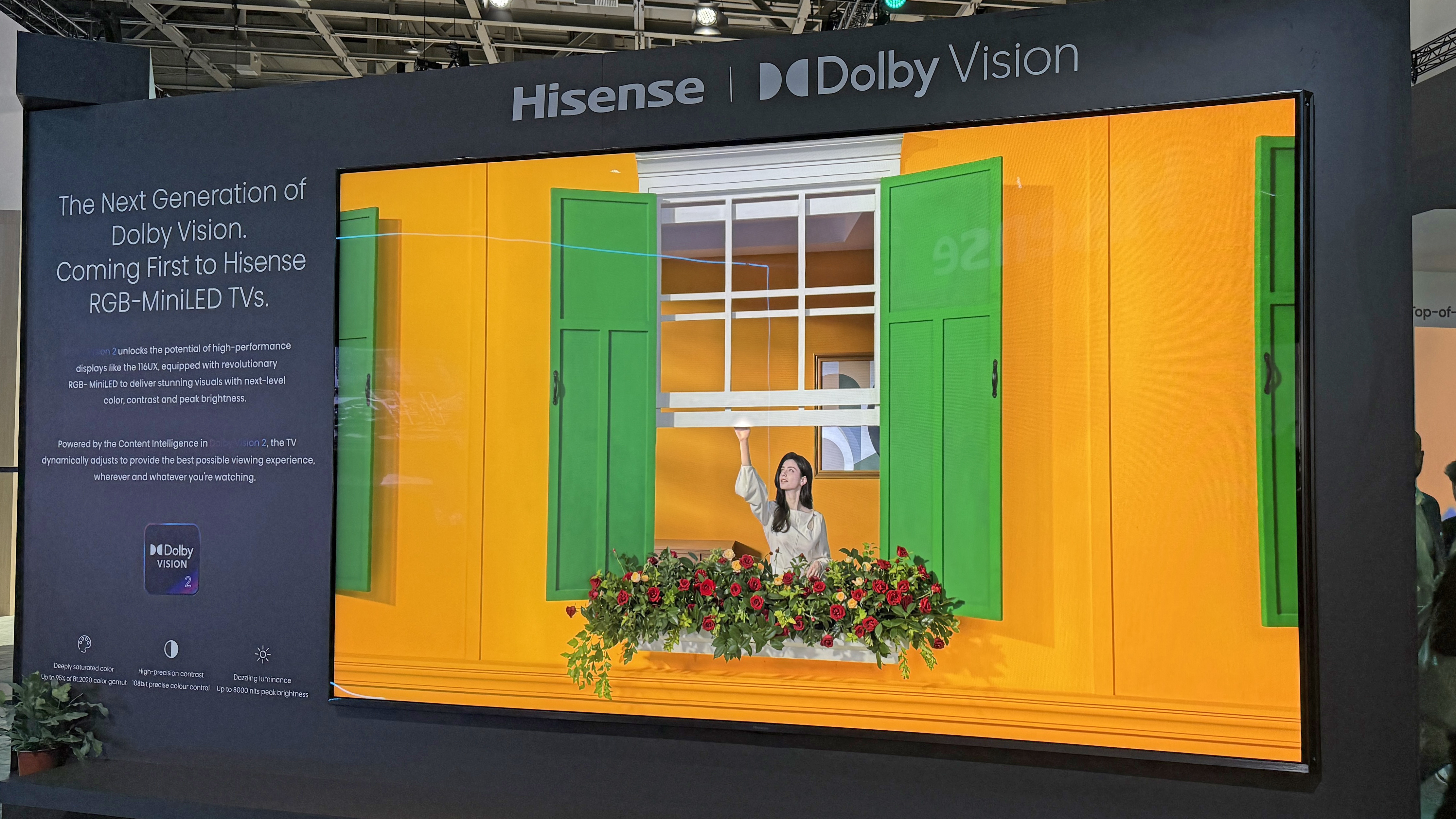
We’ve actually seen Dolby Vision 2 in action on budget TVs and were impressed by how much of a perceived difference it made to black tone handling, contrast and color. It seemed like a clear step up from its predecessor, Dolby Vision.
Dolby Vision 2 will have several new features in its arsenal. First, Precision Black, which is designed to make blacks more natural and answer consumer frustration with ‘too dark’ scenes on streaming services. Next is Light Sense, which will adjust the image on the screen to suit the ambient light conditions in the room. And live sports optimization for more accurate motion processing and image.
Dolby Vision 2 Max will have these features plus an even more optimized picture engine and Authentic Motion. This is a tool designed to reduce shake but preserve natural and authentic motion by letting filmmakers adjust the motion themselves instead of relying solely on the TV’s motion settings. We have seen Authentic Motion in action and were again impressed.
Dolby Vision 2 looks to be an exciting upgrade over its widely used predecessor. The fact that it’s coming to Hisense’s RGB mini-LED TV, which could be a real threat to OLED now that it’s set to be used in smaller sets, is an exciting development for 2026 and I can’t wait to get some real testing time with Dolby Vision 2.
The best TVs for all budgets


