
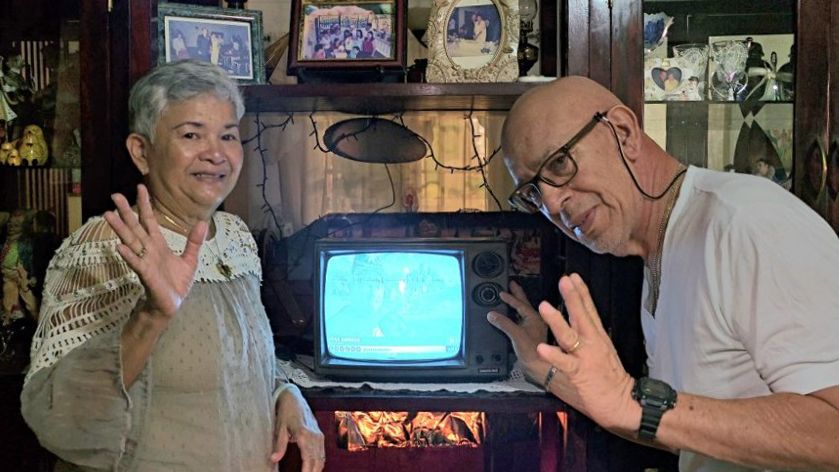
- A Guatemalan family recently traded in a 39-year-old CRT TV for a new LCD
- Samsung accepted the TV as part of their Eco Exchange program
- Engineers completely restored the set and it is now on display at its headquarters in Panama City
It’s easy to wistfully mutter ‘things were built differently back then’ when you look back at your old gadgets. But a Guatemalan couple recently shocked even Samsung with the longevity of the CRT TV they recently traded in for a new flat-screen model.
The Morales family bought their trusty Samsung set way back in 1987. After an impressive 39 years of operation, the TV was finally struggling enough to convince them to enter the 21st century with a new flat screen model.
According to its proud owner Ann Morales, the ever-reliable TV worked flawlessly for nearly four decades. “We saw the Berlin Wall fall on this TV,” she told Samsung. “We used it hard, from the morning news to the movies at night, and it always turned on. It was a real workhorse,” she added.
When the family reluctantly took in the TV as part of Samsung’s Eco Trade-In program, it started a new journey for the set. Their local store saw its potential as a museum piece and sent it to Samsung’s Central America and Caribbean headquarters in Panama City. Put a mixture of head scratcher and wonder.
Samsung’s engineers were initially uneasy about how to fully restore the TV to its former 1980s glory – understandably so, as many of them weren’t born when it was released. However, after some technical research, they managed to restore the set and it now apparently produces a clear image and functions as it did in 1987.
Samsung says the TV, now a display piece at its global headquarters in Suwon, Korea, has become something of a local hero after garnering a lot of attention when it was restored.
A relic from a bygone era
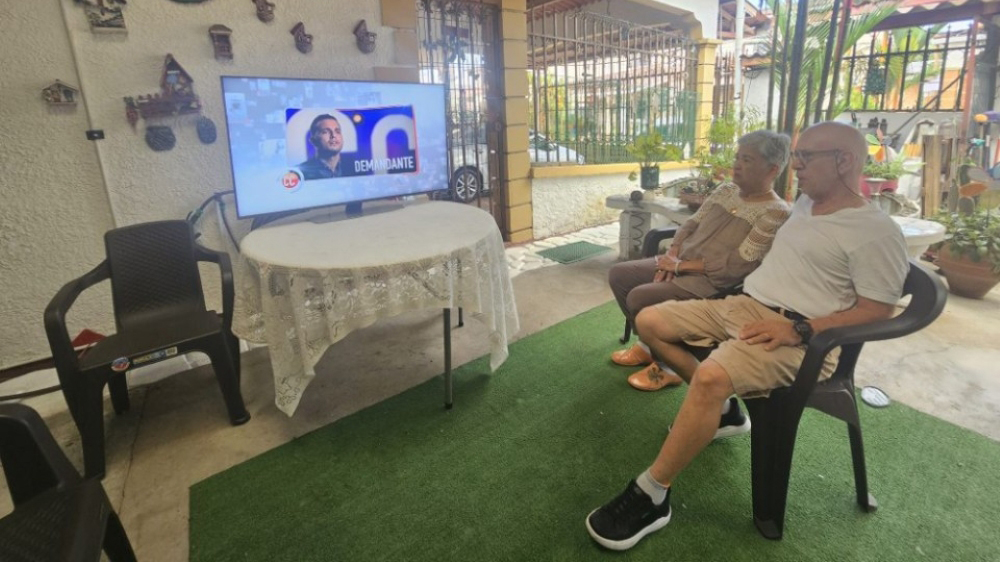
As impressive as this 39-year-old TV is, it’s not a record-breaker. Back in 2011, a working Marconi TV from 1936 was auctioned and sold for £16,800 (about $22,900 / AU$32,600), meaning it was still working 75 years after it was built.
Still, both of these examples remain outliers, and the longevity of some CRT TVs is often due to their analog simplicity, repairability, and superior thermal management compared to modern LCDs and OLEDs.
The estimated lifespan of today’s television is about five to seven years, or a decade if you’re lucky. That’s partly because LED backlighting can last as little as five years, while many owners find themselves lost without software updates or support for the latest image formats. There’s simply a lot more that can go wrong in today’s TVs, and it’s often more cost-effective to replace them than to repair them.
The knock-on effect is that we now rarely develop the kind of emotional ties to our TVs that the Morales family reported. “At Christmas, the whole family gathered around the screen; it was like the fire in our modern fireplace,” recalled Ana Morales.
“I couldn’t just throw it in the bin. Every time I saw it, I remembered my early working years and the joy my children felt. It saddened me to think that its life would end in a landfill,” she added.
To Samsung’s credit, its Eco Trade-In program (which allows you to trade in old devices from Samsung or other brands in some regions) meant it eventually found a new lease of life. And it’s not alone – a new trend among TV enthusiasts is to hunt down old CRT sets and keep them alive for posterity.
This isn’t just about nostalgia either, as many reward the talents of CRT televisions for their ability to reproduce video game graphics as they looked in their heyday. So the next time you see a good deal on CRTs on eBay and get hit with a wave of nostalgia, you might have more competition than you bargained for.
Follow TechRadar on Google News and add us as a preferred source to get our expert news, reviews and opinions in your feeds. Be sure to click the Follow button!
And of course you can also follow TechRadar on YouTube and TikTok for news, reviews, video unboxings, and get regular updates from us on WhatsApp also.


