
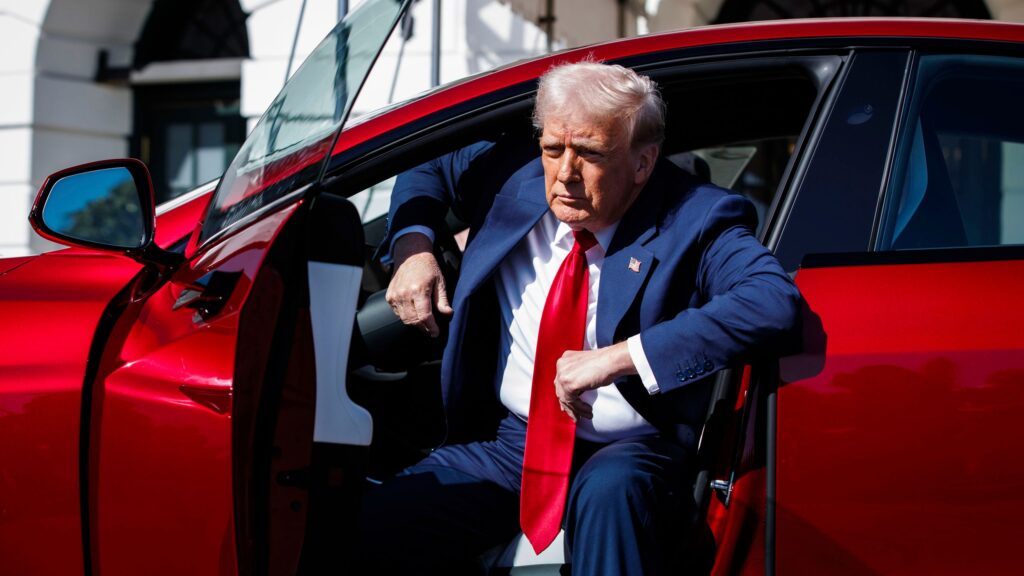
- President Trump has announced a reversal of the ‘danger finding’
- This ruling found that greenhouse gases endanger public health
- Trump promises cheaper cars, but that could increase the cost of living
President Trump has reversed a landmark ruling that found greenhouse gases threatened public health in an effort to lower car prices and ease energy costs for American households.
According to the New York Times, for over 17 years the US Environmental Protection Agency (EPA) has relied on scientific findings to justify regulations that limit carbon dioxide, methane and other pollution from oil and gas wells, tailpipes, smokestacks and other sources that burn fossil fuels.
Called the ‘hazard finding’, it was designed to reduce the effects of climate change and protect the health of American citizens and, arguably, the world’s population.
But this is not the view of President Trump’s current administrator of the EPA, Lee Zeldin. According to The Guardian, an emailed statement from a spokesman said the threat finding was used to “justify trillions of dollars in greenhouse gas regulations covering new vehicles and engines”.
The potential rollback of that policy is expected to increase the nation’s greenhouse gas emissions by 10 percent over the next 30 years, according to the Environmental Defense Fund, an advocacy group. “We predict 58,000 premature deaths by 2055,” Peter Zalzal, Attorney, Environmental Defense Fund, told CNBC.
In addition to the potential effects on health and the global climate, the automotive industry is expected to face an extended period of uncertainty. This reinforces the earlier removal of federal tax credits for electric cars, where sales fell dramatically, as well as the numerous trade tariffs imposed by President Trump, making it nearly economically impossible for some global automakers to export to North America.
However, the Trump administration claimed ignoring the ‘hazard findings’ would save automakers and other companies an estimated $1 trillion, although it has declined to explain how it arrived at that estimate, according to CNBC.
Fuel prices rise, innovation stalls
So what could the effects be? First, removing emissions regulations could prompt US automakers to cut their spending on innovation and fall back on polluting and less efficient vehicles. According to some industry insiders, this would actually cause Americans to spend more money on fuel to complete the daily commute.
This increase in demand will then cause fuel costs to rise, which could increase the profits of major oil companies by as much as $1.4 trillion, according to Electrek.
At the same time, a reduction in the incentives to innovate could cause the US auto industry to slip even further behind in the race to develop more efficient and environmentally friendly vehicles. This could greatly benefit China, which is already driving ahead in the development of next-generation battery and hybrid technology.
Despite financial support for the current administration, Elon Musk and his company Tesla have been vocal about the hazard finding, arguing that it — and the vehicle emissions standards that come from it — have provided a “stable regulatory platform for Tesla’s extensive investments in product development and manufacturing,” according to CNBC.
Currently, the company’s sales have stalled across the globe, and many argue that its lack of innovation has caused it to fall behind the competition.
EV uptake is actually increasing
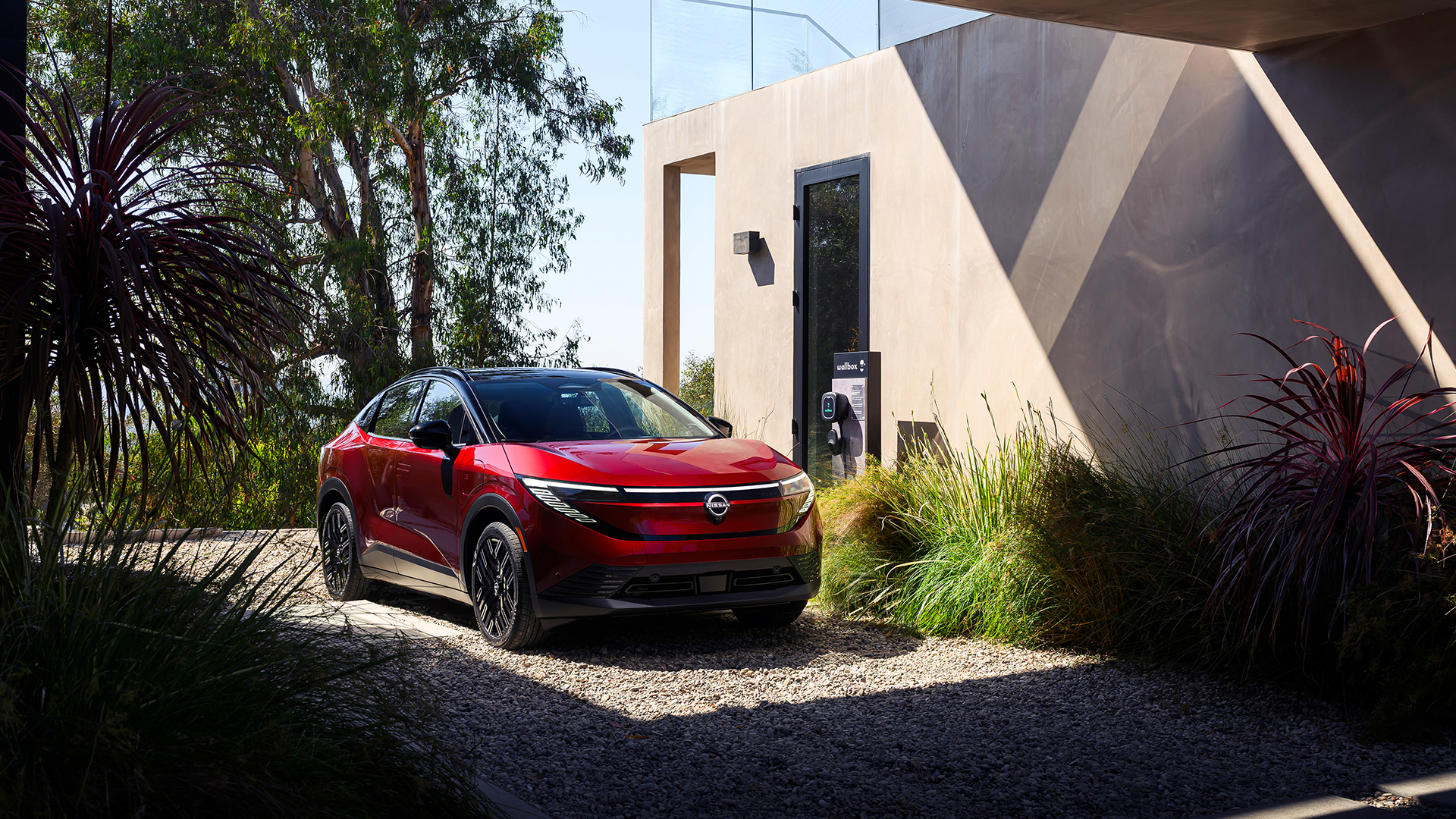
On the flip side, this landmark reversal of policy could actually boost demand for pure electric, hybrid, and generally more efficient vehicles as American citizens flock to models that can help reduce daily travel costs.
What’s more, states could step up and pass their own legislation that would override President Trump’s decision. California has been an advocate for cleaner EV technology and the general reduction of greenhouse gas emissions on a more local level.
Due to the extremely sensitive nature of the automotive industry, most automakers build vehicles to the strictest emissions standards, rather than risk making a production line overly complicated and expensive.
This could mean that these manufacturers based in the US would produce cars based on the strictest standards in the strictest states.
Finally, automakers work to extremely long product development timelines, which means this ruling won’t immediately stop what’s in the pipeline. The electric cars and hybrids coming to market in two or three years will probably still do so.
“Even despite this, almost kind of a war on electric cars — getting rid of the subsidies, getting rid of the regulation — I think it’s been pushed to a point where you’re not going to see us completely turn around on electric cars,” Alan Jenn, a professor at the University of California, Davis’s Electric Vehicle Research Center told CNBC.
Either way, the recent decision by the Trump administration is likely to be met with frustration by an industry currently undergoing perhaps its most significant transition in 100 years.
Follow TechRadar on Google News and add us as a preferred source to get our expert news, reviews and opinions in your feeds. Be sure to click the Follow button!
And of course you can also follow TechRadar on YouTube and TikTok for news, reviews, video unboxings, and get regular updates from us on WhatsApp also.


