
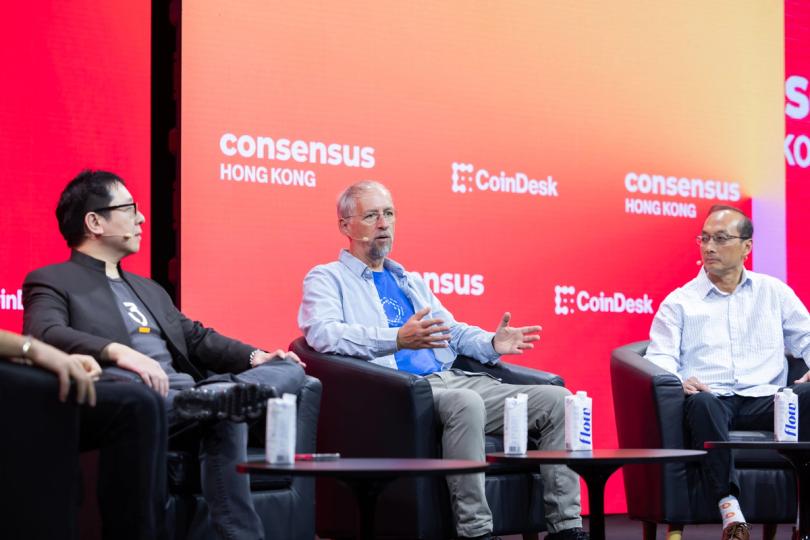
MIAMI BEACH — Bitcoins The latest slide has frustrated investors who expected a smoother ride after a wave of institutional milestones, but Adam Back, one of the early cypherpunks cited in bitcoin’s 2008 white paper, said the volatility shouldn’t surprise long-term observers.
“Bitcoin is generally volatile,” Back said at the iConnections conference in Miami Beach on Tuesday. “There is a lot of positive news […] and in the previous four-year market cycles, this has been a point in a cycle where the price runs lower.”
He suggested that some market participants may be trading around the historical pattern rather than reacting to fundamentals. “There was some expectation or possibility that the market might be different because there are different types of investors. So I think some people think the price might come back later this year.”
Bitcoin entered the year with tailwinds. A more crypto-friendly administration in Washington and long-awaited regulatory clarity around spot exchange-traded funds (ETFs) were expected to unlock deeper institutional participation.
For many investors, this was also meant to be a proving ground. Bitcoin’s core pitch has long centered on scarcity and independence from government monetary policy, and being a digital store of value designed to hedge against currency depreciation. At a time when US fiscal deficits remain large and questions about the dollar’s long-term purchasing power persist, the backdrop seemed consistent with this thesis.
Yet the market has not followed the script. Bitcoin has fallen about 26% over the past year, even as the political environment became more supportive and institutional access improved. Rather than decouple from macro uncertainty, the asset has at times traded in line with broader risk markets.
Meanwhile, traditional safe havens have been piling up. Gold has risen to new records, with silver also reaching several annual highs. Capital seeking shelter from inflation concerns and geopolitical risks appears to have flowed, at least in part, into metals rather than digital assets.
Back, who is now the CEO of Blockstream as well as the Bitcoin Standard Treasury Company (BSTR), also pointed to structural dynamics in who owns bitcoin.
“The ETF Holders […] are stickier investors than the retail traders of bitcoin exchanges,” he said. Retail participants often deploy most of their capital during rallies, leaving little dry powder during downturns. Institutions, on the other hand, can rebalance across portfolios.
Still, Back cautioned that institutional adoption is still early. “I think there’s not that much institutional capital yet.”
In his view, large pools of capital have yet to fully enter the market, although major regulatory hurdles have been cleared and clearer rules could pave the way for more institutional approaches.
Over time, he expects wider use to reduce volatility. He compared bitcoin’s current phase to early high-growth stocks. “You can look at analogies of, say, early Amazon (AMZN) stock, which had wild price swings, basically because the market was uncertain.”
“That kind of rapid adoption curve inherently brings with it volatility,” he said. As adoption matures and more institutions, companies and states gain exposure, Back said bitcoin’s price swings should moderate. He doesn’t expect volatility to go away, but said he thinks it may start to look like gold, which trades with less dramatic moves than a younger asset.
Back also said he measures bitcoin’s long-term potential against gold’s overall market value. He argued that comparing the two market values provides a rough benchmark for adoption, and in his view, bitcoin remains about 10 to 15 times less than gold today, suggesting room for further growth if it continues to capture share as a store of value.
Despite short-term price fluctuations, Back argued that bitcoin’s long-term investment case remains intact. “Bitcoin as an asset class has stood out from everything, every other asset class in the last decade in general, by having the highest annual returns,” he said.
For Back, volatility is not a contradiction of bitcoin’s thesis, but a feature of its adoption phase. “Volatility […] is part of the picture,” he said.


