
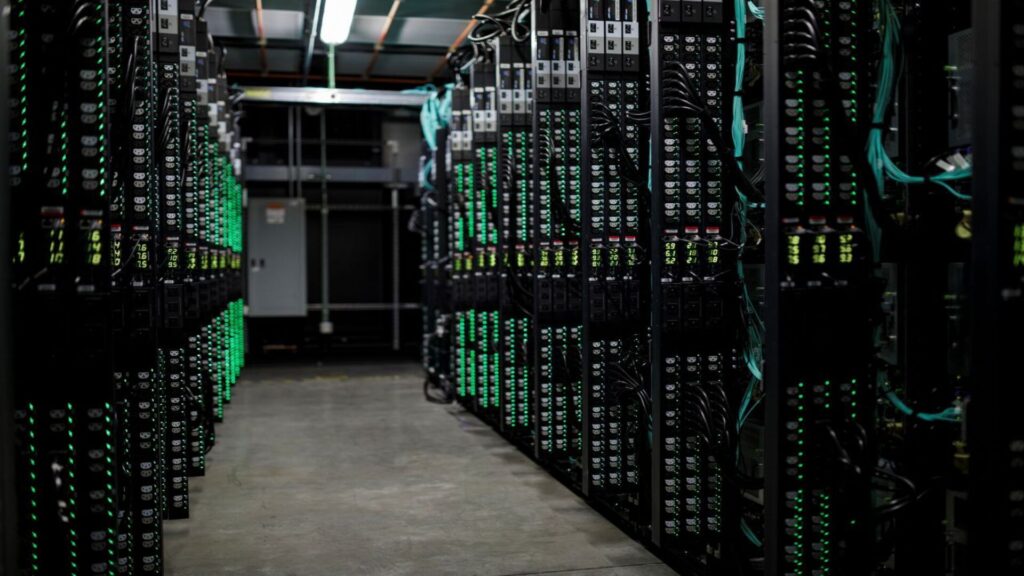
- Wind turbines may soon double as offshore AI computing facilities.
- Cold seawater could cool servers inside floating turbine platforms.
- Aikido Technologies plans experimental offshore infrastructure for artificial intelligence processing.
Rising demand for AI infrastructure continues to increase pressure on energy supplies and the physical footprint required for large-scale computing facilities.
An American startup, Aikido Technologies, is exploring a concept that connects offshore wind power generation with a data center installed directly inside sea-based turbine structures.
The company plans to test a combined wind turbine and computer system in the North Sea off the coast of Norway.
The article continues below
Offshore wind turbines as computing platforms
The proposed prototype will generate about 100 kilowatts of power while operating AI servers inside the turbine structure.
The project aims to be launched before the end of 2026 as an early technical demonstration.
“We have this power from the wind. We have free cooling. We think we can be quite competitive against conventional data center solutions,” Aikido CEO Sam Kanner told IEEE Spectrum.
“This crisis in the next five years is an opportunity for us to prove this and deliver AI computing where it’s needed.”
The platform relies on a semi-submersible wind turbine structure similar to designs commonly used in offshore oil and gas operations.
The floating installation includes three ballast-filled legs that maintain buoyancy and stability in deep water.
Each leg contains fresh water used as ballast in its lower section, and the company proposes to install computer hardware higher in the structure.
According to its design sketch, each leg could accommodate a data hall of between three and four megawatts.
This will allow a single turbine to support a data center capacity of around nine to twelve megawatts.
Cooling depends to a large extent on the surrounding marine environment. Water stored in the ballast sections circulates through cooling systems connected to AI processors.
After absorbing heat, the heated water returns to the ballast chamber, where the cold water of the North Sea reduces the temperature again.
An air conditioning system is still necessary for components that are not integrated into the liquid cooling system.
The startup has referred to the initial experimental installation as the Proof of Concept A1DC system.
Despite the attractiveness of the concept, offshore wind production varies throughout the year, creating uncertainty for systems that require a continuous and stable electricity supply.
To address this variation, each turbine installation includes batteries designed to store excess energy generated during periods of high wind.
If production drops for longer periods, the platform can connect to the mainland’s power grid and draw power from external sources.
The arrangement reduces the risk of prolonged computer outages, but introduces reliance on conventional power infrastructure.
Environmental exposure creates another complication as offshore structures must withstand harsh weather, constant wave motion and the corrosive effects of salt water.
These conditions can increase long-term maintenance requirements for all equipment installed at sea, including computer hardware typically housed in controlled indoor facilities.
A similar prototype combining underwater data processing with offshore energy infrastructure was introduced in Shanghai in 2025. But whether such systems evolve beyond experimental deployments remains uncertain.
Via Tomshardware
Follow TechRadar on Google News and add us as a preferred source to get our expert news, reviews and opinions in your feeds. Be sure to click the Follow button!
And of course you can too follow TechRadar on TikTok for news, reviews, video unboxings, and get regular updates from us on WhatsApp also.


