NEWYou can now listen to Pakinomist articles!
32 years ago, many fans in the global soccer community saw that the United States was planning to host its first FIFA World Cup in 1994 and asked a collective question: Why?
At the time, the US men’s national team was a largely anonymous squad of unknown players wearing now-nostalgic denim uniforms.
In mainstream America, soccer did not have the same popularity as other sports such as gridiron football or baseball. But then the tournament started.
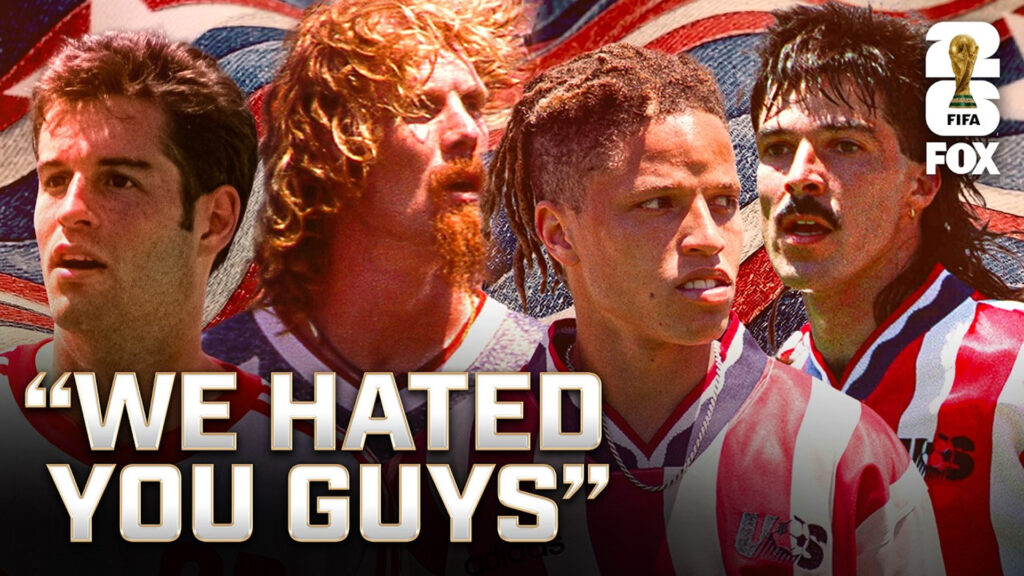
Looking back on the summer of 1994, the members of that team — Alexi Lalas, Cobi Jones, John Harkes and Marcelo Balboa — reunited to take a trip down memory lane and talk about the tournament that changed the sport.
Bora And The Bootcamp
Alexi Lalas and USA head coach Bora Milutinovic ahead of a friendly against England in 1994 (Getty Images)
The architect behind the Americans’ transformation from 1994 was Bora Milutinović. The enigmatic manager arrived with a great World Cup pedigree, having already guided Costa Rica and Mexico to the round of 16 and quarter-finals respectively.
Milutinović’s specialty was inspiring underdogs to play well above their weight class, but his methods frustrated a young Lalas.
“Bora, an incredibly intelligent man… spoke five languages, not one of them well, and will go down as… the most frustrating coach I ever had in my life, but also the coach who gave me the opportunity that changed my life,” Lalas.
For the players, Bora was not the most popular figure in the dressing room as his experience was initially met with resistance until the team won its first ever major international tournament title at the 1991 Gold Cup.
“I hated it, and I’ll tell you why, because he made me the translator. Nothing like being on a team and you’re the player translating the coach’s new message. It was horrible,” Balboa said. “But as time grew, I understood what Bora wanted and I think we all believed it, when we go to the ’91 Gold Cup and suddenly we start winning games, we beat Mexico and we win the Gold Cup.
“I don’t think a lot of us bought in before that tournament. When we won that tournament, we were like, shit, here we go.“
The ‘Miracle On Ice’ moment
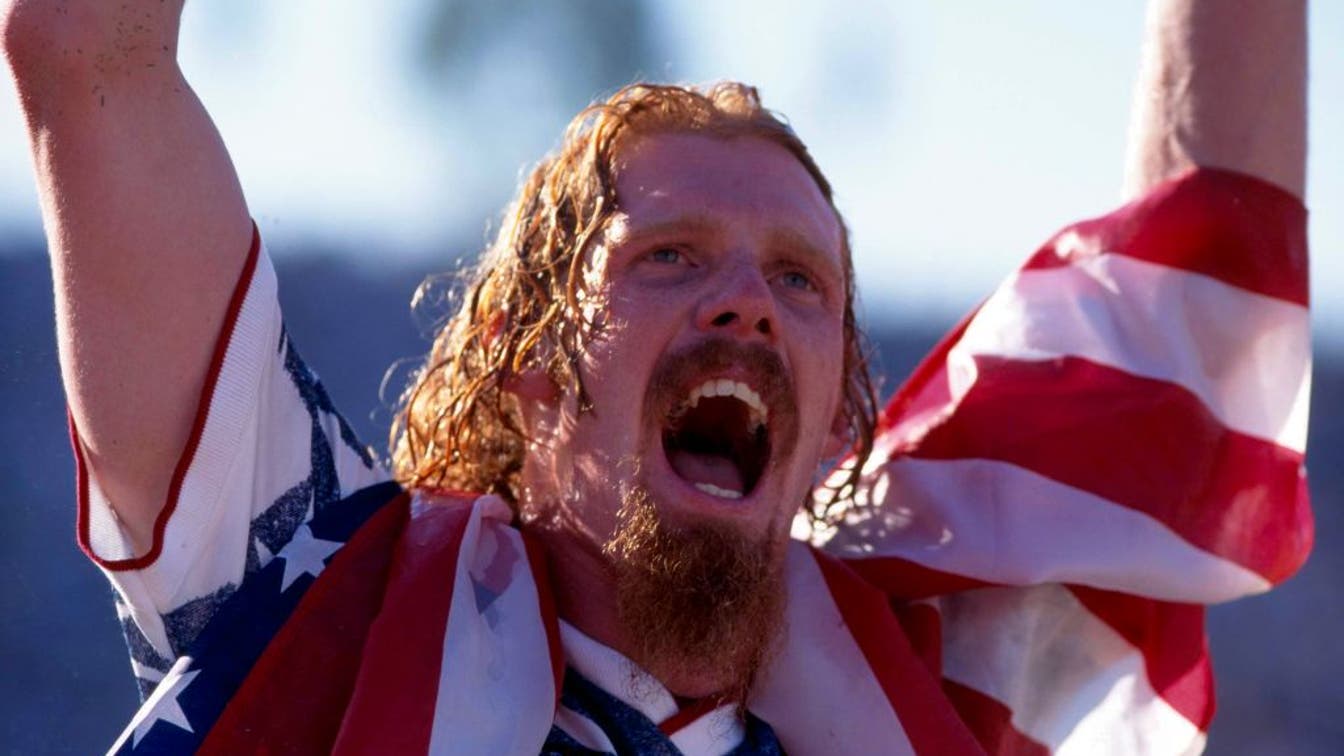
Alexi Lalas celebrates the World Cup group stage victory over Colombia in 1994. (Photo: Mark Leech/Getty Images)
When the tournament arrived, the United States was still considered naive. But after earning a tie against Switzerland, the Americans faced tournament favorites Colombia in front of a raucous Rose Bowl crowd. What followed was a historic upset that became America’s soccer equivalent of the 1980 “Miracle on Ice.”
“The final whistle blows, all hell breaks loose in the most positive way… I remember in 1980, when the American hockey team, Jim Craig, with a flag around him, and I, I wanted that moment to celebrate my country,” Lalas said. “Everyone thought we were going to lose to Colombia, right?”
The 2-1 victory was made even more overwhelming by the team’s humble realities. The US didn’t even have a domestic professional league at the time.
“When you talk about … ‘iconic wins,’ ‘best win ever.’ You look at that team with six guys, didn’t have a club team, we trained every day,” Balboa said.
“Cobi and I, we never played in a club and all our experience was international,” added Lalas.
Brazil breaks America’s hearts
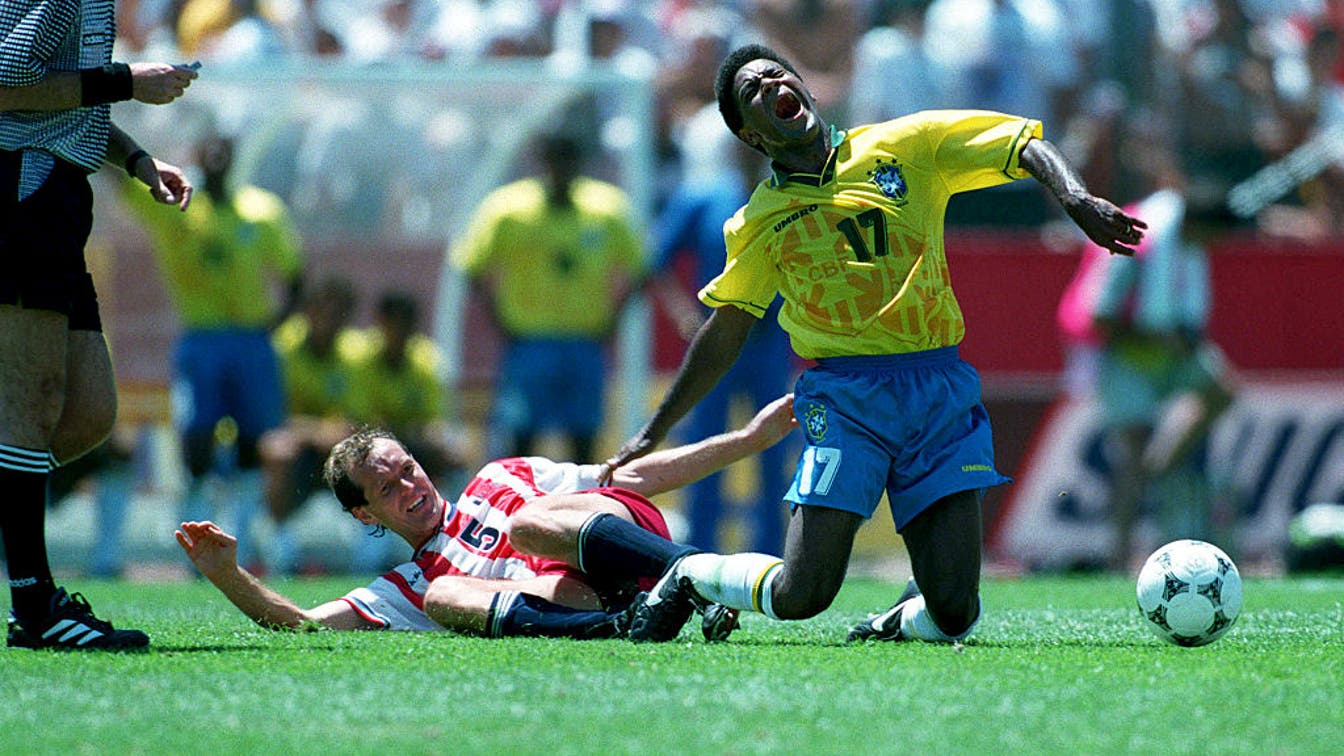
Thomas Dooley of the United States and Mazinho of Brazil challenge during a World Cup match in 1994. (Photo by Stewart Kendall/Sportsphoto/Allstar via Getty Images)
The dream run eventually collided with global powerhouse Brazil in the Round of 16 on the Fourth of July. The match reached a violent turning point when American playmaker Tab Ramos was hospitalized after a brutal elbow from Brazil’s Leonardo. Although Leonardo received a red card, the loss of Ramos devastated the American midfield.
“Just devastating, scared beyond belief because the way he landed,” Harkes said. “I cared about Tab. I didn’t care about the game at that point.”
The loss of Ramos not only hurt the United States and its players emotionally, but also tactically.
“Not only did we lose a player in Tab who left the field, but we lost from a practical perspective the guy who could hold the ball for us,” Lalas said.
Even down to 10 men, the eventual world champions continued to produce scoring opportunities.
In the 72nd minute, Brazilian forward Bebeto finally broke the deadlock, slipping a clinical shot through the tiniest of windows.
“The thing that annoys me about this goal is that I have the tackle… The problem is that I get to it and I overshoot it and it ends up going the only possible place through my legs and into the far corner there,” Lalas said. “This little magician right here, Bebeto, scores the goal that they need to go through and for all intents and purposes, our World Cup is over.”
Looking forward to this summer
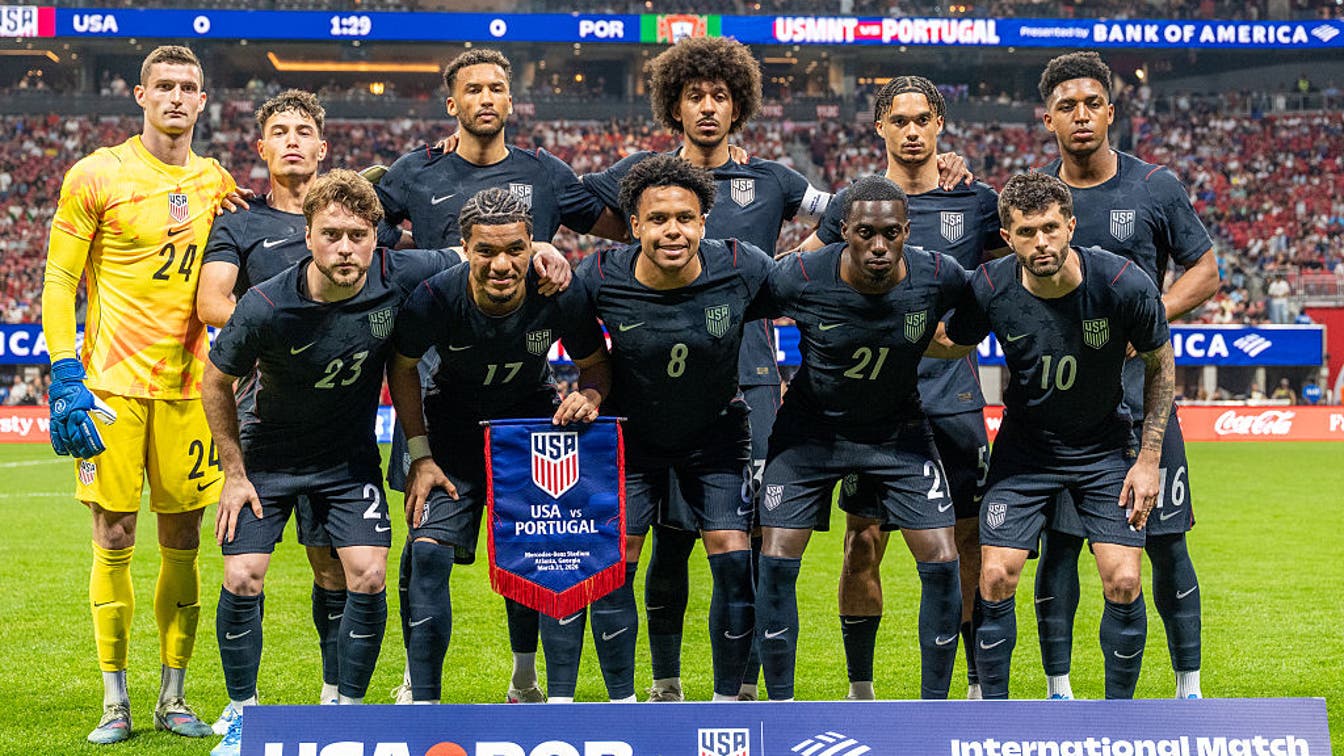
Can the 2026 squad build on the legacy of the 1994 pioneers? (Photo by Shaun Clark/ISI Photos/ISI Photos via Getty Images)
More than three decades after the Class of ’94 laid the groundwork, the World Cup returns to North American soil.
For the current generation of Americans, the tournament represents a massive launching pad to eclipse the history written by their predecessors.
“I think this team can go far. I think this team can go further than 2002,” Harkes said. I hope we reach a semi or even beyond. Why not? Why not us? Let’s believe it.”
As the pressure and expectations mount for the modern team, the pioneers of ’94 remind them that it takes a bit of audacity to change the sport forever.
“You have to have dreamers,” Alexi Lalas said.
2026 FIFA World Cup: How to watch
The 2026 FIFA World Cup will run from June 11 to July 19, 2026. Spread over three countries, the tournament will culminate with the final on July 19 at the New York New Jersey Stadium in East Rutherford, New Jersey. All 104 tournament games will be broadcast live across FOX (70) and FS1 (34) with every game streaming live and on-demand on both FOX One and the FOX Sports app. A record 40 games, more than a third of the tournament, are televised in prime time across FOX (21) and FS1 (19).
The June 11 opener between Mexico and South Africa (3 p.m. ET) will stream for free on Tubi, as will the USA’s June 12 opener against Paraguay (9 p.m. ET).