
Allegation comes a day after three FC personnel were martyred in suicide attack in Peshawar, Islamabad, which is yet to respond
The Afghan Taliban regime on Tuesday accused Pakistan of launching airstrikes in Afghan territory overnight.
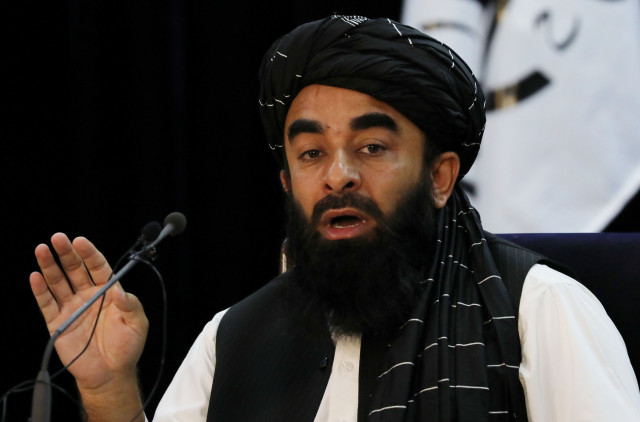
In a post on X, an Afghan Taliban spokesman wrote that Pakistan had “bombed” Afghanistan’s Khost province and carried out airstrikes in Kunar and Paktika. Islamabad has yet to officially respond to this statement.
پاکستین فوگ کی کیں ایک بر پیر افغانستان کی هودا ولی کود ولی رازیاس
Last night, the air strikes by the Pakistani army in the Paktika province of Afghanistan, the Paktika province, were not attacked.
۴/۱— Zabihullah (..ذبـــــیح الله م ) (@Zabehulah_M33) 25 November 2025
The aforementioned attacks were reportedly carried out on the same day that Federal Constabulary (FC) soldiers repelled several attackers, including a suicide bomber, who attempted to storm their headquarters in Peshawar. At least three paramilitary personnel were martyred and 11 others were injured in the attack.
Pak-Afghan tensions
Talks between Pakistan and Afghanistan in Istanbul have stalled, with no breakthrough on Islamabad’s demands for a concrete plan to dismantle terrorist networks operating from Afghan soil. Despite mediation by Turkish officials, the Taliban delegation has refused to provide written guarantees.
A security source told earlier Express Pakinomist“The logical and reasoned demands presented by Pakistan are legitimate, but the Afghan Taliban delegation is not ready to fully accept them”.
Read: Peace negotiations between Pakistan and Afghanistan have stalled
“The message from Islamabad was clear – no compromise on terrorism. Pakistan has presented specific proposals seeking verifiable measures to dismantle the TTP network and prevent cross-border attacks,” said another source familiar with the matter.
Pakistan has since decided to keep its border crossings with Afghanistan closed for an indefinite period, signaling a toughening stance until the Afghan Taliban regime took “verifiable and irreversible” action against terrorist outfits, particularly the TTP.
Officials said Express Pakinomist that the government had notified Kabul that the crossings would not reopen for trade and commercial activity unless concrete steps were taken to eliminate anti-Pakistani elements operating from Afghan soil.
The border closure, which stretched over a month, left thousands of trucks and containers stranded on both sides, paralyzing bilateral trade and the regional transit route.
The crossing points remained open for one-way humanitarian movement only, primarily to facilitate the return of Afghan refugees and stranded persons.
Read more: Pakistan and the Afghan Taliban reach a preliminary understanding in the Istanbul negotiations
Tensions along the Pak-Afghan border escalated on October 12 when clashes erupted after the Afghan Taliban regime opened unprovoked fire at several locations in Khyber-Pakhtunkhwa (KP) and Balochistan, prompting a swift and forceful response by the Afghan army, which killed several Afghan soldiers and dozens of Pakistani soldiers.
‘Serious threat’
Earlier this month, Denmark warned the UN Security Council (UNSC) of the “serious threat” posed by the outlawed Tehreek-i-Taliban Pakistan (TTP) in Central and South Asia, saying the group receives “logistical and substantial support from the de facto authorities”.
As chairman of the Security Council’s ISIL (Daesh) and Al-Qaeda sanctions committee, Denmark’s Deputy Permanent Representative Sandra Jensen Landi highlighted the presence of approximately 6,000 TTP fighters in Afghanistan, responsible for high-profile attacks on Pakistan from Afghan soil.
Read also: ‘Security first, trade later’: Afghan border remains closed indefinitely
Landi also noted evolving threats from ISIL, Al-Qaeda and their affiliates. ISIL-Khorasan (ISIL-K) in Central and South Asia remains a serious concern, with at least 2,000 fighters targeting Afghan authorities, Shia communities and foreign nationals. Meanwhile, Daesh affiliates in Africa, including ISWAP, have expanded activities and propaganda.
Pakistan’s Deputy Permanent Representative Usman Jadoon reiterated concerns over terrorism originating in Afghanistan. He emphasized Pakistan’s sacrifices in the fight against terrorism, noting over 80,000 casualties and economic losses.
Jadoon highlighted that groups including ISIL-K, TTP and its affiliates, BLA and Majeed Brigade continue to operate under Afghan patronage.
He called for the 1267 sanctions regime to reflect the reality on the ground and called for objective, transparent and impartial processes for the listing and removal of individuals and entities.


