- Prolonged disruption of the Strait of Hormuz could remove 8-10 million bpd from supply.
- Rising energy prices could fuel inflation and hurt global economic growth.
- Major shipping lines have begun to suspend fleet movements.
Crude oil prices rose on Monday in Asia amid unrest in the Middle East following US and Israeli military strikes on Iran.
Brent crude futures rose 13% to trade above $82 a barrel. barrel from Friday’s close of $72 in the first minutes of open trading, while prices for US benchmark West Texas Intermediate crude rose nearly 10% to cross $70 a barrel. barrel.
The price of Brent, the international benchmark for crude oil, already rose last week ahead of the strikes that began on Saturday.
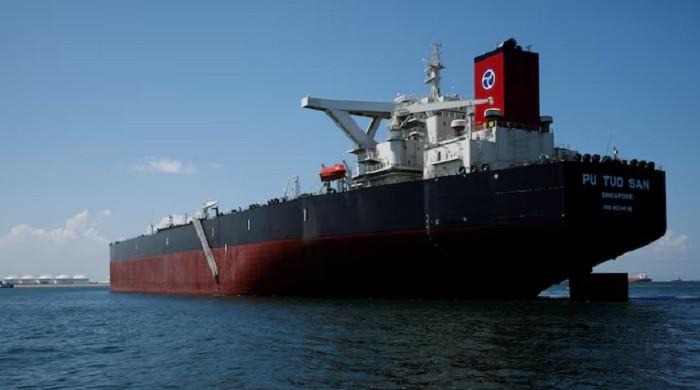
With the resulting regional unrest, maritime transport is threatened through the Strait of Hormuz, through which about 20% of global oil passes.
The key waterway is mostly but not completely closed as some Chinese and Iranian vessels are reported to have passed through.
In such a situation, insurance costs become prohibitive, said Amena Bakr, head of Middle East and OPEC+ research at analysts Kpler, predicting the price could hit $90.
The main shipping lines have already confirmed that they are suspending the passage of their fleets along the route.
Trump’s ‘Achilles heel’
“Even if some alternative infrastructure could be used to bypass the Strait of Hormuz, the net impact of its closure would be a loss of 8 million to 10 million bpd (barrels per day) of crude oil supply,” Jorge Leon, an analyst at Rystad Energy, said in a note on Saturday.
In theory, oil-importing countries have reserves, with OECD members having to maintain 90 days of oil stocks, but prices above $100 cannot be ruled out.
If the blockade of the Strait of Hormuz continues, “no matter how much spare capacity (in the strategic reserves) will not fill this gap. That gap is just too big”, Bakr said.
Another Kpler analyst, Michelle Brouhard, described high oil prices as “Trump’s Achilles heel.”
In her view, Iran will likely look to keep crude oil prices high to force Trump to back off on his low-price promise to voters at a time when the US is already gearing up for midterm elections at the end of this year.
‘Harmful effect’
Gas prices were also expected to rise on Monday as Qatar is a major exporter of liquefied natural gas, adding to inflation risks.
The increase in hydrocarbon prices is bad for the economy.
The last time crude oil prices rose above $100 was at the beginning of the war in Ukraine. Gas prices also rose sharply, which played a big part in a long period of rising prices.
Rising gasoline prices, higher energy prices, increased shipping costs and loss of revenue for air transport could have “a detrimental effect on growth”, said economist Eric Dor, of the IESEG School of Management in Paris.
“If it’s a matter of three days, it’s not serious. But if it’s over a longer period, then it will have a further recessionary effect,” he told AFP.