
Flights from Pakistani airports to Bahrain, Kuwait, Qatar, Sharjah, Dubai, Turkey, Iraq, Iran and others have been cancelled
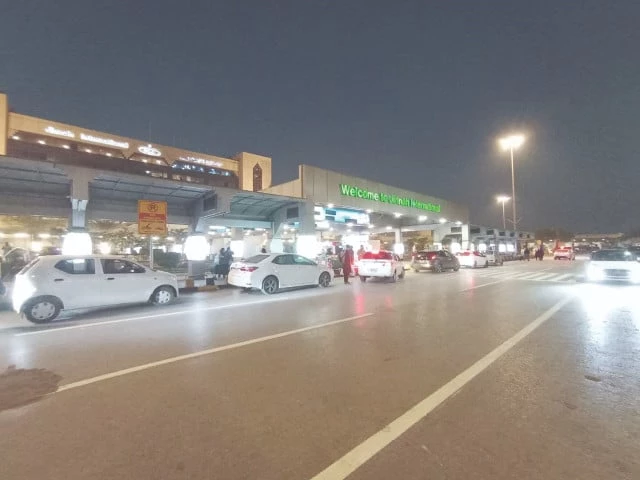
Jinnah International Airport, Karachi. Photo: Express
LAHORE:
Due to the regional conflict involving Iran, Israel and the United States, air operations from Pakistan to the Middle East, like other countries, have been severely disrupted. Over the past three days, more than 500 domestic and international flights have been cancelled, leaving thousands of passengers stranded.
Along with passengers, air cargo services have also been suspended, halting the transportation of various goods, including food and other supplies. It is still unclear when flights will resume.
According to data from the Pakistan Airport Authority, more than 500 flights departing from and arriving at various airports across Pakistan have been cancelled. The suspension of air cargo services has also disrupted the delivery of food and other goods, causing hardship not only to passengers but also to industrialists.
Flights from Pakistani airports including Lahore, Karachi, Islamabad, Peshawar, Quetta, Faisalabad and Multan operated by PIA, private airlines and foreign carriers to Bahrain, Kuwait, Qatar, Sharjah, Dubai, Turkey, Iraq, Iran and other countries have been cancelled.
Airport sources said some airspace has been closed, leading to suspension of operations. At this time there is no information on when flights will resume. Only flights to and from Saudi Arabia continue.
If the situation continues or worsens, air operations may be subject to further disruption. According to Khawaja Ayub Naseem, a senior executive of the Travel Agents Association, fear and uncertainty also make many Umrah pilgrims hesitate to travel.
Read: The US-Iran conflict disrupts thousands of flights as travel chaos deepens
Hundreds of pilgrims had booked tickets via Dubai. Although ticket refunds are possible, hotel reservations are non-refundable. If the situation continues, travel agencies may face losses of millions of rupees.
While Pakistan’s airspace remains fully accessible and safe, airlines have adjusted operations in response to the evolving security situation and restrictions in adjacent airspace.
Karachi’s Jinnah International Airport saw extraordinary activity over the weekend, with dozens of flights from foreign airlines diverted to Karachi, creating scenes reminiscent of the 1990 Gulf crisis.
According to aviation sources, a large number of foreign airlines were diverted to Karachi as regional airspace restrictions and security concerns forced pre-emptive diversion. Several planes were temporarily parked during the day, while many others landed to refuel.
In view of the extraordinary influx, the Pakistan Airports Authority (PAA) on Saturday issued a formal NOTAM highlighting limited aircraft parking space at the airport and directing airlines and flight crew to ensure prior coordination before operating into Karachi.
A PAA spokesman said a total of 27 flights were handled, including diversions, return flights, technical landings and diverted operations.
Read more: Karachi airport becomes hub for diverted Gulf flights amid escalating Middle East conflict
Karachi airport alone managed 13 diversions, including technical refueling stops. Additionally, four diversions were recorded at Lahore Flight Information Region, while two return diversions were handled at Islamabad Airport. Three flights returned to their original or alternate destinations, while five diverted flights passed through Karachi airspace without landing and were given alternate routes.
The sudden increase in traffic created operational challenges due to limited parking space, prompting airport authorities to warn airlines of possible delays.
The United States and Israel launched joint strikes in Iran that killed 201 and injured over 700. Iranian state media confirmed that 86-year-old Supreme Leader Ali Khamenei died while working in his central leadership along with family members, including his daughter and grandchildren.
Since then, Iran has attacked several US bases in neighboring Gulf states, including Dubai, Abu Dhabi, Bahrain, Qatar, Kuwait and Iraq.


