
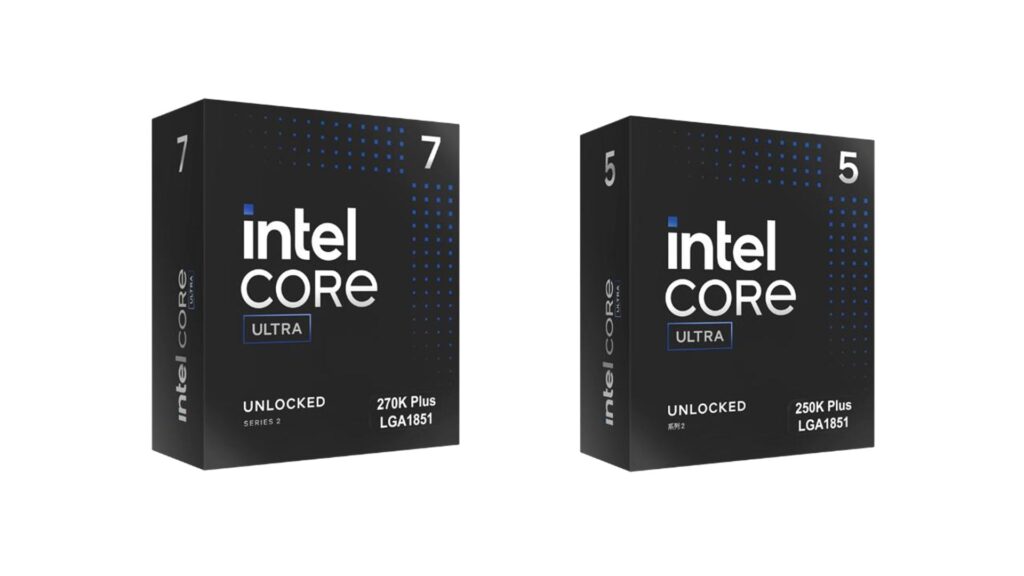
- The Intel Core Ultra 270K Plus improves Adobe Premiere workflows by 15% over the 9700X
- Rendering in Cinebench and Blender achieves up to 23% faster results
- 250K Plus outperforms previous generation AMD CPUs by about 35%
Intel’s latest Core Ultra 200S Plus series has attracted attention for delivering performance that is hard to ignore, especially compared to older Intel models and some similarly priced AMD processors.
In testing by Puget Systems, the 270K Plus and 250K Plus both increase E-core counts, boost clocks, and increase peak memory speeds, creating a tangible improvement over previous generations.
While AMD’s Ryzen 9 X3D chips remain strong in certain workloads, the new Intel chips close gaps in many professional applications.
The article continues below
Performance in rendering and content creation
In CPU-based rendering in applications such as Cinebench, V-Ray and Blender, the Core Ultra 7 270K Plus demonstrates impressive results, performing up to 9% of the more expensive 9950X3D, while often outperforming other CPUs in the same price range by up to 23%.
The 250K Plus also shows significant gains, often matching or beating older high-end AMD chips, with improvements of around 35% over the 245K.
These performance improvements relate not only to additional cores, but also to improvements in memory latency and bandwidth.
In Adobe Premiere, the 270K Plus performs as well as or slightly better than previous high-end Intel models and offers a 15% advantage over the 9700X.
This trend continues across intraframe codecs (13% faster than 245K), RAW processing (30% faster than 9700X) and QuickSync accelerated workflows.
After Effects shows a somewhat mixed picture: while the 270K Plus handles 2D tasks efficiently, 3D and tracking workloads favor AMD’s Ryzen chips.
DaVinci Resolve shows a similar balance, with the 270K Plus marginally leading in more CPU-bound tasks, while GPU-bound processes show little difference between the models.
In Unreal Engine shader compilation and Visual Studio builds, AMD’s 3D V-Cache processors retain some edge, but the 270K Plus outperforms older Intel models by up to 100% in some cases.
Compile times in particular show big gains over the 9700X, with improvements ranging from 15% to nearly 100% depending on the test scenario.
The 250K Plus also shows strong relative performance, often outperforming CPUs previously considered superior at the same price point.
Tests using the Llama and MLPerf benchmarks reveal modest improvements at the CPU level – and while the integrated NPU couldn’t be directly assessed, the 270K Plus consistently handles small models faster than previous Intel offerings.
This trend is consistent across content creation and professional workloads, with the new chips delivering strong performance gains without commanding a premium price.
Considering the $299 price and the improvements in memory and E-core architecture, the 270K Plus makes the 9700X, which retails for around $340, look underwhelming.
Follow TechRadar on Google News and add us as a preferred source to get our expert news, reviews and opinions in your feeds. Be sure to click the Follow button!
And of course you can too follow TechRadar on TikTok for news, reviews, video unboxings, and get regular updates from us on WhatsApp also.


