
PM, CDF discuss mediation efforts, capital under unprecedented security lockdown, dialogue closely watched
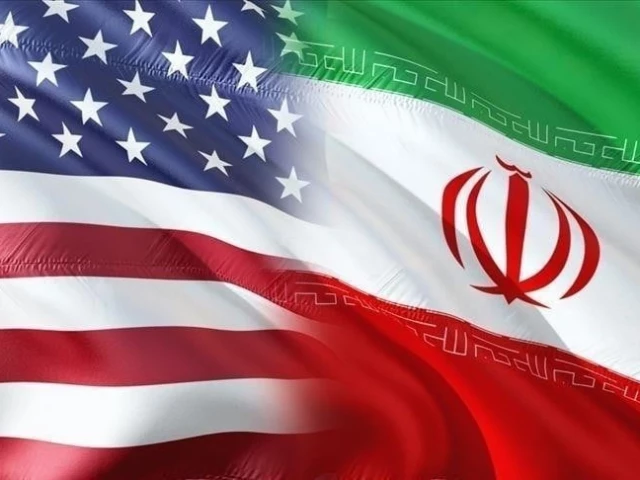
The US imposed new sanctions on Iran. PHOTO: ANADOLU
ISLAMABAD:
Pakistan is set to host what could prove to be one of the most consequential diplomatic engagements in recent history as senior leaders from the United States and Iran arrive in Islamabad for high-stakes talks following a devastating six-week war that has left thousands dead and pushed the global economy to the brink of recession.
Just three days after a fragile and hard-won ceasefire, the talks scheduled for Friday aim to determine whether the tenuous ceasefire can be turned into a lasting peace deal. With tensions still simmering in the Middle East, the Islamabad dialogue is being closely watched by world capitals as a critical test of diplomacy over conflict.
The US delegation will be led by Vice President JD Vance, accompanied by former President Donald Trump’s key Middle East envoys, Steve Witkoff and Jared Kushner. On the Iranian side, Parliamentary Speaker Mohammad Baqer Qalibaf is expected to head the delegation along with Foreign Minister Abbas Araghchi and other senior officials.
The presence of such dignitaries emphasizes both the urgency and seriousness of the situation.
Islamabad has effectively been placed under an unprecedented security lockdown ahead of the talks. Key routes have been sealed off, security personnel heavily deployed and surveillance tightened to ensure the safety of visiting dignitaries. Officials say the talks will take place in a secure, undisclosed location, away from the media spotlight.
“Pakistan is a host and a mediator,” a senior official said, calling for restraint and accountability in media coverage. “This is not a media spectacle. The goal is not optics, but results.”
Indeed, officials have emphasized that Pakistan’s role is not to seek recognition but to facilitate meaningful dialogue between two adversaries locked in decades of hostility.
While the details of the negotiating framework remain closely guarded, diplomatic sources indicate that both sides will initially hold separate meetings with Pakistani interlocutors. Islamabad is expected to act as an intermediary passing messages and proposals between the two sides. However, the possibility of direct face-to-face engagement between US and Iranian officials has not been ruled out.
The US is believed to be entering the negotiations with an expansive 15-point proposal. The plan reportedly covers key concerns, including Iran’s nuclear program, limitations on ballistic missile development, security of maritime routes, particularly the Strait of Hormuz, and broader regional stability.
For its part, Iran is said to be presenting a 10-point framework focused on securing firm guarantees against future military action, a gradual reduction of the US military footprint in the region, new arrangements for the Strait of Hormuz and a comprehensive regional de-escalation mechanism.
Despite the diplomatic momentum, the ceasefire itself remains fragile.
Meanwhile, ahead of the all-important talks, Field Marshal Syed Asim Munir, Chief of Army Staff and Chief of Defense Forces, met Prime Minister Sharif to review the progress of mediation efforts.
According to the prime minister’s office, both civilian and military leadership expressed satisfaction with the de-escalation achieved so far, but stressed that maintaining the ceasefire would require continued restraint from all parties.
They reiterated Pakistan’s readiness to provide “general support” to facilitate a negotiated settlement and stressed the importance of transforming the current lull in hostilities into a lasting peace framework.
Sources reveal that at a critical juncture the ceasefire was on the verge of collapse following Israeli attacks. However, Pakistan intervened diplomatically, persuading Tehran to exercise restraint and avoid retaliatory actions that could have reignited full-scale conflict.
This behind-the-scenes role has further elevated Pakistan’s position as a key diplomatic player at a moment of global crisis.
Still, officials remain cautious about expectations.
“This is a process, not an event,” said a diplomat familiar with the preparations. “There are deep trust deficits, complex issues and multiple stakeholders. A breakthrough is possible, but not guaranteed.”


