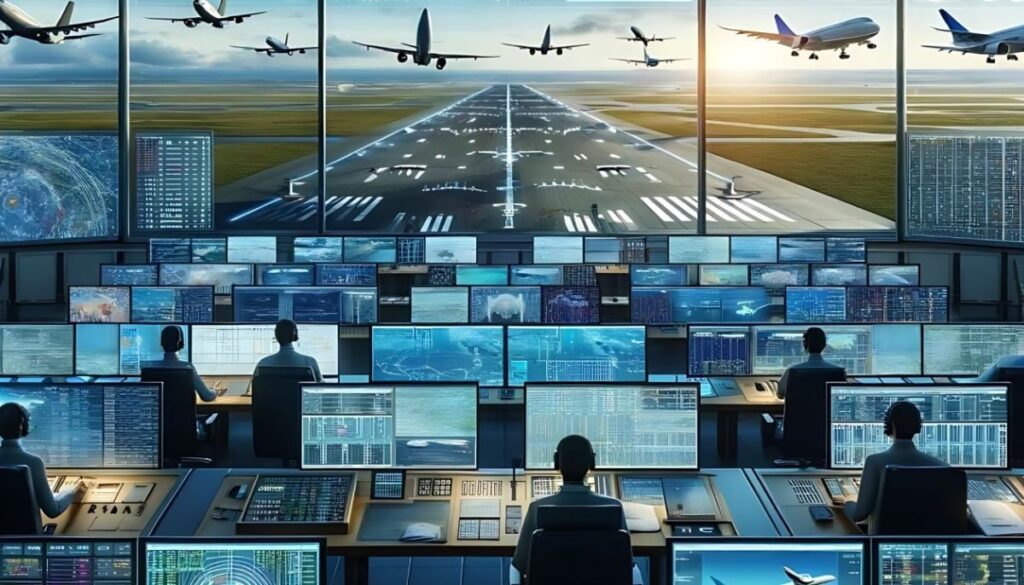
After a series of high-profile incidents at US airports, the federal government is moving quickly to modernize the nation’s aging air traffic control system. The price is 12.5 billion dollars and artificial intelligence is going to play a significant role.
Speaking to CBS News, Transportation Secretary Sean Duffy said, “AI is a tool, but we’re not replacing humans in how we manage the airspace.”
When asked if AI would replace air traffic controllers, he replied: “Hell no, it’s not going to happen.”
Air traffic control is one of the most high-pressure jobs in the world, and the idea of handing over responsibility to a machine is not something most people are comfortable with. Duffy’s position is that AI should make controllers better at their jobs, not replace them.
Artificial intelligence (AI) will be used to merge airline flight schedules with Federal Aviation Administration (FAA) data to detect potential congestion problems well before they develop.
Instead of struggling to deal with on-the-day delays, the software will flag conflicts weeks in advance and suggest small adjustments that move a departure by five or ten minutes, which is expected to help prevent bottlenecks from forming in the first place.
Duffy said: “This software will say, ‘We can see this 45 days out. Let’s move some of these planes a little bit later, or five, seven, ten minutes earlier and we can fix the problem’. Then you’re not late.”
The US Congress approved $12.5 billion for air traffic control upgrades through the Big Beautiful Bill last year.
The Department of Transportation says it has already replaced nearly half of all copper wiring across the system, upgraded about 270 radio sites, installed new surface awareness technology at 54 airports to help controllers track planes on the ground, and moved 17 towers from paper runways to electronic systems.
But the AI software itself has yet to be funded. Estimates put the cost somewhere between $6 billion and $10 billion, meaning Congress will have to act again before that part of the plan can move forward.
Duffy acknowledged the human element directly, saying: “We have humans navigating, controlling the airspace, and as humans we can make mistakes. That’s why I want to provide additional tools to support air traffic controllers.”