
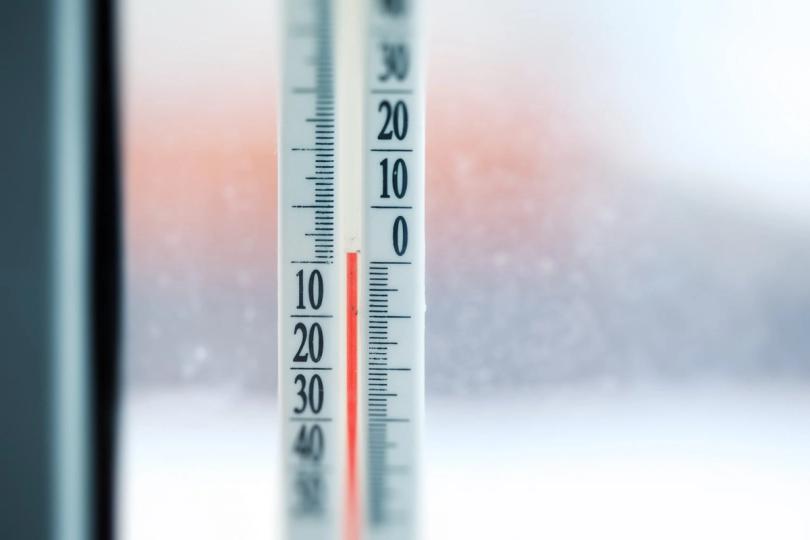
A few weeks ago, abnormal temperature increases at a Météo-France station near Paris-Charles de Gaulle (CDG) triggered a criminal complaint and an investigation. According to French media reports, the readings were linked to Polymarket bets that generated tens of thousands of dollars in winnings. Whether the full mechanics are ultimately proven exactly as suspected is almost beside the point. The real story is simpler: A market that settles money on a single physical observation is only as strong as the data chain beneath it.
Most commentators focus on how to prevent this specific incident from happening again. But the more important question is why anyone should be surprised that it happened at all.
When everything becomes tradable, everything becomes a goal
The same week this story broke in France, Polymarket announced the launch of perpetual futures contracts on crypto, stocks and commodities, with up to 10x leverage and no expiration date. Kalshi confirmed a similar product days later.
A Paris temperature bet and a leveraged Bitcoin perp seem like they belong in different worlds. They don’t. Both are expressions of the same underlying movement: markets expand into any domain where an outcome can be observed, measured, and decided. Prediction markets started with elections and sports, then moved to weather, then to 5-minute crypto price windows, and now to continuous derivatives on any asset class. The pitch has been consistent for years.
As these markets proliferate, so does the surface area for manipulation. The CDG incident is not an isolated curiosity. This is what happens when financial incentives meet fragile data infrastructure.
The oracle problem, in the physical world
In decentralized finance, the “oracle problem” refers to the difficulty of feeding reliable real-world data into systems that execute financial contracts automatically. The discussion tends to be abstract, focused on API redundancy and cryptographic verification of data feeds.
What happened at CDG, regardless of what the investigation ultimately concludes, is the oracle problem in its most concrete and physical form. A financial market worth real money settled with the output of a single instrument in a single location, with no cross-references, no redundancy and no anomaly detection. As a meteorologist, I can say that a sudden three-degree rise at a single station occurring in the early evening and absent from any neighboring observations would immediately raise questions in any operational forecasting context. The fact that it didn’t trigger any automated hedging before the financial settlement is what should worry us. This vulnerability is not specific to Polymarket.
Weather derivatives on the CME, parametric insurance contracts, agricultural index products, catastrophe bonds with parametric triggers: every one of these instruments depends on the integrity of observational data. And the vast majority still rely on surprisingly thin data pipelines. The industry has spent decades refining pricing models and regulatory frameworks. It has almost nothing invested in determining what confirms the data that triggers the payout.
The right infrastructure race
If any measurable risk is to become an instrument that is continuously priced, tradable, and I believe the direction is now irreversible, then the critical bottleneck is not the trading platform, the blockchain or regulatory approval. It is the data certification layer.
Who measured the temperature? With what instrument? When was it last calibrated? How many independent sources confirm the reading? Who can audit the chain of custody? These questions are not glamorous and will never attract the attention that a new commercial product does. But they are the supporting structure. Without answering them, you end up with what we saw at CDG: A system that can be compromised by someone with a heat source and a bus ticket to Roissy.
The companies that will define the next decade of parametric and predictive markets are not the ones building the most impressive trading interfaces. They are the ones who build the trust layer between the physical world and financial settlement: certified, multi-source, tamper-proof data infrastructure. The plumbing system is unglamorous. It is also the only thing that makes the rest of the architecture believable.
In fifteen years, insurance will undergo a similar development
The traditional insurance model works like this: an incident occurs, a claim is filed, an adjuster visits, a negotiation unfolds, and a payment is made weeks or months later. This model is a product of a world where we could not observe, measure and verify losses in real time. It was designed for information scarcity.
That scarcity is ending. Satellite images are now resolved with sub-meter precision. IoT sensor networks provide continuous environmental monitoring. Weather models assimilate observations in near real time. Settlement can be done onchain in seconds. The infrastructure for continuous, parametric, self-executing risk transfer is being assembled and the pace is accelerating.
Within fifteen years, if your vineyard suffers a late frost, you won’t be calling your broker. A parametric contract, priced in real time against a continuously updated risk surface, is automatically settled the morning after the event. The payout will reach your account before you finish inspecting the vines.
That product will systematically be cheaper, faster and more transparent than traditional indemnity insurance. Not because it covers another risk, but because the transaction cost structure totally collapses. No adjustments, no claims adjusters, no moral hazard investigations, no 18-month billing cycles. When you remove so much friction from risk transfer, you don’t improve the existing product. You replace the architecture.
Prediction markets, perpetual contracts, weather derivatives and parametric insurance: these are not separate industries evolving in parallel. They are stages along the same trajectory: the progressive financialization of any observable risk, priced continuously, settled instantly and available to anyone willing to pay the market price.
The CDG incident may have involved tens of thousands of dollars. Its real importance lies in its role as an early signal. The future of risk transfer will depend entirely on the quality and integrity of the data underneath, and right now that layer is dangerously underdeveloped.


