
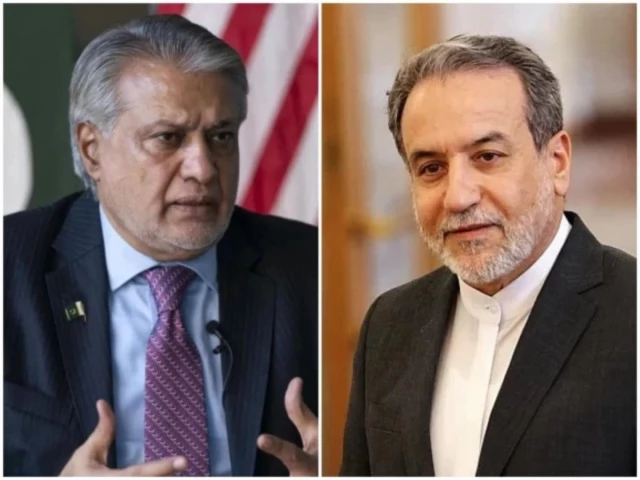
FM Dar and Araghchi exchange views on recent regional developments, ongoing diplomatic efforts
Foreign Minister Ishaq Dar and Iran’s Foreign Minister Abbas Araghchi. Photo: Files
Iran on Thursday thanked Pakistan for facilitating the repatriation of its nationals from seized vessels, while appreciating the latter’s diplomatic and humanitarian support amid the negotiation process with the United States.
The actions were revealed in a call between Deputy Prime Minister and Foreign Minister Ishaq Dar and his Iranian counterpart Abbas Araghchi.
According to a statement issued by the Ministry of Foreign Affairs, the two leaders exchanged views on recent regional developments and ongoing diplomatic efforts aimed at promoting peace and stability.
“Araghchi briefed FM Dar about his recent visit to China and the consultations held on regional and international issues of common interest,” the statement read.
DPM/FM Senator Mohammad Ishaq Dar @MIshaqDar50 spoke today with Iran’s Foreign Minister Abbas Araghchi @Araghchi.
The two exchanged views on recent regional developments and ongoing diplomatic efforts to promote peace and stability.
FM Araghchi briefed DPM/FM on… pic.twitter.com/fjODsbcGQ7
— Ministry of Foreign Affairs – Pakistan (@ForeignOfficePk) 7 May 2026
Pakistan on Monday facilitated the transfer of 22 Iranian crew members on board the container ship MV Touska, seized by the US.
On February 28, the United States and Israel launched a joint offensive against Iran. Iran responded with its own attacks on Israel and the Gulf states that host US bases. US-Israeli attacks on Iran and Israeli attacks in Lebanon have killed thousands of civilians and displaced millions.
The war has been on hold since April 8, when Pakistan brokered a two-week ceasefire. After the ceasefire, Pakistan hosted the highest-level US-Iran talks since the 1979 Islamic Revolution, which ended without a deal, but the ceasefire held.
Despite the ceasefire, the US began intercepting Iranian ships.
Iran later blocked almost all ships passing through the Strait of Hormuz except for its own, when US President Donald Trump imposed a separate blockade of Iranian ports.
The closure of the strait, a choke point for about 20% of global oil and liquid natural gas shipments, resulted in a phenomenal increase in global oil prices.


