
The Senate Banking Committee plans to hold its long-awaited markup hearing for the Digital Asset Market Clarity Act of 2025 (also known as the Clarity Act) on Thursday, May 14 at 10:30 am.
The Clarity Act was largely in limbo after Coinbase CEO Brian Armstrong announced the exchange was withdrawing its support over the stablecoin dividend and other provisions in January. Senators Thom Tillis and Angela Alsobrooks last week released a compromise text dealing with dividends that would prohibit crypto companies from offering returns on static stablecoin reserves but allow rewards for stablecoins involved in activities, seemingly addressing one of the main issues blocking the bill from advancing.
The committee did not publicly release the full text of the updated bill at press time.
The banking industry groups said they had problems with this compromise text and wanted to provide feedback. A letter released by several banking trade associations, including the American Bankers Association, the Bank Policy Institute, the Independent Community Bankers of America, the National Bankers Association and the Consumer Bankers Association, said on Friday that “further work is needed to arrive at a text that embraces the innovation represented by digital assets while protecting consumers.”
The letter contains recommendations with specific changes to the text of the provision that was released last week.
The scheduling of a markup hearing suggests lawmakers are ready to move forward with the current version of the text regardless of those concerns.
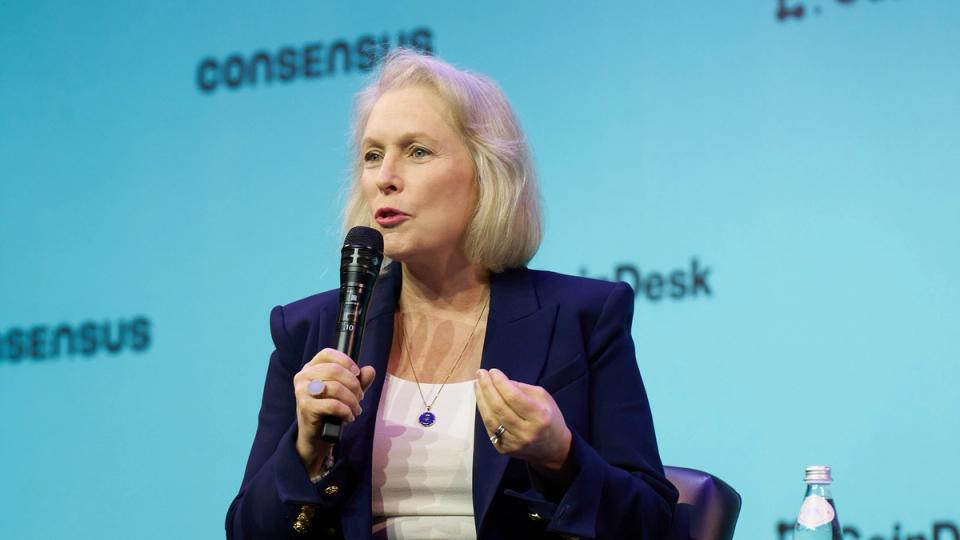
There are still other outstanding issues — Senator Kirsten Gillibrand, a longtime champion of the crypto industry, told the audience at Consensus Miami last week that the Clarity Act needs an ethics provision that prevents high-ranking officials from profiting from the crypto industry while regulating it. Her office reiterated that position in a press release Thursday, which cited CoinDesk-commissioned polling data showing that 73% of registered U.S. voters believe senior government officials should not have business ties to the industry.
However, this issue may not be addressed in the Senate bench version of the bill; after the bank markup, the Senate must merge this version of the bill with the Senate Agriculture Committee’s version before the full Senate can vote to advance the bill.


