- The announcement follows US President Donald Trump’s visit to Beijing.
- Boeing highlights the agreement as an important milestone for the US aviation industry.
- The company says the deal marks the reopening of the Chinese market for flight orders.
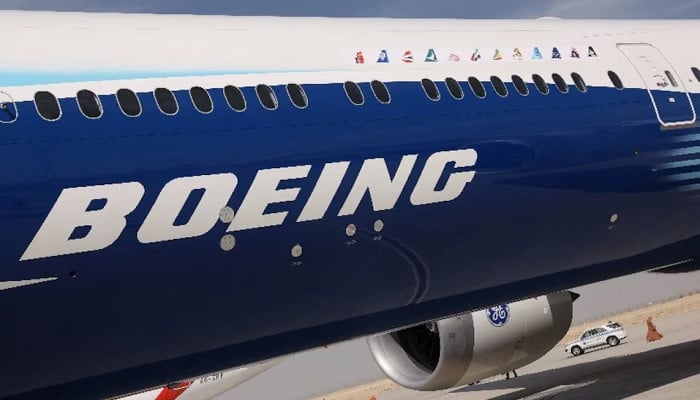
Aviation giant Boeing confirmed on Friday that China had committed to buy 200 aircraft, as previously announced by US President Donald Trump during his visit to Beijing.
“We had a very successful trip to China and achieved our major goal of reopening the Chinese market for Boeing aircraft orders,” the company, whose chief executive, Kelly Ortberg, was part of the US delegation to China, said in a statement.
“This included an initial commitment for 200 aircraft, and we expect additional commitments to follow after this initial tranche,” Boeing said, thanking the Trump administration “for making this milestone happen.”
“We now look forward to continuously meeting China’s demand for aircraft,” it said.
China’s last order from Boeing dates back to 2017, when Trump went to Beijing at the beginning of his first term in the White House. At the time, it ordered 300 single-aisle and wide-body aircraft — a megadeal worth $37 billion.
On Thursday, Trump had referred to the new Boeing commitment, telling Fox News host Sean Hannity in an interview: “I think it was a commitment.”
“That’s a lot of jobs,” the president added.
Speaking to reporters aboard Air Force One as he flew home from China, Trump said the deal contained “a promise of 750 aircraft, which will be by far the biggest order ever if they do a good job with the 200.”
US media have reported for months that Beijing was poised to place a major order from Boeing that would include 500 single-aisle 737 MAXs and about 100 larger 787 Dreamliners and 777s.
“He (Xi) committed to 200 Boeing, big, 777s and 737s, and a lot of big, big, big, beautiful Boeing planes,” Trump said in the Fox News interview that aired Friday night.
For China, such a large order will ensure capacity to continue growing its aviation market, as production of its home-grown COMAC C919 narrow-bodies falls short of ambitious targets.
It would also help Boeing narrow the gap with rival Airbus, which has pulled far ahead in China in recent years.
An estimate by aviation intelligence and advisory firm IBA puts the value of the 200-plane order at about $17 billion to $19 billion, assuming 80% of the mix consists of MAX jets.
“However, this figure could increase to $25 billion if a larger share (around 40%) of the total order is announced for the widebody aircraft,” said IBA’s Samuel Kenekueyero.
The deal would be a much-needed victory for Trump, whose aggressive tariffs and other trade policies have so far failed to make much of a dent in the large US trade deficit.
An order for more than 500 jets, if it materializes, would be the largest in aviation history, surpassing IndiGo’s 500-plane deal for Airbus narrowbodies, although China’s purchases would likely be split between its three major state-run carriers.
Order size below expectations
The U.S. plane maker’s shares had fallen nearly 4% on Thursday after Trump told Fox News Channel that China had agreed to buy 200 jets, well below analysts’ expectations. They fell about 2.6% on Friday, while GE Aerospace shares fell 2%.
Industry sources have said Boeing was initially in talks for at least 500 narrowbody jets tied to the Beijing summit, with dozens of widebody jets and potentially as many as 200 to follow at a later date.
Trump said Xi would pay a return visit to Washington in September, suggesting it could be the focal point for the next tranche of potential aircraft orders.
However, concerns over after-sales support have weighed on purchase decisions, said Li Hanming, an independent expert on China’s aviation industry.
“The reason China is not buying is very simple: Nobody wants to buy anything without guaranteed after-sales maintenance and support. Last May, the US was still threatening export restrictions on parts. If they impose parts embargoes like that, who would still dare to buy Boeing?”