
ISLAMABAD:
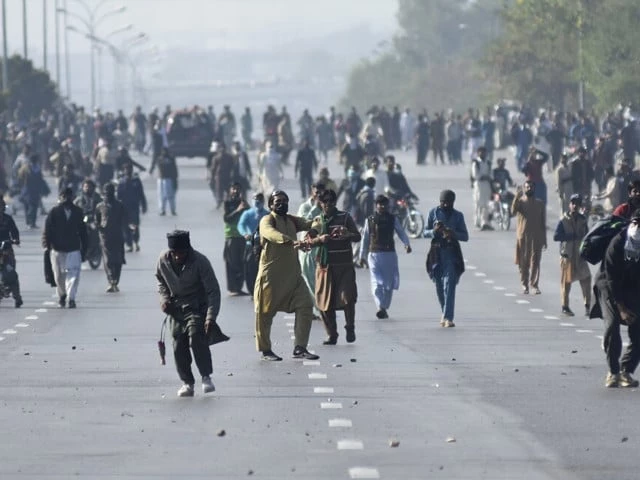
Major opposition political parties are gearing up for protests against the government over rising inflation on Friday, but they are unable to join forces as Tehreek-e-Tahafuz Ayeen-e-Pakistan (TTAP), Jamiat Ulema-e-Islam (F) and Jamaat-e-Islami (JI) announced their separate plans, underscoring a lack of unity among their ranks.
Some of the parties openly expressed their lack of confidence in Pakistan Tehreek-e-Insaf (PTI), the main opposition party, and hence decided to stay away from their protest call.
Separate protests are being planned over inflation and governance.
TTAP, whose main alliance includes the PTI, is also focused on demands related to former prime minister Imran Khan’s imprisonment and access to medical treatment.
Despite overlapping anti-government rhetoric and shared criticisms of governance and economic conditions, efforts towards a united opposition protest front appear unlikely, revealing continued mistrust and fragmentation in the opposition camp.
The latest protest call came from TTAP, which announced nationwide demonstrations on May 22 after a late-night alliance meeting attended by PTI leaders and allied opposition figures on Monday.
The announcement came after Opposition Leader in the National Assembly Mahmood Khan Achakzai warned that the opposition would intensify its response if meetings with Imran Khan and demands regarding his medical treatment were not eased.
Separately, JUI-F chief Fazlur Rehman had already announced protests over inflation and economic conditions during a rally in Karachi on May 15, while JI chief Hafiz Naeemur Rehman has also filed a constitutional petition against rising fuel prices and taxes on Tuesday and announced a nationwide protest movement starting on May 22 against inflation.
Despite the convergence of protest timelines, senior leaders from both JUI-F and JI indicated that they were not considering participating under a joint protest umbrella led by TTAP- or PTI-backed forces.
Senior JUI-F leader Kamran Murtaza said it was better that each party conducts its own protest and explained that the JUI-F still had “trust issues” with the PTI.
He said that in previous political engagements, including cooperation on constitutional issues such as the 26th Amendment, his party had participated in joint processes, did whatever the PTI asked of them, but later felt that it was unfairly blamed after this development ended.
He suggested that similar concerns persisted in later developments, contributing to continued mistrust between the two sides despite overlapping opposition positions against the government.
JI Pakistan Deputy Chief Liaquat Baloch also ruled out the possibility of a common protest platform, saying that each political party had the right to mobilize from its own platform.
Responding to questions about the absence of a common opposition platform, PTI Sindh Provincial President Haleem Adil Sheikh argued that political parties should at least unite on public issues such as inflation and governance, regardless of broader political differences.
He said that TTAP had earlier tried to build broader coordination on economic issues and that Achakzai had earlier conveyed to Fazl during a meeting that while parties might disagree on other policy issues, they should at least issue a joint statement on the issue of inflation.


