
Senior provincial minister says IRSA’s decisions are exacerbating shortages and threatening Karachi’s water supply
Protesting the ongoing water shortage, the Sindh government on Sunday accused the Indus River System Authority (IRSA) of unfairly reducing the province’s water share and urged the federal government to intervene immediately.
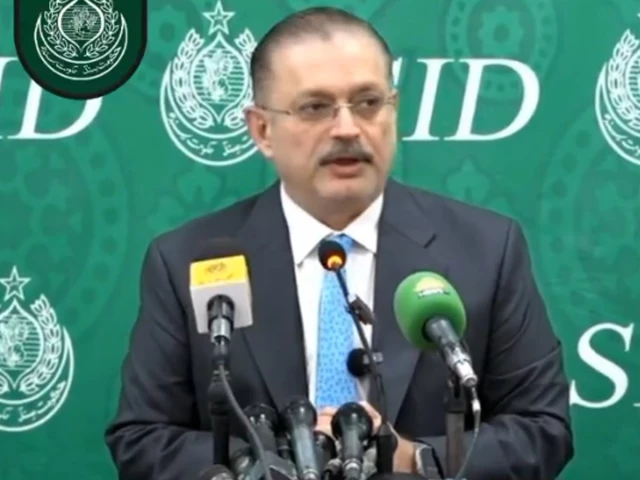
In a statement, senior minister Sharjeel Inam Memon said Sindh had been facing a 22 percent water shortage for several days, with 42 percent shortage at Guddu Barrage and 29 percent at Kotri Barrage.
“IRSA’s recent behavior is a violation of the 1991 water agreement and a blatant injustice to the people of Sindh,” Memon said.
Sindh में पानी की संस्टिल कोल्ट उरसा की जेंबे सिंद्ध साथ गीफर सिंद्ध सिंध गुर्व का अग्टान
The senior provincial minister, Sharjeel Inaam Maiman, has said that the 1991 water apportionment must be fully protected under Sindh’s rights. கியு ப்பு ப்பு க்கு க்கு ப்ப்பு குக்கு ப்பு ந்து நை நிய்… pic.twitter.com/VLKBvnVcUc
— Sindh Information Department (@sindhinfodepart) May 31, 2026
He said the reduction in Sindh’s water share created serious risks for Karachi, whose water supply depended on the Indus river system.
“The unfair reduction in Sindh’s water share creates serious risks even for Karachi, the country’s economic hub,” he said, adding that the city was already facing a significant gap between water demand and supply.
Memon accused IRSA of ignoring Sindh’s objections and further reducing the province’s allocation under the principle of “deficiency compensation”.
“IRSA is further reducing Sindh’s share in the name of deficiency compensation, which is unacceptable,” he said.
The minister said Sindh had repeatedly maintained that additional water entering the river system due to extraordinary rainfall could not be drawn from the province’s allotted share.
Sindh में पानी की संस्टिल कोल्ट उरसा की जेंबे सिंद्ध साथ गीफर सिंद्ध सिंध गुर्व का अग्टान
The senior provincial minister Sharjeel Inaam Maiman has said that the 1991 water treaty of Sindh is taking practical steps to provide a complete and legitimate part. Pakistan People’s Party and Sindh… pic.twitter.com/lBHHQCIDc9
— Sindh Information Department (@sindhinfodepart) May 31, 2026
“IRSA’s decisions continue to reinforce the perception that Sindh is being subjected to discriminatory treatment,” he said.
Memon stressed that Sindh’s rights under the 1991 Water Sharing Agreement should be fully protected.
“No province can be given preference over another province’s share,” he said.
He also questioned the transfer of water through Chashma-Jhelum and Taunsa-Panjnad link canals while Sindh’s barrages, canals and agricultural areas continued to face shortage.
“When the province’s barrages and canals suffer from shortages, why prioritize connecting canals?” he asked.
The minister said the issue was no longer limited to agriculture and had also become a challenge for urban centres.
“The supply of drinking water to Karachi and other cities in Sindh is directly connected to the Indus river system,” he said.
Memon warned that reduced flows at the Kotri Barrage and its associated canals could affect Karachi’s water supply system and increase the risk of disruption to residents.
“The consequences of water scarcity will also be felt in Karachi’s drinking water supply, industries and overall economic activity,” he said.
Sindh में पानी की संस्टिल कोल्ट उरसा की जेंबे सिंद्ध साथ गीफर सिंद्ध सिंध गुर्व का अग्टान
Senior Provincial Minister Sharjeel Inaam Maiman has said that Karachi is on the Sindh River and there has been a continuous shortage of water in Sindh.
They… pic.twitter.com/PjHzfr74Mf
— Sindh Information Department (@sindhinfodepart) May 31, 2026
The minister called the situation unacceptable and urged the federal government to take immediate notice of IRSA’s decisions.
“We demand that the federal government take practical measures to ensure that Sindh receives its full and rightful share under the 1991 water agreement,” he said.
Memon said the Pakistan Peoples Party and the Sindh government would not compromise on Sindh’s water rights.
He also urged the IRSA to review its decisions, saying any reduction or unfair distribution of Sindh’s share of water was against the interests of the province.
Separately, Memon criticized the Muttahida Qaumi Movement-Pakistan (MQM-P), accusing the party of trying to revive its politics through what he called baseless allegations and outdated narratives.
Responding to a press conference of MQM-P leaders, he said the party’s politics had historically revolved around slogans, accusations and the creation of crises.
“Even today MQM is repeating the same old approach,” he said.
Memon alleged that the party had tried to create controversies around provincial autonomy, constitutional powers and the local government system.
Defending the Sindh government’s development initiatives in Karachi, he said projects like the Yellow Line and Shahrah-e-Bhutto reflected the government’s commitment to practical work.
“The Yellow Line, Shahrah-e-Bhutto and other projects are proof that the Sindh government believes in practical work,” he said.
He added that legal or administrative disputes regarding public spaces should be resolved through courts and relevant institutions.
The minister said persons who had contributed to the city’s problems through inefficient governance and interest-driven politics were now trying to portray themselves as saviors.
Sindh’s senior minister Sharjeel Inaam Maiman, responding to MQM Pakistan’s leadership conference, has said that MQM is unsuccessfully trying to revive its politics with the help of baseless falsehoods. অনানে কায়া কায়ান pic.twitter.com/P57CNkb8jn
— Sindh Information Department (@sindhinfodepart) May 31, 2026
“The Sindh government has not only devolved powers to local government institutions but has also provided them with financial resources and legal support,” he said.
Memon maintained that Karachi belonged to all Pakistanis and not to any single political party.
“Karachi is the economic center of Pakistan,” he said. “Those who criticize any development initiative as their political weapon are in fact acknowledging their own political downfall.”


