
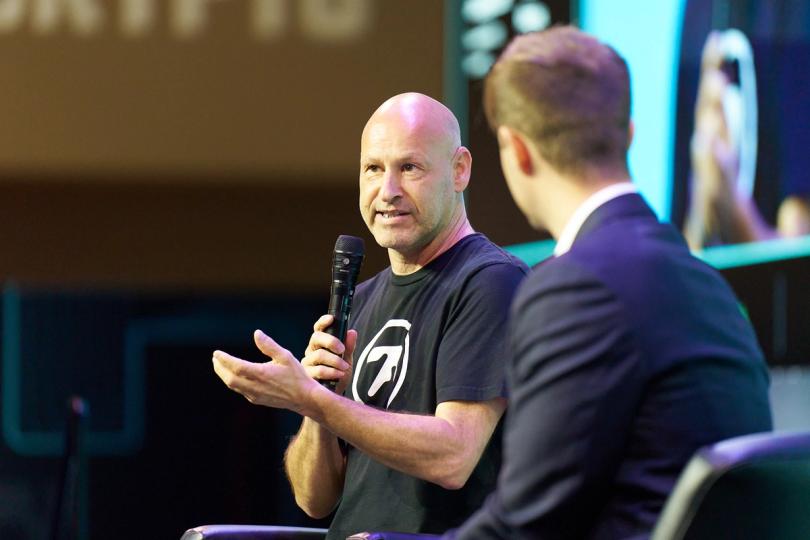
Ethereum Foundation budget cuts, staff layoffs and management changes have fueled weeks of criticism from parts of the blockchain community, but Joe Lubin, who was involved in its creation and is now CEO of software developer Consensys, said the moves are a necessary development, not a crisis.
Lubin, who has no role in the foundation, told CoinDesk that the organization’s role should be narrower, more focused on managing the network’s core technology and values, while other organizations take responsibility for adoption, institutional engagement and ecosystem growth.
“It is important that the Ethereum Foundation is credibly neutral above reproach,” Lubin said in an interview. “The potential for conflicts of interest between the business side and the builders is just not a credibly neutral way to run your decentralized protocol ecosystem.”
The comments come after weeks of debate about the fund’s direction. Critics have questioned whether the organization, often known by its initials, has moved quickly enough to address competitive threats and improve Ethereum’s market position, while others have raised concerns about layoffs and restructuring.
Lubin said many of those concerns stem from a misunderstanding of what the fund should do for the blockchain, which handles about 2 million transactions a day, according to Etherscan data.
“What’s happening at EC is cleaning it up,” he said, referring to efforts to separate protocol management from commercialization and business development.
According to Lubin, Ethereum’s future will be shaped by multiple organizations rather than a single dominant institution.
“I think it will be clear that there will be a handful of large nodes that are stewards of the Ethereum ecosystem and leaders in different niches or different specialties in the Ethereum ecosystem,” he said.
That model differs from other blockchains, where protocol development and commercial strategy are often placed under the same umbrella. Lubin said Ethereum’s decentralized nature calls for a more distributed institutional structure.
The Ethereum co-founder also pushed back on a broader narrative that Ethereum itself has entered a period of decline. “Ethereum is not going down, not at all,” he said.
Still, Ethereum and the rest of the crypto industry are facing a new rival competing for funding and investment. Artificial intelligence has supplanted crypto as the dominant technology narrative in recent years, said.
“We were the cool kids, the edgy bringers of the new excitement in the economy and society. We’re not front and center right now in terms of capital inflows, investment,” he said.
But he argued that Ethereum’s years-long focus on scaling infrastructure is beginning to position the network for a new wave of adoption.
Among the trends he highlighted were autonomous AI agents that perform on-chain transactions and growing institutional use of Ethereum-based infrastructure.
“A next big wave is agent commerce, where the hybrid human-machine economy begins to make use of our rails,” said Lubin.
For Lubin, these new use cases are precisely why the Ethereum Foundation is narrowing its focus. As new organizations take charge of adoption and commercialization, he argued, the foundation’s job is to stay focused on the protocol itself and ensure it can support the next generation of activities built on top
Read more: Why the Ethereum Foundation is suddenly back at the center of crypto’s culture war


