
- Donated Texas parkland is now becoming a multimillion-dollar industrial data center project
- Residents fear the constant industrial noise next to homes built near the former recreational farmland
- Texas officials expect millions in future tax revenue from controversial development deal
Nearly three decades after a Texas farmer donated 87 acres of land for community recreation, residents are protesting plans to instead turn the site into a sprawling commercial data center development.
The disputed land is located in Taylor, Texas, where longtime residents recall generations of children using the open fields for sports, camping and gatherings.
According to filed deed records from July 1999, local farmer Mr. Blend the property for just $10 through a public trust arrangement.

Residents face massive data center proposal
Pamela Griffin, whose family lived next to the property for decades, recalled Bland telling her father, “I see the kids don’t really have anywhere to play.”
She also recalled him adding, “I’m thinking of giving this land to parkland because these kids need a place to play.”
Public records later showed the property passed through several nonprofit and municipal entities before finally reaching the city of Taylor in 2003.
Five years later, city officials transferred ownership to the Taylor Economic Development Corporation for approximately $15,000, significantly changing the property’s administrative direction thereafter.
The controversy intensified in 2025 after Taylor Economic Development Corporation sold the same property to developer Blueprint for $10 million.
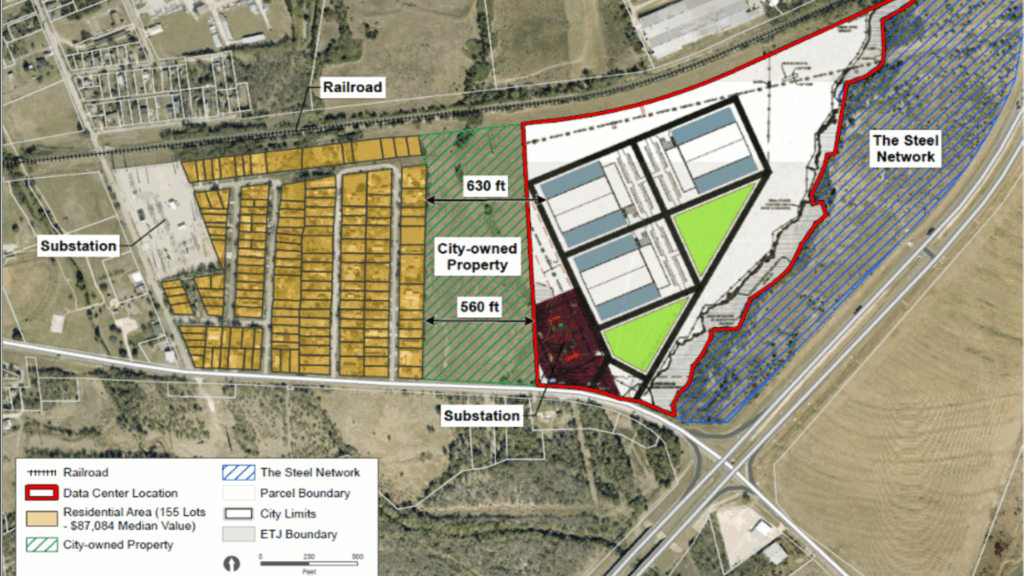
Blueprint intends to build a 135,000-square-foot data center next to residential neighborhoods, rail infrastructure and an existing electrical substation near Griffin’s home.
Griffin explained that she only learned about the proposed facility after neighborhood organizers contacted residents while gathering opposition to the 2025 development plans.
She said her family knew little about modern data centers before examining the facilities and considering possible impacts on nearby residential communities.
Residents subsequently raised concerns regarding electricity demand, industrial noise and environmental impact.
They are also concerned about its potential effects on the local water systems around the proposed development area.
Correspondence from municipal authorities reportedly assured residents that several safeguards would reduce potential disruptions associated with the operation of the future facility nearby.
Officials discussed mitigation measures, including constructed barriers, closed water cooling systems and a dedicated electrical substation.
Some homeowners nevertheless fear that proximity to industrial digital infrastructure could reduce surrounding property values.
Legal and financial pressure around development
City officials maintain that existing zoning significantly limits municipal authority over commercial uses allowed within the designated boundaries of the Employment Development District.
Investigations by 404 Media suggested that municipal restrictions largely involve architectural oversight because current zoning regulations already allow industrial technology facilities in this district.
The developer reportedly still requires building approvals and building permits before major construction activities can legally begin across the disputed property area.
Meanwhile, municipal officials continue to defend the deal through projected economic benefits expected from expanded commercial tax collections over the coming decade.
Officials estimate the project could generate approximately $30 million in additional tax revenue, including nearly $20 million earmarked for local education funding.
Despite these projections, critics argue that the dispute increasingly reflects broader tensions between municipal development ambitions and longstanding community expectations around donated public land.

Follow TechRadar on Google News and add us as a preferred source to get our expert news, reviews and opinions in your feeds.


