
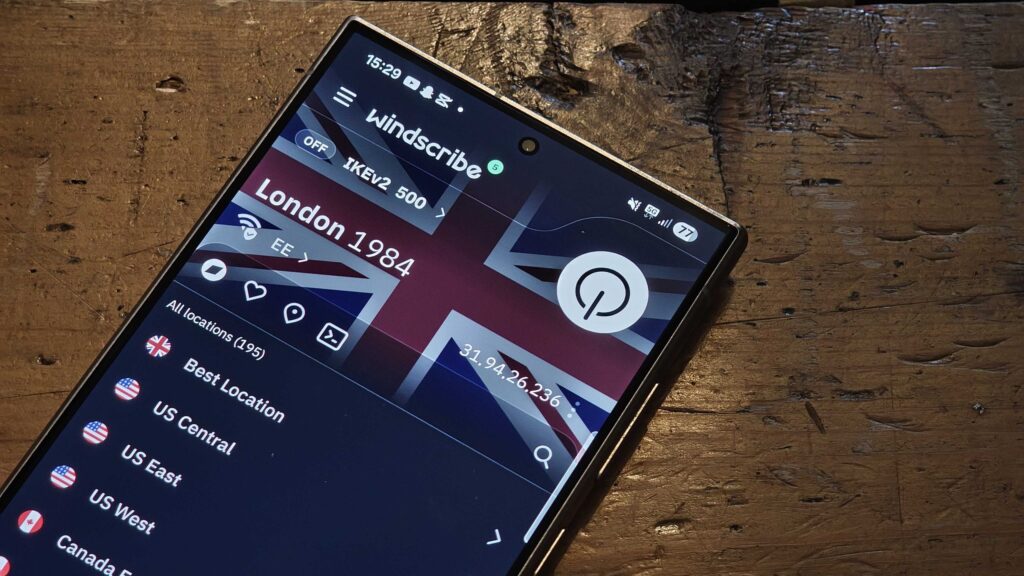
- Windscribe now accepts cash payments for its 1-year Pro subscription
- Leaving a zero digital footprint, it gives users total financial anonymity
- Windscribe still strongly advises most users to stick to digital methods
When you think about buying the best VPN on the market, you generally expect a quick, fully digital transaction involving a credit card, PayPal, or perhaps cryptocurrency. What you probably don’t expect is the ability to stuff dollar bills into an envelope and send them around the globe.
Yet that’s exactly what Windscribe has just introduced. The popular Canadian provider has rolled out a new feature that allows users to pay for their virtual private network entirely with physical cash.
According to provider’s notice, the system is designed exclusively for those who want absolute financial anonymity.
“Cash avoids the usual payment trail,” the company explained. “No card number. No PayPal account. No app store subscription. No bank statement politely documenting that you bought privacy and immediately creating a receipt for it.”
In classic, sarcastic Windscribe fashion, however, the provider is aggressively trying to talk most people out of using it.
An “awkward analogue side quest”
Sending cash may sound like a throwback to a bygone era, but Windscribe claims, “This is real, official, and somehow still a thing in the year of our lord.”
By physically sending money, users remove the cashier middleman entirely. Your bank or local payment processor will not have any data logging your purchase of a privacy tool. In highly restrictive regions, where buying a VPN can flag your bank account, this analogue approach can be a crucial lifeline.
By launching this, Windscribe joins a very small, exclusive club of privacy-minded providers. Competitors like Mullvad has long accepted cash payments, famously allowing users to send physical currency to their Swedish headquarters. Proton VPN also allows users to send bills by mail to avoid the digital banking network.
Have you ever dreamed of sending us cash to finance our questionable habits? Dream no more. Windscribe now accepts cash payments. But don’t do this either. This is very stupid.8 June 2026
But while the privacy benefits are real, Windscribe pulls no punches about the major drawbacks.
“Until you do, this is the slowest and riskiest way to pay,” warns the company’s official billing page. The provider notes that envelopes can be “lost, delayed, damaged, stolen or eaten by whatever lives inside the postal system.” Because cash payments are inherently untraceable, the company cannot credit an account if the money is lost in transit.
As a result, Windscribe is explicitly telling its general user base to stick to digital options.
“If that sounds silly, congratulations, your pattern recognition works,” the company said. “We added the available option because privacy sometimes requires awkward analog side tasks, not because we think everyone should start feeding paper money into the postal system.”
Strict restrictions on paper money
If you really need a non-digital way to buy your VPN and are willing to brave the postal service, there are strict rules on what your paper money can buy.
Cash payments are limited to the one-year Windscribe Pro subscriptionwhich currently costs $69 USD. You cannot use cash to purchase custom plans, monthly rolling plans, or lifetime memberships.
You are also completely lclosed out of seasonal discounts.
Finally, every transaction is made in this way completely non-refundable. If you send the cash, your only hope is that it arrives safely without interception.
For the average internet user who wants to browse safely, creating an account with a standard card or crypto wallet is a much safer and faster way to protect your online identity. But for the small subset of users whose threat model requires total detachment from the banking system, Windscribe is ready to receive your envelopes.


