
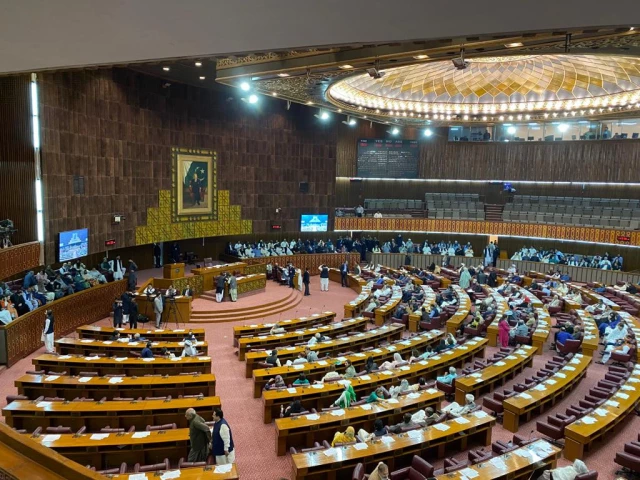
Hussain Tariq marks 54% electricity inflation and asks how minimum wages will pay bills
Pakistan People’s Party (PPP) MNA Hussain Tariq on Sunday termed the direct tax target set in the new budget at Rs6.9 trillion as “very ambitious and unlikely to be achieved,” and urged Finance Minister Muhammad Aurangzeb to respond to his concerns.
Tariq stated that the budget is not only about numbers, but also about balancing “debit and credit” and providing economic direction for the country’s people. He said the PPP understands budget discussions “on facts and figures”, but the party has always emphasized how the budget affects ordinary citizens.
“If people benefit from it, that’s fine, but if a budget makes things more expensive, then we feel it should be changed,” he said, adding that there have been ongoing discussions in government on the issue.
Read: Aurangzeb says Budget 2026-27 delivers on promise to shift economy from stability to growth
Referring to targets set by the Federal Board of Revenue (FBR), the MNA noted that a target of Rs 14.131 trillion was set which, like every year, was not achieved and needed to be revised. He said the new target of Rs 15.264 trillion represents an increase of 17% compared to last year, while inflation has been adjusted to 8%. “Beyond that, how will it adapt?” he asked, adding that PPP Chairman Bilawal Bhutto Zardari had also pointed out that the FBR sets targets but fails to meet them, after which a “tug of war” begins between the state and the provinces over revenue responsibilities.
On indirect taxes, Tariq said all members recognize them as regressive. Noting a revised tax target of Rs 6.5 trillion, he said a 17% revision has been added overall.
Further, highlighting inflationary pressures, he said the price sensitive indicator has increased by 14.75%, reflecting a significant impact on the poor. He referred to year-on-year data up to June 4, stating that prices of 51 essential items used by low-income groups have increased.
“I agree that inflation is around 8% overall,” he said, “but there are other pressures as well.” The MNA added that while petrol prices have increased due to war-related conditions, electricity inflation has increased by 54% in a year. “If a person earns minimum wage, how will he pay utility bills?” Tariq asked.
“If he pays bills, he will not be able to meet the needs of his children,” he said, stressing that citizens should not be left helpless due to external conditions such as war.
The MNA also added that the budget does not appear to provide a clear financial direction for the coming years, especially in terms of job creation and short- and long-term economic policy.
On agriculture, he said he appreciated Minister Rana Tanveer Hussain for his efforts in the national food security sector. Noting that opportunities in areas such as GMO and gene editing were not fully exploited in the past, he said policy improvements had been made, but farmers still did not have enough money to invest in modern machinery.
Read more: Saved by the budget?
He said that farming often yields only a 50% profit margin while input costs remain high. Referring to the government’s remarks, Tariq said the finance minister had claimed that agriculture received significant attention last year, but this year only limited discussion took place.
Tariq also mentioned that Rs117.4 billion was allocated to agriculture, which he described as the backbone of the economy.
The MNA concluded by emphasizing regional equity, saying it should not only be considered at the provincial level, but should also be extended to investments at the district level, where economic stress is most visible.


