
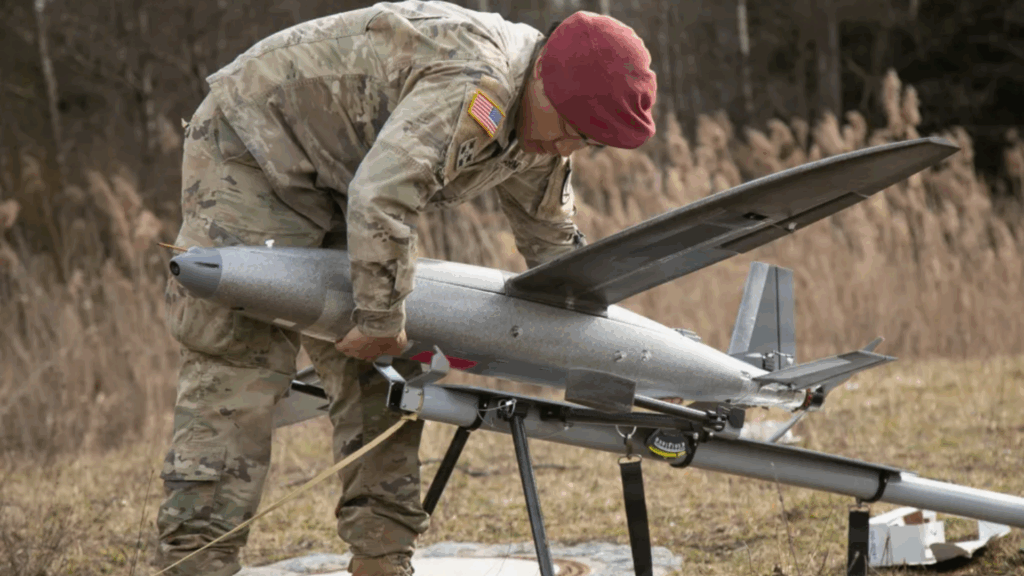
- Ukraine says modified drones outperform standard systems in combat.
- AI-assisted drones reach targets hundreds of kilometers away.
- Electronic warfare forces constant changes to drone communication systems.
Ukraine’s expanding drone campaign against Russian supply networks offers new lessons about modern warfare, particularly regarding the limits of commercially supplied unmanned systems.
A Ukrainian expert involved in the country’s mid-range drone operations claims that drones purchased in standard configurations cannot remain effective for long.
His warning comes as Ukrainian forces increasingly rely on modified drones to attack logistics routes deep behind Russian-controlled territory.

Modified drones are striking logistics far behind the front
According to the officer from First Corps Azov, Ukraine’s campaign focuses on disrupting fuel deliveries, cargo transport and rail movements that support Russian military operations.
Instead of relying on expensive long-range weapons, Ukrainian units have adapted relatively affordable fixed-wing drone systems for missions that extend far beyond their original capabilities.
These modified drones can now reach distances of up to 250 kilometers after receiving communication and propulsion modifications.
The campaign concentrates on supply routes where large quantities of military cargo move through areas that remain difficult to protect.
As the distance from the front increases, the logistics network becomes more concentrated, while defensive cover becomes increasingly challenging to maintain.
The officer explained that Ukrainian units assign specific roads and transport corridors to different formations, enabling continuous surveillance and strike operations against moving supplies.
Artificial intelligence also plays an important role during missions, especially in the final stages of flight and target identification.
The officer claims that AI systems help operators by recognizing potential targets and supporting autonomous navigation.
However, he emphasized that human operators typically retain authority over final strike decisions.
“Our policy is that the decision should be made solely by the operator,” he said.
Russian forces have already begun responding with defensive measures, including the anti-drone network, armed observation posts and efforts to hide vehicles from AI-assisted recognition systems.
Nevertheless, the officer claimed that existing countermeasures have yet to fully address the challenges posed by the ongoing campaign.
Customization becomes more important than standard equipment
Beyond battlefield operations, the officer offered a broader assessment of how military organizations should approach unmanned systems.
He argued that drone technology is advancing so rapidly that equipment purchased in standard configurations quickly loses effectiveness against electronic warfare systems and changing battlefield conditions.
Electronic warfare remains an obstacle among many confrontational drone operators, though the officer suggested it represents only one part of the overall counterdrone effort.
Navigation methods, communication links, frequencies, and software features often require frequent adjustments as adversaries develop new responses.
Assets that work efficiently one month may require significant changes soon after.
As a result, he argued that military formations should maintain dedicated facilities capable of modifying and adapting drones on an ongoing basis.
“Each unit should have their own drone lab that can reconfigure these drones and modify them,” he said.
Such facilities will allow operators to adjust aircraft, communications systems and mission profiles as battlefield requirements change.
The officer also suggested that simply supplying units with off-the-shelf drones might not produce the most effective results.
In his view, organizational structures that support rapid experimentation and modification will become increasingly important as unmanned systems evolve.
Via TWZ

Follow TechRadar on Google News and add us as a preferred source to get our expert news, reviews and opinions in your feeds.


