
Sources say Islamabad’s engagement with all stakeholders helped prevent a major regional confrontation
Pakistan’s efforts to facilitate diplomacy between the United States and Iran were aimed at promoting regional stability rather than securing any narrow national interest, security sources said on Tuesday, saying Islamabad had helped prevent a potentially devastating conflict through engagement with all major stakeholders.
Iran and the United States agreed on a peace deal brokered by Pakistan after a conflict that lasted more than three and a half months, with both Iran and the United States confirming the development late Sunday.
“Pakistan is not interested in time diplomacy. The mediation efforts undertaken by the country’s political and military leadership were not aimed at achieving a limited objective,” the sources said.
Read: Mediation in Pakistan leads to an elusive deal
According to the sources, Pakistan played an important role in helping to avert a war that could have been forced on the region and had serious implications for regional peace and security.
“Through consultations and cooperation with all key parties, Pakistan helped prevent a major conflict, the consequences of which could have been serious,” they said.
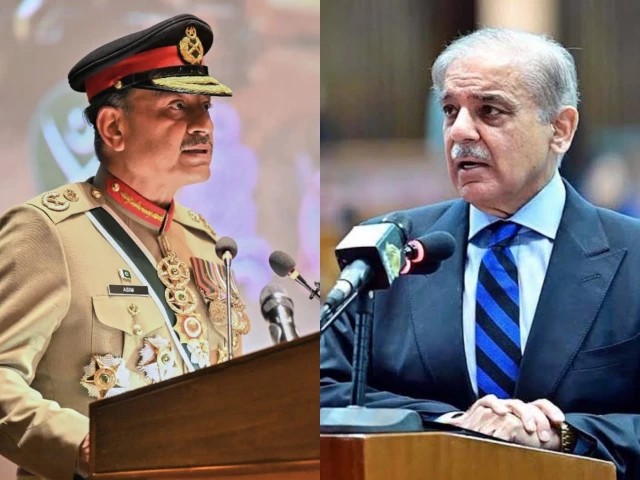
The sources credited the Chief of Defense Forces and Chief of Army Staff Field Marshal Asim Munir for playing a significant role in the diplomatic process.
“Through sincerity, professional competence, wisdom and the grace of God, Field Marshal Asim Munir played a key role in saving the region from a major confrontation,” they said, adding that it was “a success achieved without fighting a war and a reflection of the highest level of strategic thinking.”
#BREAKING
“Pakistan’s role as a mediator between the US and Iran is aimed at regional stability and peace, sensitive diplomatic processes require confidentiality, without disclosing details or future steps,” said a senior security official, adding CDF Asim Munir won the war… pic.twitter.com/bg2vy1K1nN
— Pakistan TV (@PakTVGlobal) June 16, 2026
They stressed that sensitive diplomatic efforts require confidentiality and caution.
“Pakistan, as a responsible mediator, cannot afford speculation. Therefore, there will be no comment on the content of the talks, their details or the future course of action,” the sources said.
However, they acknowledged that attempts to undermine peace efforts could continue, but maintained that Pakistan would remain committed to working with its partners for regional stability.
“Efforts to sabotage peace may continue, but Pakistan will continue to work with complete sincerity with its partners to bring about peace,” they added.
The sources also praised Muslim countries, especially Saudi Arabia, for showing restraint and leadership during the crisis.
Also read: Pakistan wins global praise for brokering US-Iran deal
“Saudi Arabia and other Muslim countries showed leadership, patience and strategic restraint. Their efforts helped prevent a conflict that could have engulfed the entire region and further divided the Muslim world,” they said.
The sources said military diplomacy and ties with friendly countries should be seen in a broader context of national interests and strategic engagement.
“Relationships with friendly countries cannot be viewed through a narrow lens. They are part of broader diplomatic strategy and national interests,” they said.
They maintained that Pakistan’s diplomacy was independent and not borrowed from any other country. “Pakistan’s diplomacy is its own. It is not borrowed from anyone,” they said.
Foreign connections
Commenting on Iranian Foreign Minister Abbas Araghchi’s remarks on the Chabahar port, the sources said each country was pursuing its own interests.
“Every state has its own interests. We have no need to worry about who meets whom,” they said.
The sources described Pakistan’s ties with China as exceptionally strong.
“In the past, it was said that relations with China were sweeter than honey, higher than the Himalayas and stronger than iron. Today we say that Pakistan’s relations with China have become stronger than platinum,” they said, adding that Pakistan also maintained cordial relations with other countries.
“We have our own relations with the United States. We also enjoy sincere relations with Russia, Saudi Arabia and Iran,” they said.
Imran’s alleged meeting with former army chief
Responding to a question regarding reports of a meeting between Pakistan Tehreek-e-Insaf founder Imran Khan and a former army chief, the sources reiterated that the military had no role in politics.
“We have repeatedly stated that the Pakistan Army has nothing to do with politics. Politicians should talk among themselves,” they said.
“When some individuals become irrelevant, such reports start surfacing,” the sources added.
Afghanistan ribbon
Discussing security challenges, the sources described terrorism as an ongoing reality and said Pakistan had repeatedly engaged with the Afghan government on the issue.
“We have engaged a lot with the Afghan government, but every time the issue comes back to terrorism,” they said.
The sources said Pakistan had adopted a tougher approach to Afghanistan due to persistent security concerns.
“In Afghanistan, there is dialogue on the one hand and terrorism on the other. That is why we have taken a tough approach,” they said.
The sources claimed that more than 32,000 operations had been carried out till June 15.
“Over 32,000 operations have been conducted. A total of 1,861 terrorists were killed, including 991 inside Pakistan and 862 inside Afghanistan,” they said.
According to the figures shared by the sources, 74% of 2,170 operations were conducted in Khyber-Pakhtunkhwa and 34% in Balochistan.
“On an average, 10.3 terrorists were killed daily while 640 Pakistanis embraced martyrdom,” they said.
The sources also claimed that precision strikes were used in Afghanistan to avoid civilian casualties.
“We used expensive ammunition in Afghanistan to ensure that ordinary people were not harmed,” they said.
They further claimed that more than two dozen terrorist organizations were operating inside Afghanistan.
Kashmir issue and BLA
On the Kashmir dispute, the sources said that the people of Indian Occupied Kashmir were pursuing their own movement.
“We have fought five wars with India over Kashmir. The people of occupied Kashmir are running their own movement. Can anyone buy them?” they asked.
The sources claimed that Kashmiris remained dissatisfied with Indian rule.
“They cannot remove the love of Pakistan from the hearts of Kashmiris,” they said.
On water-related disputes with India, the sources said Pakistan had various options at its disposal and would act in accordance with the government’s directives.
“We have all options available on the water issue and can act on instructions from the government. India should not test our resolve,” they said.
The sources warned against any attempt to hamper Pakistan’s water rights and said such a move would invite a response.
“Let India try to stop Pakistan’s water; we will show them the consequences,” they added.
#BREAKING
“Pakistan to protect its share of water at any cost,” says a senior security official. The official emphasizes that water is a national interest linked to Pakistan’s economic and social fabric and that the country has the will and ability to respond when necessary… pic.twitter.com/m4i6cfucqz
— Pakistan TV (@PakTVGlobal) June 16, 2026
The sources said Pakistan would continue to defend the decisions taken by the National Security Committee (NSC) in 2025 and remain committed to the Indus Waters Treaty.
“We will defend the NSC decisions from 2025 and ensure that the Indus Waters Treaty remains intact,” they said.
The sources rejected allegations that the UAE was involved in any conspiracy against Pakistan.
“The UAE is not part of any conspiracy against Pakistan, including in Balochistan,” they said.
They claimed that the Balochistan Liberation Army (BLA) was being supported by India.
“BLA is Indian sponsored, which is why it has been described as Fitna al-Hindustan” they said.
The sources also accused terrorist groups and hostile elements of exploiting social media and rights-based narratives.
“They come forward in the name of rights but seek to create unrest. They burn property and then blame the security forces,” they alleged.
According to the sources, the security situation in Balochistan had improved significantly.
“More than 24,700 operations have been carried out in Balochistan. The situation has improved significantly and people are benefiting from mineral resources,” they said.
They also maintained that governments in Balochistan were formed through constitutional and parliamentary processes.
“Governments in Balochistan are made through the assembly. The military has no role in that process,” they said.
Commenting on the proceedings on May 9, the sources said the trial would continue regardless of delays.
“Even if individuals disappear, the law will take its course. Once they are arrested, the criminal process will begin,” they said.
“The May 9 case belongs to Pakistan, not the army. Wait and see; the case will reach its conclusion,” the sources added.


