
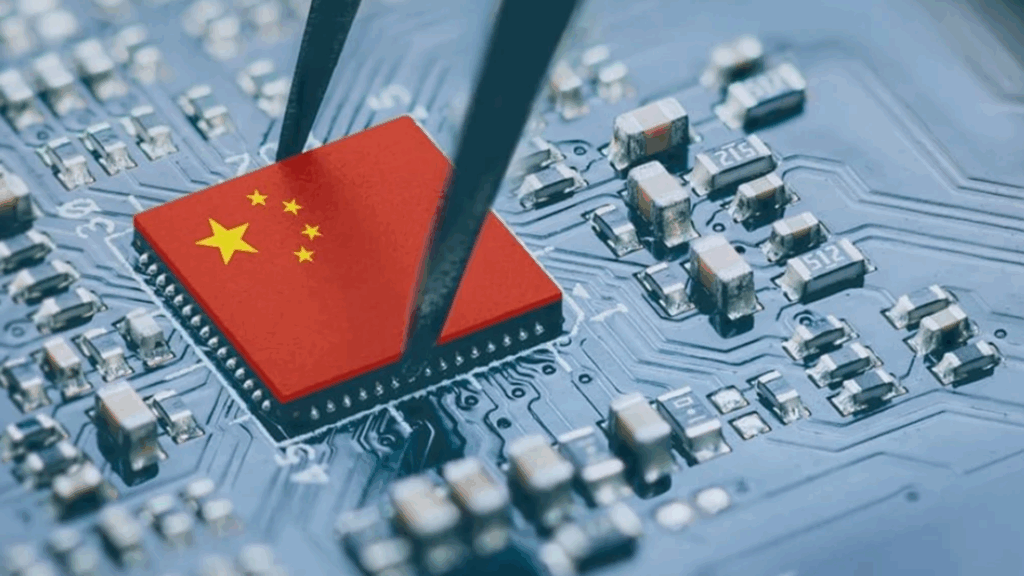
- China is planning a massive AI computer network supported by domestic chips
- Lack of high-bandwidth memory limits the production of advanced AI accelerator in China
- Domestic chip makers still lag behind global leaders by several years
China is drawing up a plan that could direct about 2 trillion yuan (about $295 billion) toward a nationwide AI computer network.
The proposal would connect data centers across the country into a single computer network run mainly by state-backed telecommunications companies.
Officials reportedly want at least 80% of the underlying technology, including AI chips and associated infrastructure, to come from Chinese suppliers.

A massive expansion centered on local technology
The plan is being developed by the National Development and Reform Commission, while major carriers including China Mobile and China Telecom will oversee the operation.
According to reports, the network will be connected to a single national computing platform by 2028 through extensive infrastructure rollout.
Financing will be heavily dependent on government loans and ultra-long government bonds, while associated upgrades to the power grid could increase costs significantly.
The total capital requirement could rise above 5 trillion yuan (about $738 billion) when energy infrastructure is included in broader estimates tied to the rollout.
The plan comes as Beijing continues to tighten restrictions on foreign semiconductor products used in data centers and AI facilities.
In 2025, authorities introduced requirements for data centers to source at least 50% of their chips from domestic manufacturers – and in November of that year, state-funded projects reportedly faced further restrictions, barring foreign accelerators from facilities still under construction.
Officials also pushed for compliance measures requiring the removal of Nvidia, AMD and Intel components in projects below 30% completion.
These moves have increased opportunities for Chinese chip companies, including Huawei, while reducing reliance on vendors such as Nvidia, AMD and Intel.
The policy ensures that critical AI tools and LLMs work on hardware developed in China, but replacing imported processors remains a difficult task.
Domestic chip supply remains a major challenge
Chinese semiconductor manufacturing capabilities come mostly from SMIC and a small group of state-approved foundries.
SMIC co-head Zhao Haijun has warned that over-expanding infrastructure could leave facilities underutilised.
Reports indicate that SMIC’s most advanced stable manufacturing process remains roughly comparable to 7nm technology and is already operating above 93% utilization levels.
With several domestic chip designers competing for the same production resources, expanding production rapidly under current wafer allocation limits may prove difficult.
High-bandwidth memory also remains a major constraint, limiting how many high-end accelerators can be assembled for AI workloads and AI tool deployment.
Industry estimates suggest that domestic suppliers will meet only about 76% of AI chip demand in China by 2030, even as demand grows towards a market size of US$67 billion.
Huawei has increased shipments, including an estimated 812,000 chips last year, but supply chain limits continue to affect production scaling.
Chinese industry leaders have acknowledged that domestic AI data center chips remain 5 to 10 years behind leading international competitors in some categories.
Reports also suggest that DeepSeek reverted to Nvidia hardware for certain training tasks after experimenting with Huawei alternatives in heavy workloads.
This suggests that Chinese processors can still struggle with the most demanding AI training environments despite advances in inference performance.
Via Tom’s hardware

Follow TechRadar on Google News and add us as a preferred source to get our expert news, reviews and opinions in your feeds.


