
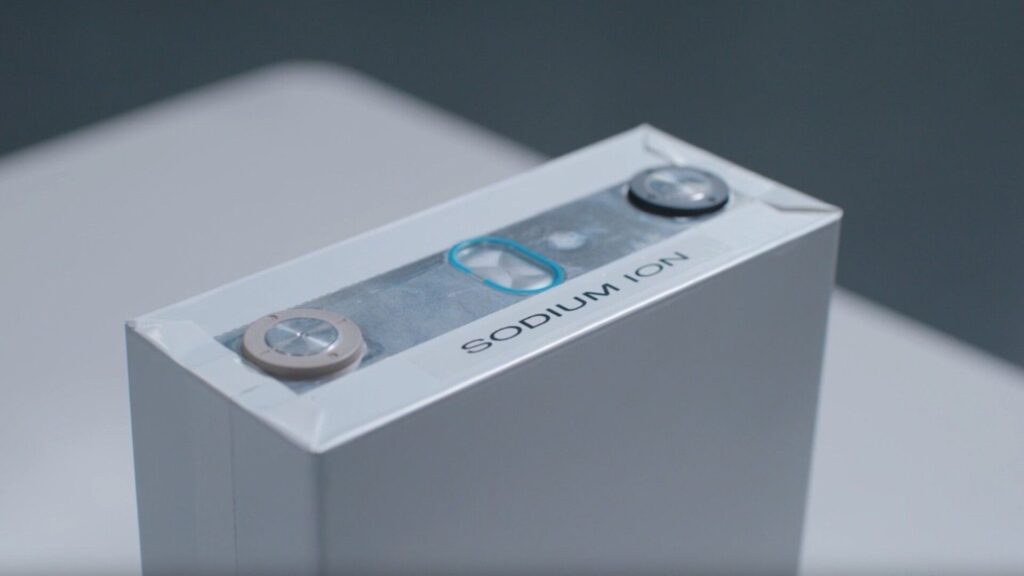
- GM is entering large-scale energy storage through a sodium-ion battery partnership
- Sodium-ion batteries promise cheaper storage without complex cooling systems
- Peak Energy supplies storage systems, while GM builds sodium-ion cells
General Motors (GM) has announced a partnership with energy storage firm Peak Energy in a move that marks a notable shift in the automaker’s battery strategy.
Under the agreement, GM will manufacture sodium-ion (Na-ion) battery cells for stationary energy storage systems that serve utilities, data centers and other large electricity users.
Peak Energy will then deploy these cells in its own proprietary storage systems for utilities and large power users.

Why sodium instead of lithium
Na-ion batteries share significant chemical similarity with the lithium-ion (Li-ion) cells that dominate portable electronics and electric vehicles today. However, the comparisons largely end at the basic chemistry.
GM and Peak claim that Na-ion systems can operate over a much wider temperature range.
This potentially eliminates the expensive cooling infrastructure that grid-scale Li-ion deployments typically require.
“When you talk to a utility, hyperscaler or other power provider that needs energy storage solutions, their priority is not to maximize range or minimize weight,” said Kurt Kelty, GM VP of battery and sustainability.
“It delivers reliable, affordable power over long periods under real-world conditions.”
This distinction matters because sodium’s biggest weakness—lower energy density compared to lithium—translates into larger, heavier battery packs for equivalent storage capacity.
For a vehicle, that trade-off would be disqualifying, but for a stationary installation bolted to the ground, weight is not in the equation at all.
GM hopes to close the production gap
Peak Energy has already developed passively cooled Na-ion storage systems, which the company claims reduces energy storage costs by 20% compared to Li-ion options.
Peak’s own analysis suggests that the US could avoid about 2TW hours of wasted energy annually if Li-ion phosphate systems were replaced with their Na-ion technology.
Kelty argues that GM’s existing expertise in cell design, prototyping and industrialization translates directly to Na-ion manufacturing, citing what he called key architectural similarities between the two chemistries.
“We believe that sodium ion can become a defining chemistry for grid-scale energy storage in the coming years,” added Kelty.
However, Na-ion technology still faces real hurdles before it can challenge lithium’s dominance on a large scale.
The manufacturing ecosystem for Na cells is still far less developed than for Li-ion.
Historically, sodium-ion cells have offered lower energy density than lithium-ion alternatives, requiring larger battery installations to store comparable amounts of energy.
Another challenge involves manufacturing capacity, as China currently hosts the majority of sodium ion battery manufacturing facilities.
GM and Peak Energy are US companies, and efficient Na-ion production may ultimately depend on Chinese manufacturing capacity – a confidence the current political climate may not allow.
At the time of writing, GM has not provided details regarding production timelines, production scale, or how quickly its partnership with Peak Energy could evolve into meaningful competition within the broader energy storage industry.

Follow TechRadar on Google News and add us as a preferred source to get our expert news, reviews and opinions in your feeds.


