NEWYou can now listen to Pakinomist articles!
Total Football is here.
The first World Cup game on a busy Saturday was a European showdown between the Netherlands and Sweden, where they The Oranje emerged victorious with a commanding, overwhelming 5-1 win at the Houston stadium. The result takes them to the top of Group F, albeit temporarily until Japan face Tunisia.
Ronald Koeman’s side produced an almost complete performance, winning with confidence and fluidity, and like the Total Football heyday of Rinus Michels and Johan Cruyff, it was full of attacking power, tenacious play and plenty of goals. When this team plays like that, it really increases their chances of doing something special at this World Cup. That’s not to say that Sweden didn’t have their chances, because when Holland lose the ball, they sometimes leave themselves vulnerable. But in the end, the Dutch team deserved their impressive victory.
Ahead of the tournament, in numerous shows and interviews I discussed the Netherlands and their legitimate chance to win it all, and as far back as November I ranked them sixth in my top 10 power rankings for the tournament. Koeman’s great work with this team has been evident for a while now, and unbeknownst to anyone, this is a team that is slowly showing that it might be able to do something it has never done: win the World Cup.
There is still a long way to go, but today Holland showed why they are the real deal.
Here are my takeaways:
1. Dutch channels Total football
(Photo by Hugo Rivera/Jam Media/Getty Images)
Back in the 1970s, the Total Football philosophy created an identity for the Netherlands that essentially became a gift to the world. The concept of fluid positioning, stretching the opposition by making the pitch as wide as possible, collective pressure and changing formation mid-match was a revelation which took the Dutch to the 1974 World Cup final before eventually losing to West Germany.
Koeman has stated that the term “TF” at this World Cup. is difficult due to weather conditions in different cities. But in this fully enclosed, air-conditioned stadium in Houston, the freedom to assert one’s identity was ever so present.
There were so many great examples of players occupying different spaces and becoming so menacing when they step into the box. Denzel Dumfries, for example, was everywhere on the right wing and even came more centrally when the Dutch attacked. It was his cross that became the assist of Cody Gakpo. The midfield of Frenkie de Jong and Ryan Gravenberch was also magnificent, pulling the strings and protecting the center of the pitch.
The bench is also full of a dynamic arsenal as Crysencio Summerville came on in the second half and scored his second goal of the tournament.
Throughout the game, the Netherlands constantly had 8 players inside the box, with the aim of pressuring Sweden and not letting them leave their own half.
Today in Houston, Holland reminded us why they invented the most influential and attack-oriented philosophy in the world … and why it finally paid off for them.
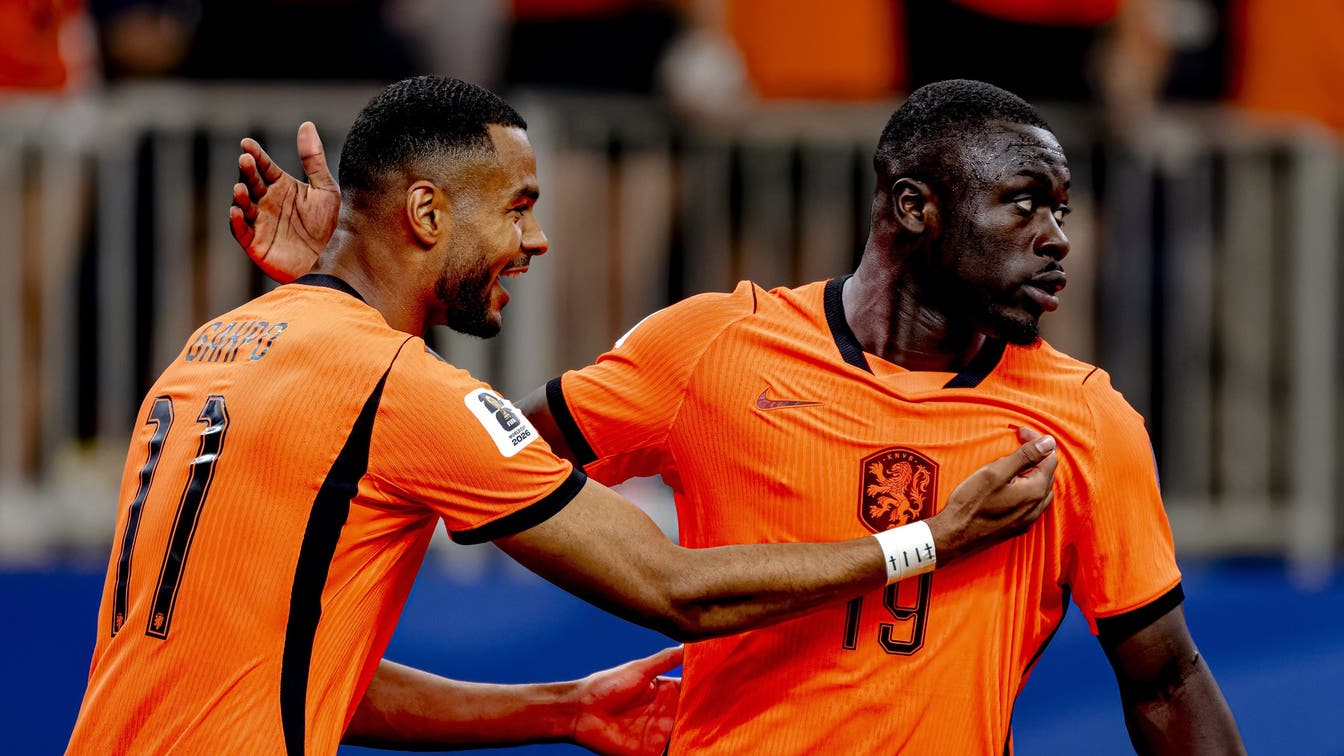
2. Brobbey and Gakpo were brilliant
(Photo by Stefan Koops/EYE4IMAGES/NurPhoto via Getty Images)
One of the biggest question marks in modern times for Holland – arguably the best team in international football never to have won the World Cup – is that despite the aesthetically pleasing football, it often struggles to find consistent quality up front. Memphis Depay, the country’s top scorer, is now 32 and not the 90-minute threat he once was.
But in Brian Brobbey, they may just have the answer. His physicality, ability to hold the game and be very direct when he steps into the box was so refreshing to see as he reminds me so much of the old-school, classic No. 9 who has only one thing on his mind: head to goal and score. Very like Gerd Müller or Hristo Stoichkov.
Gakpo was also brilliant and caused absolute havoc on the left wing where his timed runs along with his finishing were another weapon where Sweden could not find an answer.
Both got braces.
Both are key to Holland’s success.
3. Premier League Fully represented
(Photo by Molly Darlington/Getty Images)
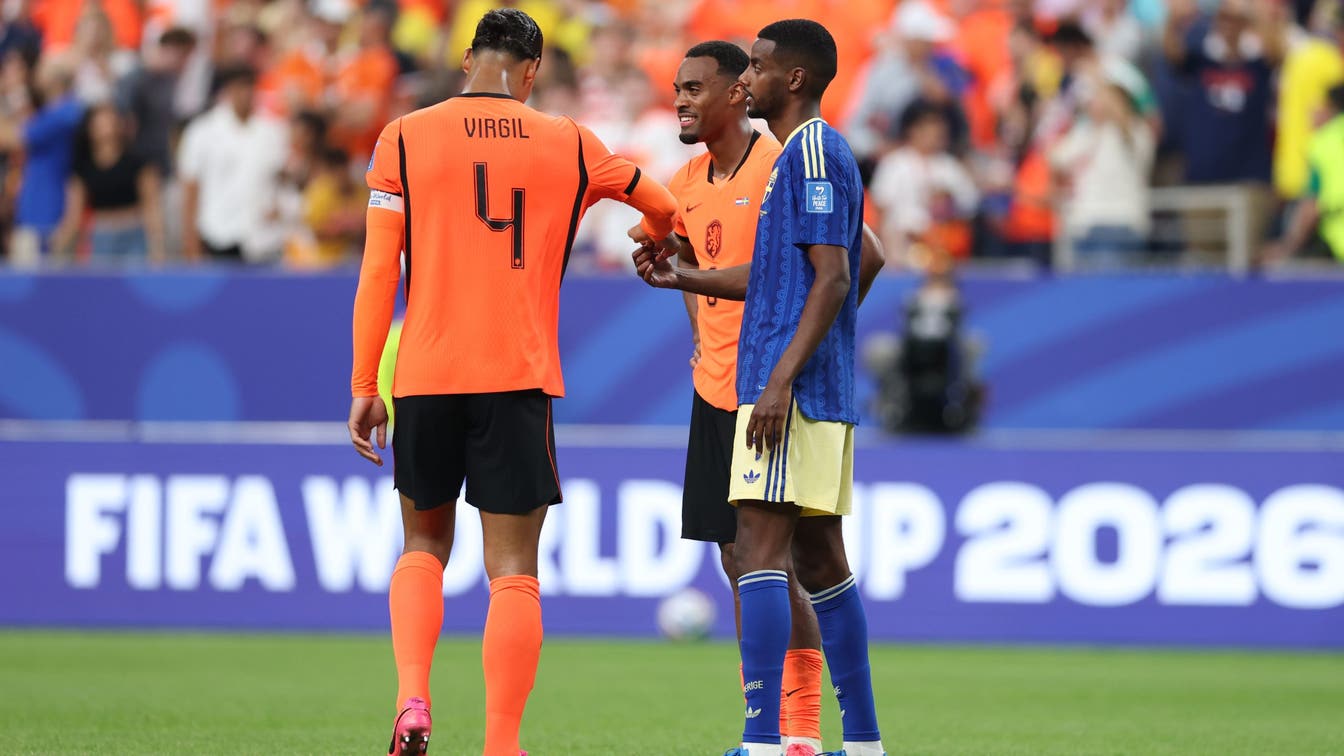
The quality and familiarity between both sides was always going to be there as there were a combined 11 Dutch and Swedish starters who also play in the Premier League, including the Swedish attacking duo of Arsenal’s Viktor Gyökeres and Liverpool’s Alexander Isak, who lined up against his Reds team-mate Virgil van Dijk, while the aforementioned Brobbey (Sundertonland) lined up against Villa’s captain Victor Lindlofe. Sweden is of course managed by former Brighton, Chelsea and West Ham manager Graham Potter. On the bench, even more so as Newcastle United’s Anthony Elanga came on later in the game to score Sweden’s only goal of the day.
The game therefore felt very much like a Premier League encounter, with both sides – especially Holland – wanting to do nothing but go forward and take the front foot.
But for today it was Koeman’s side who thoroughly deserved the win.
4. Hydration Pause continues to be a problem
(Photo by Alex Slitz/Getty Images)
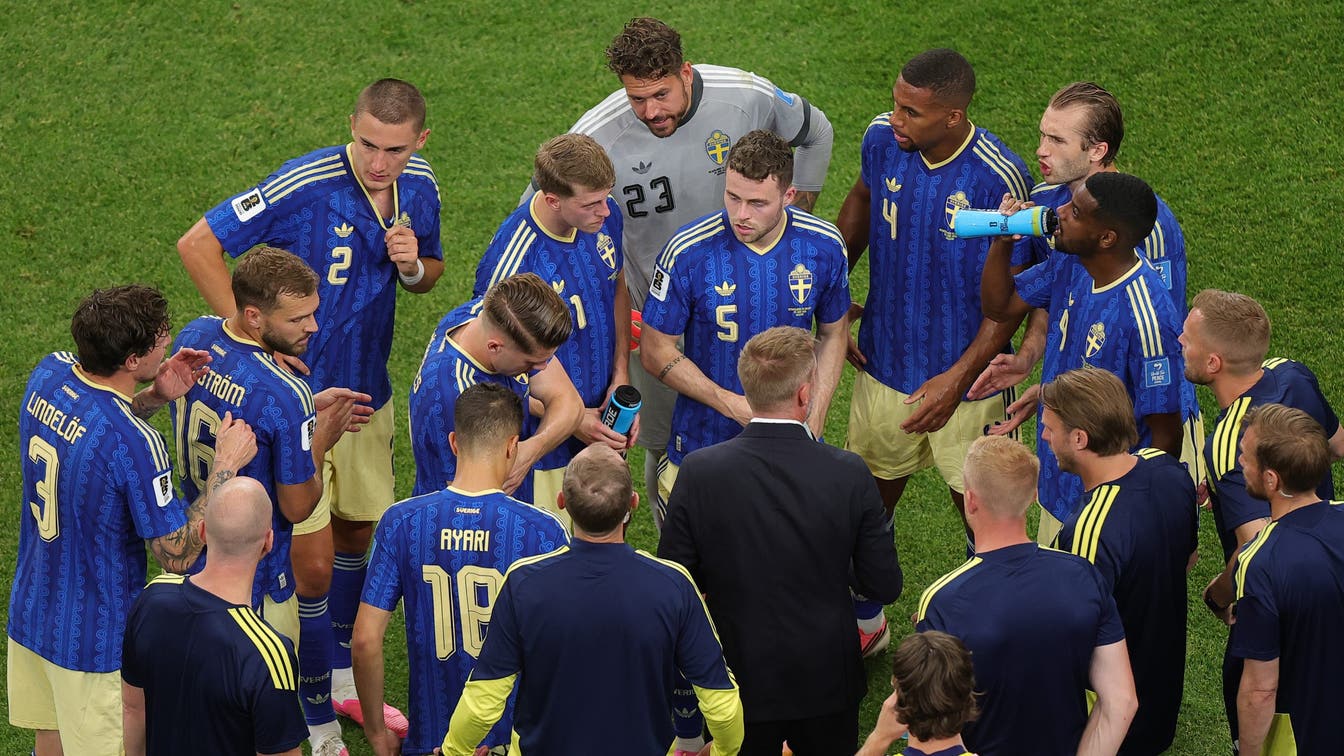
It was another match where the hydration break was met with boos, and if you’ve read my previous takeaways, you’re more than aware that I’m vehemently against these breaks because this sport is all about rhythm and tempo, and for that to happen, you need 45 minutes of action. That’s how we’ve always known it, and I hope that after this World Cup we never see these “breaks” again.
But I also wrote in a previous column that this summer they’re not going anywhere, so managers might as well make use of them by adjusting their strategy. In the first half, Potter did just that as Sweden came out of the first break and improved, taking more shots than the Netherlands before the break.
In the second half, with Sweden causing a little more trouble for the opposition thanks to Anthony Elanga, the break halted the team’s momentum and Koeman took advantage by changing a few things for the Netherlands. However, this sport is about TWO HALFS. And fans have paid good money to see non-stop action. They have every right to boo and complain about this rule, which will hopefully never see the light of day again after this tournament.
4 ½. What’s next
The Netherlands face Tunisia on Thursday in Kansas City hoping to seal the group, while Sweden have a massive game against Japan at the Dallas Stadium in Arlington.