
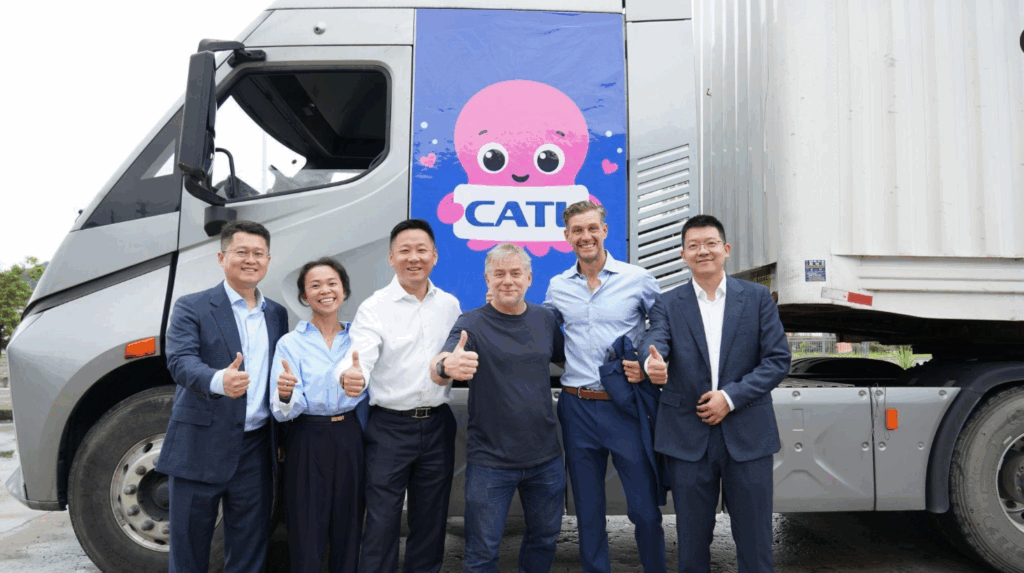
- Swaptopus plans battery hubs that can support 300,000 electric trucks
- CATL and Octopus will have truck batteries replaced within minutes
- Europe’s freight sector could avoid long collection delays by switching
Octopus Energy has outlined plans for large-scale battery projects aimed at accelerating the switch to electric freight transport across Europe.
The company is working with battery giant CATL on battery technologies for freight transport, energy storage and grid services.
While the immediate focus falls on commercial transport infrastructure, the partnership could ultimately help bring battery swapping into the mainstream European truck market.

Battery replacement has priority over storage in the household
Octopus and CATL have formed a joint venture called Swaptopus to expand battery swapping infrastructure across European freight networks.
Instead of waiting for charging sessions to finish, electric trucks will exchange discharged battery packs within minutes.
CATL’s largest commercial vehicle batteries can reach 1000 kWh, approximately 20 times the capacity found in an average electric passenger car.
“Electric trucks already beat diesel on operating costs, the challenge is keeping them running. Battery swapping changes that. Instead of waiting for hours, trucks can be back on the road in minutes,” said Greg Jackson, CEO and founder of Octopus Energy Group.
“By combining Octopus’ software and energy expertise with CATL’s world-class battery technology, we are making clean shipping practical at scale across Europe.”
The first major battery exchange hubs are expected to start operating during 2027, starting with locations located in the UK.
Octopus and CATL intend to expand this network to more than 30 major hubs operating across Europe by 2035.
According to figures released with the announcement, the infrastructure could eventually support more than 300,000 electric trucks.
The companies also estimate that the project could unlock more than £30 billion in private investment over the coming years.
Vehicle-to-Grid plans can support future batteries
In addition to freight transport, both companies are also investigating energy storage technologies and wider opportunities for electricity management across Europe.
One proposal involves expanding Vehicle to Grid technology across CATL’s global network of automotive manufacturing partners and customers.
The companies believe that millions of future electric vehicles could eventually return electricity to national energy grids during demand peaks.
“Battery replacement will be a significant part of the future of commercial transport. We have trialled this technology in China and we are delighted to bring it to the UK and Europe…” said Dr. Robin Zeng, Chairman and CEO of CATL.
“Together, our expertise in battery swapping, B2G (Battery-to-Grid) and energy storage, paired with Octopus’ AI-powered energy trading and management technologies, will accelerate the electrification of road transport across the region.”
Swaptopus believes that battery swap hubs could ultimately serve purposes that extend far beyond keeping electric trucks on the road.
“We believe the future of land-based transportation is electric and autonomous, and battery swapping is a massive part of the enabling infrastructure,” said William Rowe, CEO and founder of Swaptopus.
“Not only does this significantly reduce downtime, but since the batteries at the swap stations can be charged and discharged when the grid needs it, they act as a virtual power plant and lower costs for consumers.”

Follow TechRadar on Google News and add us as a preferred source to get our expert news, reviews and opinions in your feeds.


