
Removes the presumption by lower courts that mutation constituted evidence of the transaction
SC restores female heirs in ancestral property after 71 years, places burden of proof of oral gift on beneficiaries
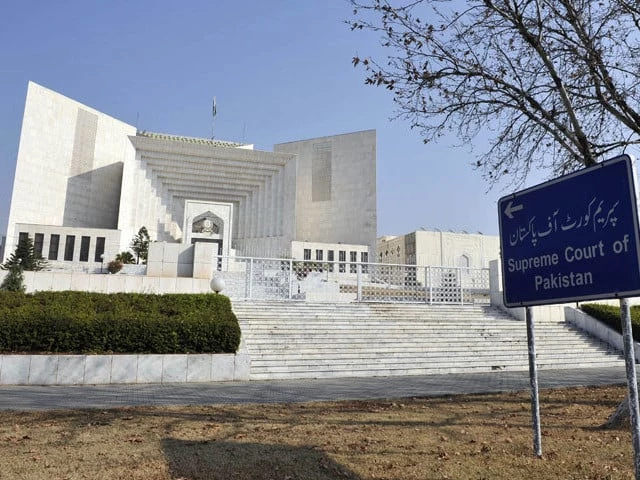
In a move to strengthen women’s inheritance rights, the Supreme Court (SC) on Wednesday ordered the restoration of the inherited share of two sisters in their ancestral property after a 71-year dispute, while ruling that the burden of proving an oral gift (hiba) was on those who claimed to benefit from it.
In 1955, the defendants’ father died and their two brothers transferred the inherited property into their names, claiming that it had been orally gifted to them.
A two-member bench of the Lahore Registry comprising Justice Shahid Bilal Hassan and Justice Shakeel Ahmad allowed the appeal filed by Noor Muhammad and issued a 14-page judgment setting aside the concurrent decisions of the trial court, the appellate court and the high court that had upheld the disputed oral gift.
The Supreme Court also ordered the tax authorities to correct the land registry and ensure that the sisters receive their inheritance in accordance with the law.
According to the judgment, the dispute dates back to 1955, when two brothers, after the death of the parties’ father, transferred the inherited property in their names, claiming that it had been orally gifted to them. The appellants maintained that the oral gift was fraudulently constructed to deprive the female heirs of their legal inheritance.
The Supreme Court rejected the conclusions of the lower courts, holding that the recipients of an alleged oral gift bear the legal burden of proving its existence.
The judgment noted that the trial court fundamentally erred by treating the alleged oral gift itself as evidence rather than examining whether the burden of proof had been discharged, making its approach contrary to settled legal principles.
Citing an earlier judgment in the case of Faqir Ali and others versus Sakina Bibi and others, the court had ordered that where “the recipients of a gift seek to exclude female heirs from inheritance,” the onus is on them to prove the gift.
“It is trite that in order for a gift to be valid and binding on the parties, three conditions must be met, namely (i) declaration of gift by the donor, (ii) acceptance of the gift by the donee and (iii) delivery of possession of corpus.”
The court further held that even if the alleged oral gift had gone unchallenged for decades, as argued by the respondents and accepted by the trial court, the onus to establish its validity still rested on those who sought to benefit from it.
The bench also rejected the contention that the claim had been filed after an unreasonable delay, noting that the record showed that the mother and sisters continued to receive a portion of the income from the land for several years after the alleged gift.
“After being in possession of the property, the sons and their successors subsequently dealt with the property through barter mutations and gift transactions for the benefit of their descendants,” the SC highlighted in the detailed order.
This, the court said, indicated that they had not been aware of any valid transfer that excluded them from inheritance.
Mutation as evidence
The Supreme Court observed that after the death of Roshan, mutation 74 and 75 were entered in favor of the defendants on April 4, 1955, recording that the widow and daughters of the deceased surrendered their share in favor of the male heirs.
“Inheritance Mutation No. 74 was entered on 4 Apr 1955 in favor of legal heirs; on the same day Mutation No. 75 was also entered into on the basis of an alleged oral gift made by the deceased’s widow and daughters in favor of two sons/brothers. Both mutations were sanctioned on 19 Apr 57, not in the judgment.
The Supreme Court rejected the assumption by lower courts that the mutation itself constituted evidence of the transaction.
The order read: “A mutation is maintained primarily for tax purposes and neither creates nor extinguishes property rights,” further emphasizing: “It is reiterated that a mutation is maintained for tax purposes and neither creates nor extinguishes property rights.”
Women’s Constitutional, Legal and Islamic Property Rights
The Supreme Court emphasized the constitutional, legal and Islamic protection afforded to women and declared that inheritance was neither a matter of male discretion nor family generosity, but a vested legal and Sharia right that automatically accrues to all heirs immediately upon the death of the deceased.
The bench maintained that women’s inheritance rights cannot be extinguished through “private arrangements, family pressure or customary practice” and warned that any transaction allegedly disinheriting women, including false gifts, fraudulent mutations and false arrangements, must be subjected to strict judicial scrutiny.
The court noted that denying inheritance to women is not just a legal dispute, but a deep-rooted social problem that often begins in families before reaching the courts. It added that women cannot be deprived of their share in the form of family honour, tradition or social pressure.
The court stated the articles supporting women’s right to inheritance: “Article 2A incorporates the principles of democracy, freedom, equality, tolerance and social justice as preached by Islam, while Article 25 guarantees equality before the law and equal protection of the law. Articles 23 and 24 recognize and protect the right to protection and deprivation of law accordingly.”
The bench further highlighted that Article 35 also obliged the state to protect the family, the mother and the child and Article 227 mandates that all laws must be brought in line with the injunctions of Islam.
“These constitutional guarantees, when read in conjunction with the Islamic injunctions regarding inheritance, leave no room for ambiguity.”
The Supreme Court recognized that the state, the courts, the tax authorities and society jointly share the responsibility of ensuring that women receive their inheritance in practice and not “only on paper”.
The SC declared all the judgments of the subordinate courts null and void and ordered correction of the revenue record to ensure the sisters’ inheritance.


