
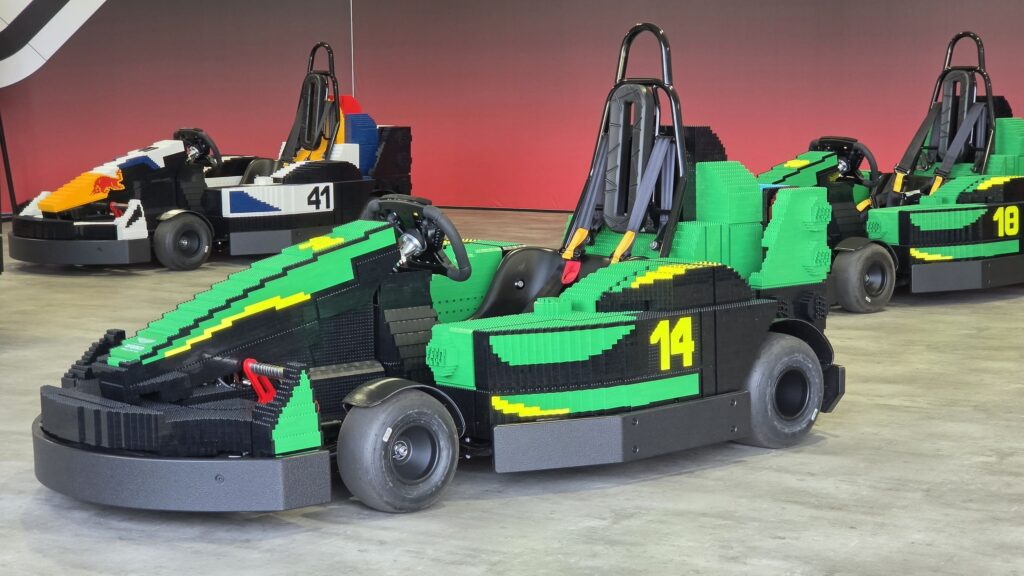
- Lego and F1 team up again, this time at the Silverstone GP
- This year the drivers drive 22 Lego go-karts around the track
- The parade takes place on Sunday just before the official race
Lego and Formula 1 have teamed up again for a major construction project – and I think I might be more excited for this year’s parade than the actual Silverstone Grand Prix.
In case you somehow missed it, last year at the 2025 Miami GP, Lego unveiled a roughly life-sized car for each team – perfectly mimicking their actual cars, except each had seating for two drivers instead of one. They then all took a lap of the circuit, with the cars powered by a small electric motor.
This year the cars are slightly smaller, but the so-called mini cars are each still assembled from more than 28,000 bricks. Think of them as go-karts because that’s essentially what they are – they even have proper go-kart wheels.
The big changes this year apart from the smaller size: each driver has their own car, meaning there are 22 taking to the grid, and they have a higher top speed of 25km/h – and this year Lego has accepted that the drivers will let their competitive side take over.
After seeing the show in Miami, I couldn’t be more excited about this year’s Lego parade. The Lego go-karts look great in person – each equipped with the team’s correct crew – but also delightfully cute, and while there’s a clear link to the big builds we saw last year, it doesn’t feel like a simple repeat
As Julia Goldin, Lego’s Chief Product & Marketing Officer, told me, the goal this year was to: “Not just replicate, but build on what we did last year. We wanted to have something that would be visually stunning, that would be fun for all the drivers, and then also bring even more to the fans who loved watching the drivers unleash their playfulness in Miami.”
“A round of chaos, childish joy and laughter”
Despite being expressly told not to drive in Miami’s Lego activations – at the risk of damaging the cars and scattering broken Lego around the track ahead of the Miami GP – the most competitive men on the planet couldn’t help but try to best each other in their blocky cars.
Some even made a few less-than-race-legal maneuvers, including taking shortcuts they could only dream of using in a real GP.
This made the performance even more fun to watch. Described by Lego as “a game of mayhem, childlike joy and laughter,” it couldn’t have more perfectly captured the emotions Lego hopes to inspire.
For the engineers behind the Miami build and now the Silverstone builds, the response couldn’t have been better.
“It was amazing to see how the parade inspired people and really showed that there is so much potential for creativity in every Lego brick.”

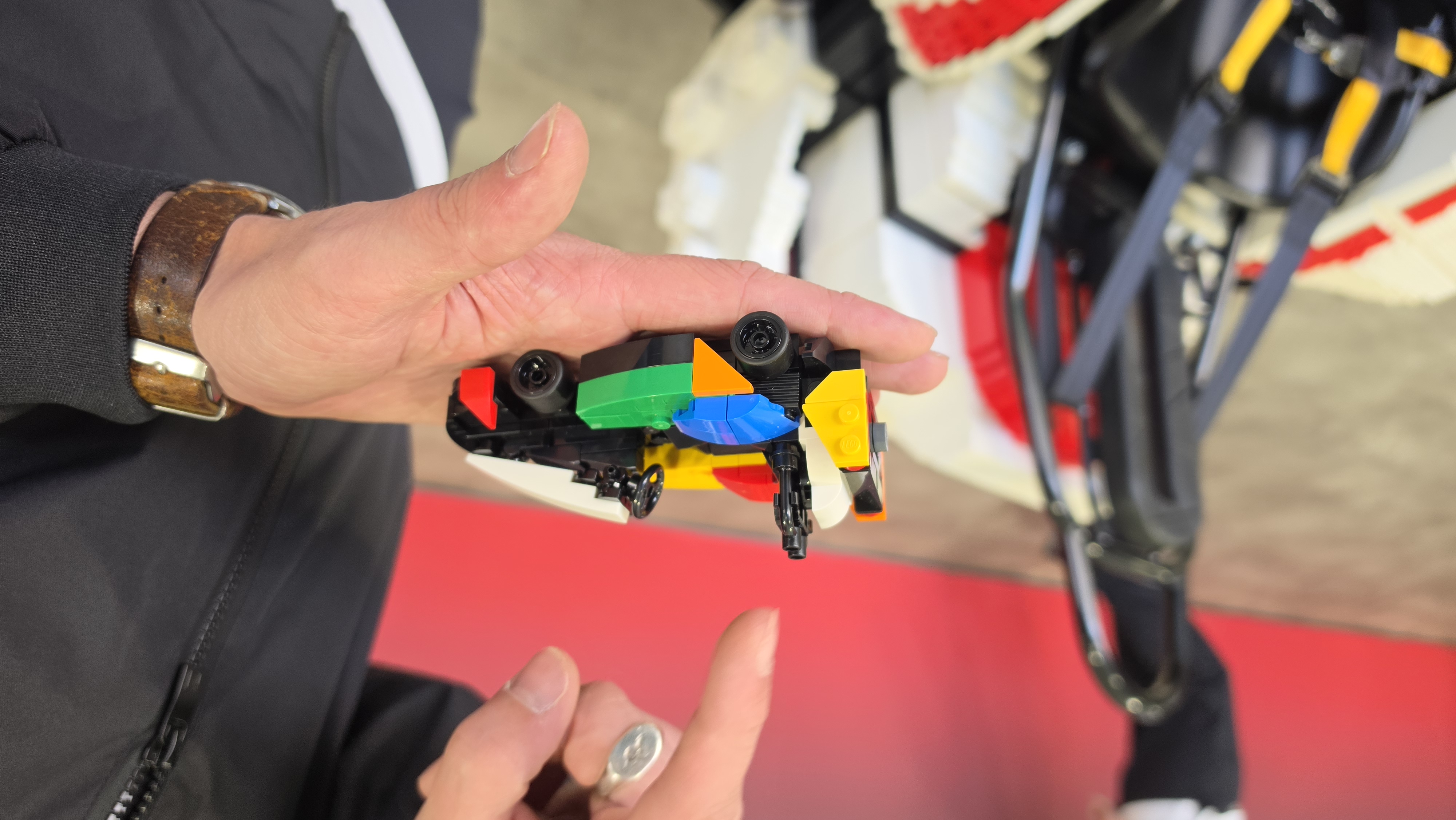
Because even though it’s only one lap for the drivers, it’s 6,400 hours of design and construction for the 20-strong team that built all 22 cars. And despite this year’s build being slightly smaller, the vehicles had their own challenges.
“Last year we took the Lego Champions cars and scaled them up about 30 times. We had a really clear plan for the final builds. This year we had to start from scratch.” says senior designer Jonathan Jurion.
“Also, instead of fitting the components into the shape of the Lego building, as we did in Miami, we had to fit the Lego around the shape of the components. At the same time, we wanted all the cars to have the team’s color and feel inspired by the F1 cars.”
The end result of this balancing act is the cars we have in the Silverstone Lego Garage and now all eyes are on Sunday for the unofficial race we are all waiting for.
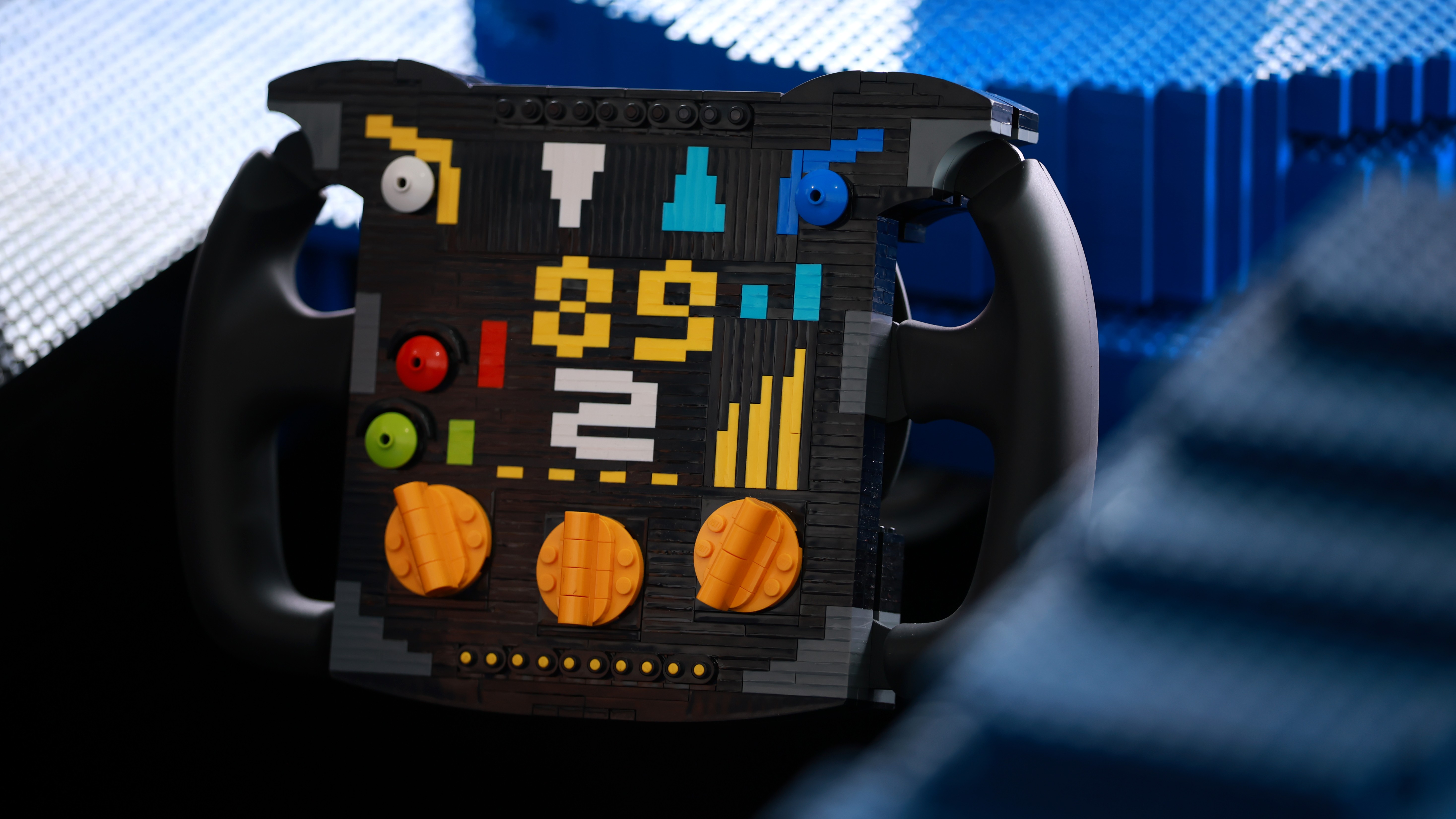
As Lego races have become an annual tradition in F1, I asked the engineering team what the plans are for 2027.
Jurion told me the team is “100% focused” on Sunday, but the team is eager to keep the collaboration going and continue to “surprise” fans with what the Lego brick can do, adding that “the sky’s the limit.”

Follow TechRadar on Google News and add us as a preferred source to get our expert news, reviews and opinions in your feeds.


