
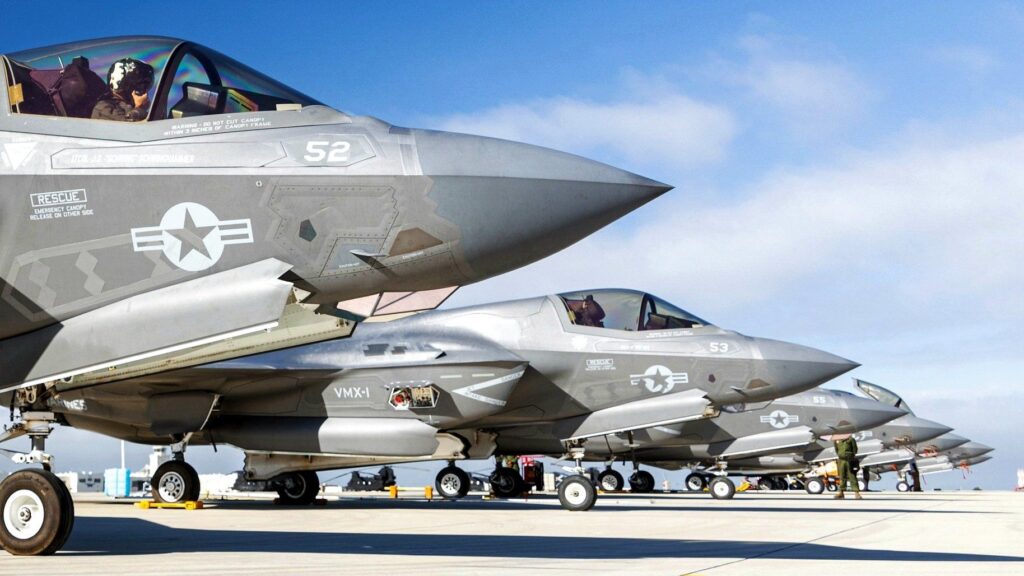
- Six new F-35Bs entered service with ballast inside the nose instead of radar
- The APG-85 delay created stealth fighters without their primary sensor
- Lot 17 redesign decisions eliminated compatibility with older radar hardware
The United States Marine Corps has accepted the delivery of six new-build F-35B stealth fighters with ballast weights to install a radar.
The aircraft left production lines without the AN/APG-85 radar that future F-35 variants are expected to rely on for combat operations.
Rather than delay delivery, officials accepted deadweight configured aircraft that occupied the nose section reserved for the missing equipment.

A new radar arrives before the plane can actually use it
The unusual situation arose because Lot 17 aircraft were redesigned around the upcoming AN/APG-85 radar architecture and mounting structure.
These modifications prevent installation of the older AN/APG-81 radar, leaving no interim option while the replacement remains unavailable.
The radar is to be supplied by Northrop Grumman instead of prime contractor Lockheed Martin, further complicating delivery plans.
Marine Corps Lt. Gen. Gregory Masiello informed lawmakers on June 23, 2026 that only six Marine aircraft currently lack installed radars.
Acceptance testing for these aircraft began in February 2026 after ending production earlier this year.
Although the Air Force and Navy have yet to receive comparable aircraft, similar deliveries are expected later this year.
Without radars, the aircraft can support basic airworthiness and pilot instruction activities while remaining unfit for combat operations.
The Joint Program Office defended the decision, stating that the Pentagon “deliberately undertook a very concurrent development and production program for advanced capabilities.”
“This decision was made with full understanding of the risk of having production aircraft ready ahead of capabilities.”
Delay reveals larger questions about F-35 readiness
The missing radar arrives amid greater concerns about operational readiness across the broader F-35 fleet during the 2025 fiscal year.
According to a recent assessment by the US Government Accountability Office, only about 25% of F-35 aircraft achieved fully mission-capable status. in 2025.
Aircraft capable of performing at least one assigned mission reached 44.1%, although this remained significantly below historical expectations.
Masiello said he would not “dispute their numbers or how they do it” during congressional testimony discussing the findings.
Using Joint Program Office calculations, he argued that mission-capable numbers were closer to 56% across operational fleets instead.
The delayed APG-85 radar is part of the broader Block 4 modernization package, which continues to encounter schedule and integration challenges.
Future F-35 models will require more cooling capacity, as new systems will draw between 62 and 80 kilowatts, more than double the 32 kilowatts consumed by current hardware.
A next-generation engine that could have addressed this cooling gap was developed, but ultimately funded after proving too expensive.
Current plans indicate that APG-85 will become operational around 2028, but meaningful cooling will not arrive until after 2031.
The sight of stealth fighters carrying lead ballast instead of radars may therefore become a lasting symbol of contemporary defense procurement realities.
Via the Defense Industry
Follow TechRadar on Google News and add us as a preferred source to get our expert news, reviews and opinions in your feeds. Be sure to click the Follow button!
And of course you can too follow TechRadar on TikTok for news, reviews, video unboxings, and get regular updates from us on WhatsApp also.


