
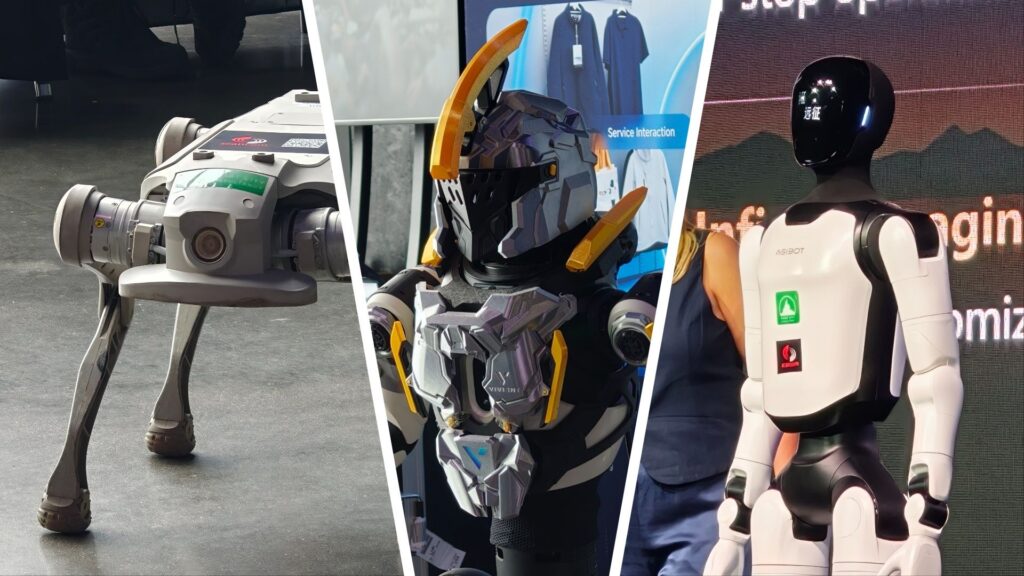
Chinese robotics company Agibot has launched a range of humanoid robots designed to look, move and sound like humans in the UK business-to-business (B2B) market.
The Shanghai-based company, founded in 2023 by two former Huawei engineers, hosted a launch event in London on June 30, 2026, with several of its A3 full-size humanoid and X2 half-size humanoid robots in attendance, as well as current and potential business partners.
The robots – all controlled by humans with smartphones and DualSense controllers – were deployed at several demo stations in the event space.

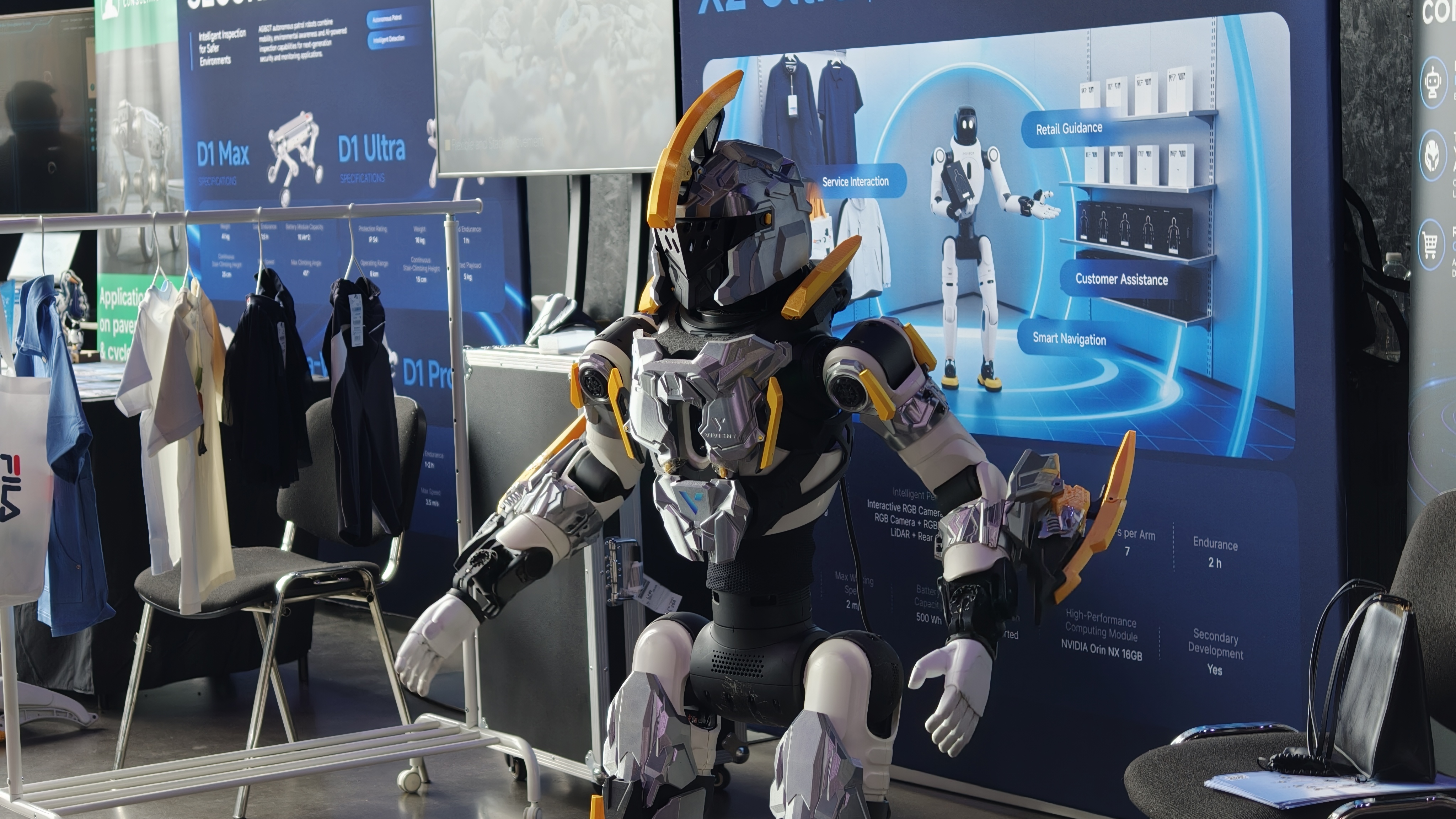
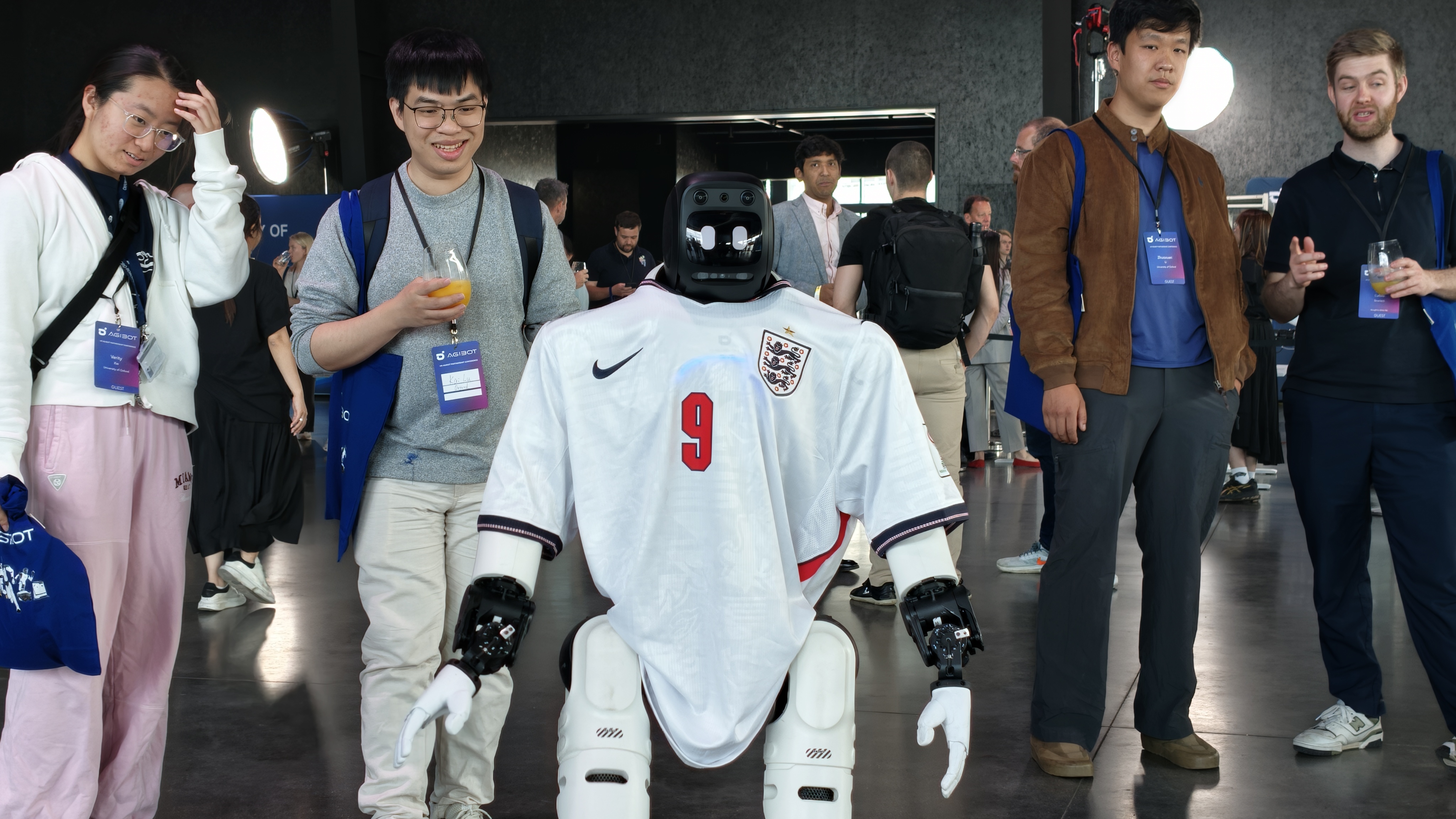
An X2 humanoid robot was set up to dance to peppy music and cut some serious shapes for a steady crowd, while another in a Harry Kane shirt kicked a soccer ball into the net. A third wore a suit of (admittedly very cool) Gundam-style armor, demonstrating the robots’ potential for customization.
As for the full-sized A3 humanoid – less expressive than its smaller sibling, with sharper angles and a rather empty circle instead of the X2’s animated ‘eyes’ – a device was provided to greet guests and for photo opportunities.
In a presentation at the UK launch event, Agibot co-founder and COO Daniel Jiang said: “The robotics business is the AI business. Robots should understand you, know what you say, talk to you and work for you.”
At the launch event, the word ‘robot’ was actually as common as the term ’embodied AI’, as Agibot representatives tried to position the company’s product range as a signifier of a new technological era: the ‘fourth industrial revolution’.
In a later talk, co-founder and R&D president Yan Xiong said, “Of the products I’ve worked on, embedded AI is the most exciting and inspiring. Through three intelligences in one body, robots can become human-like.”
The three intelligences in question control interaction, movement and manipulation, driven by AI models on the device communicating with cloud servers. It seems that Agibot sees itself first and foremost as an AI company and allocates its resources in kind: “Our main focus is research and development of the three intelligences, which occupy 75% of our R&D staff and 80 percent of our R&D budget.”
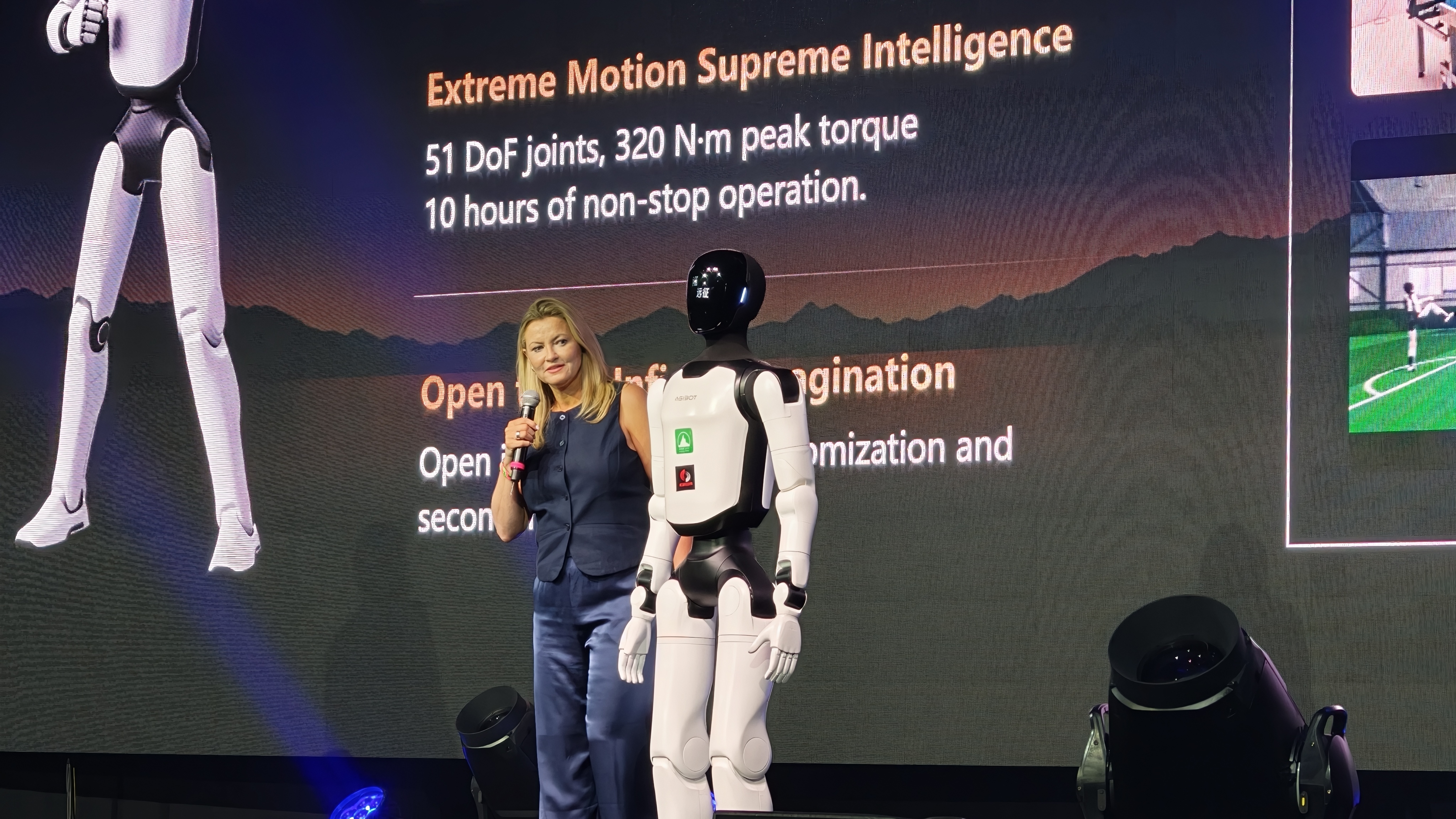
That’s not to say that the company’s humanoid robots aren’t deeply impressive. The units are made mainly of magnesium alloy with titanium reinforcements at pressure points to ensure rigidity. The A3 weighs 55 kg, which is quite reasonable considering its 5-foot-8-inch (173 cm) height, and lasts up to 10 hours on a single charge of its 1152W battery.
By comparison, the 4-foot-3-inch (131 cm) X2 weighs 39 kg and lasts for two hours. The devices communicate with the Internet via dual-module, dual-SIM 5G.
Also present were units from Agibot’s D1 quadruple series, inexplicably programmed to do backflips on command, as well as G2 series industrial robots and C5 cleaning robots. The top-tier D1 model, the D1 MaxPro, has a carrying capacity of 50 kg, while weighing only 68 kg itself.
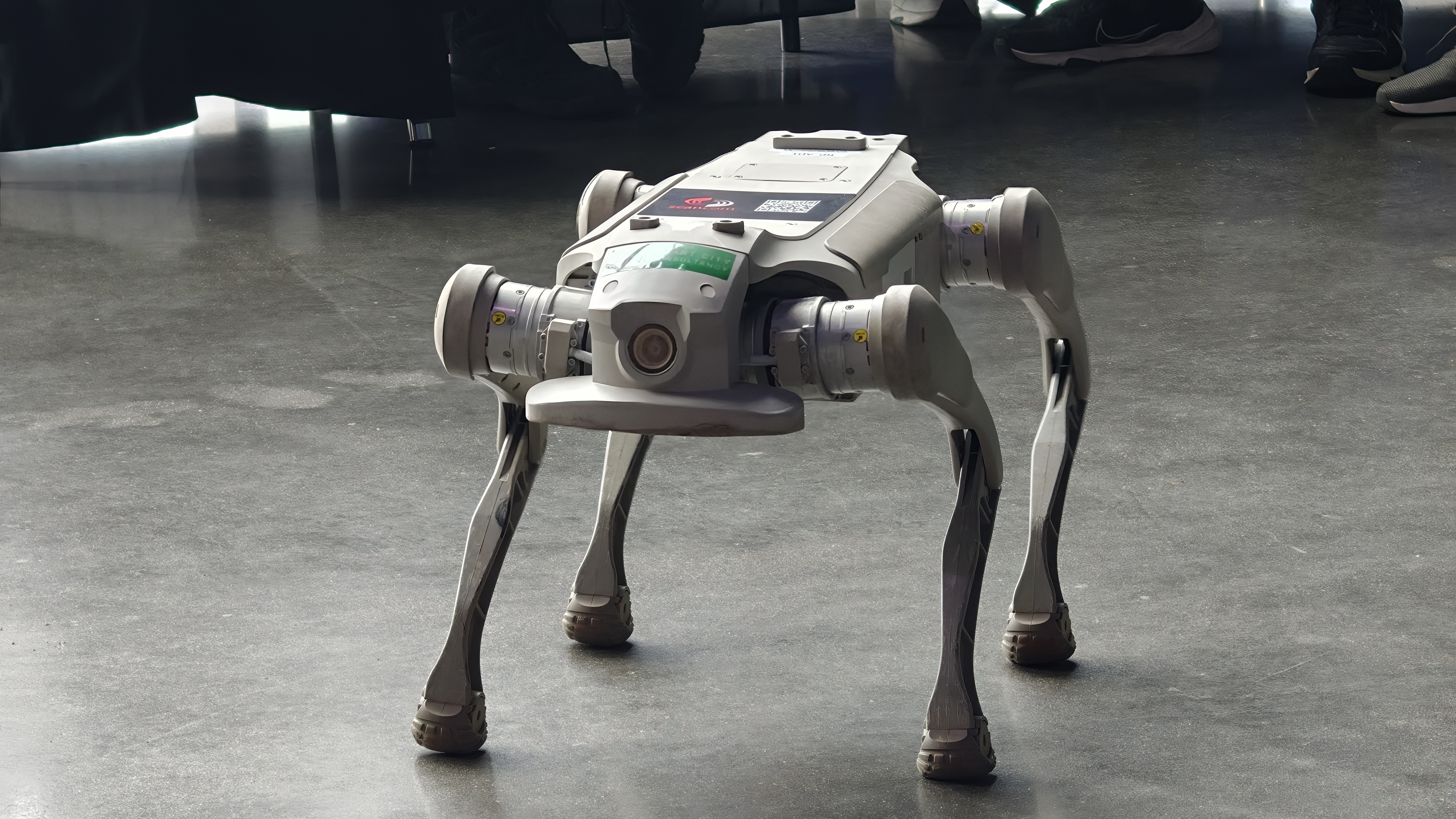
Agibot is young but rapidly increasing its production capacity. It recently launched its 15,000. unit, having passed 10,000 units just three months earlier, and has already deployed its G2 industrial robots in China’s Longcheer electronics factory. In fact, much of the event was dedicated to promoting possible use cases for each model in industries such as construction, live entertainment and business.
After shaking hands with X2 and watching D1 wave his ‘paw’ and again perform several perfect backflips, I must admit I’m still shocked by Agibot’s range of robots. The company’s launch has done nothing to assuage my many concerns about AI, but it’s still almost unbelievable to see actually droids walking around.
It’s clear that Agibot wants their robots to be relatable – the dance moves, handshakes and free kicks are obviously an attempt to instill some kind of affection in a crowd of potential customers. I’d be lying if I said I didn’t find X2 wildly entertaining, though know it’s just metal and plastic – but that’s the power of pattern recognition.
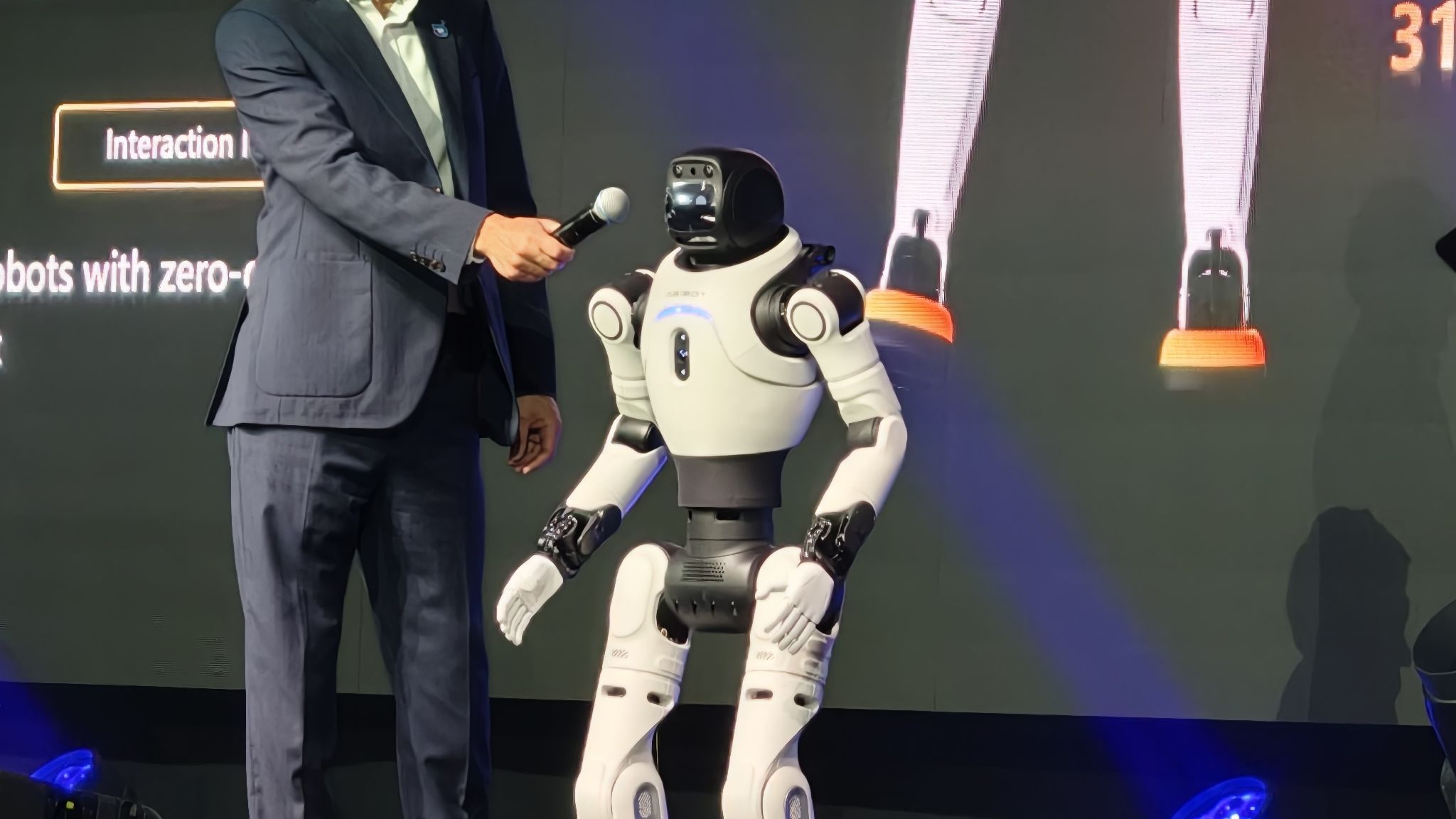
If Agibot can make progress towards its stated goal of autonomous operation, then we really aren’t far off from having a true C3PO on our hands.
It is early days, but the company’s management sounds committed. In his presentation, Yan Xiong said: “Scaling to mass production is the first hurdle to maturing the embedded AI industry. After we achieve mass production, the next step is to bring our portfolio to commercial availability.”
“AI shouldn’t be confined behind screens,” he later added, “it needs to be brought into the physical world.”

Follow TechRadar on Google News and add us as a preferred source to get our expert news, reviews and opinions in your feeds. Be sure to click the Follow button!
And of course you can too follow TechRadar on TikTok for news, reviews, video unboxings, and get regular updates from us on WhatsApp also.


