
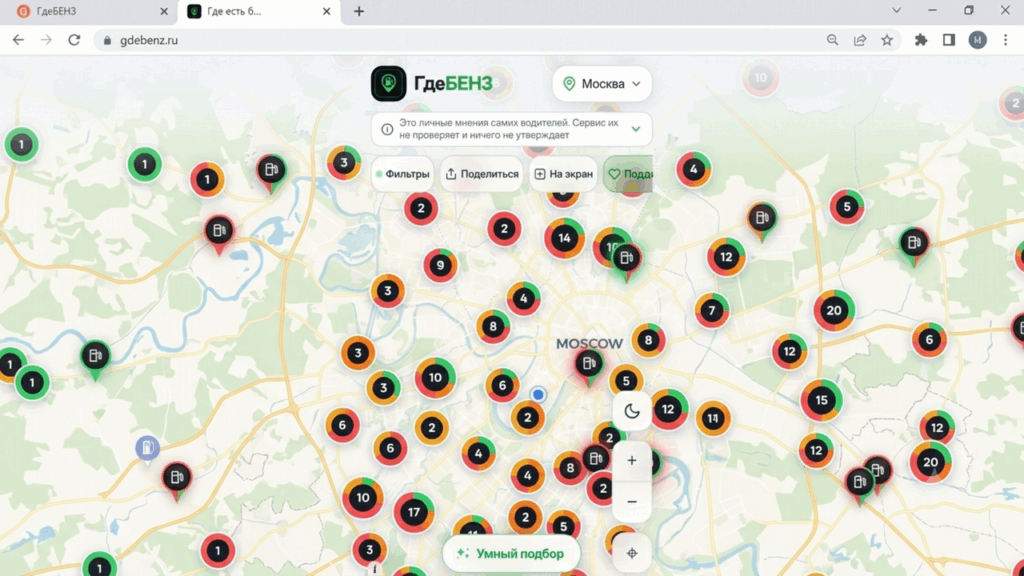
- Ukrainians reportedly manipulate Russian fuel cards through coordinated online participation
- Over a million users visit the website behind the fuel card campaign
- Digital platforms are becoming another battleground during ongoing geopolitical conflicts worldwide
A coordinated online campaign has reportedly encouraged users to change gas station information on digital maps across Russia, causing confusion among drivers.
The activity involves changing station status by marking locations with available fuel as empty or showing closed stations as operational.
Supporters of the campaign claim the effort is designed to disrupt travel decisions, increase uncertainty and create further pressure around fuel availability.
Card manipulation campaign spreads through online communities
The campaign reportedly centers around a website known as “GdeBenz”, which has attracted more than a million visitors since its launch.
Participants are encouraged to use VPN services while accessing mapping platforms to contribute modified information from external locations.
Some users reportedly relied on free VPN services to access the campaign tools and participate without revealing their actual network locations.
The changes reportedly affect gas station details seen by drivers who rely on online navigation tools when searching for available supplies.
Some participants have shared instructions through social media platforms and encouraged others to join the activity and change gas station details in various Russian cities.
The campaign has been described by supporters as an online operation aimed at creating confusion rather than directly affecting the fuel infrastructure itself.
Reports surrounding the activity have not independently verified the full extent of the disruptions or confirmed how many gas stations were affected by altered map information.
However, the campaign shows how digital platforms can become another area of competition amid ongoing geopolitical tensions, where information accuracy can influence everyday decisions.
Digital disruption creates uncertainty around fuel searches
The reported campaign relies on audience participation rather than technical attacks against fuel companies or card providers, making it different from conventional cyber operations.
By altering publicly visible location data, participants attempt to influence how drivers interpret fuel availability before traveling to specific stations.
Such changes could potentially cause unnecessary journeys, increased fuel consumption, longer queues and frustration among motorists if users encounter inaccurate information.
The activity has also drawn attention to how Russia VPN searches and related privacy tools can become part of broader online campaigns in which participants attempt to circumvent regional restrictions or hide their locations.
Supporters have celebrated the effort as an example of collective online action, while independent assessments of its practical impact remain limited.
Whether changing card information can cause significant disruption over time depends on how quickly platforms detect inaccurate updates and restore correct information.
The incident also shows how digital services used for routine tasks can become vulnerable to manipulation when large groups coordinate around a common goal.
Via Alex Bond at X


