
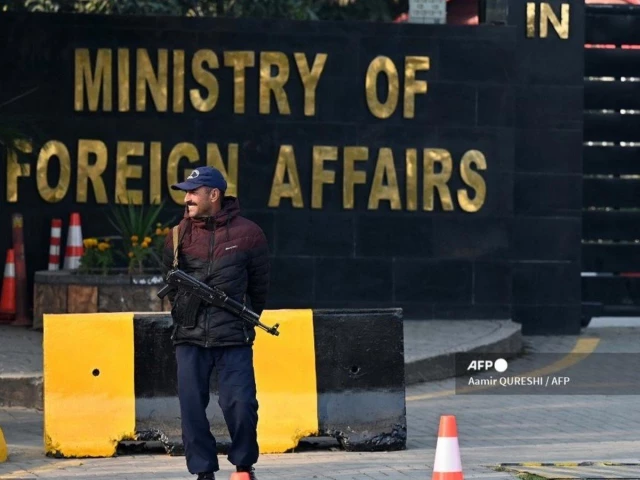
stresses all sides to take immediate steps towards de-escalation and uphold respective commitments under the Islamabad MoU
Pakistan on Sunday expressed deep concern over the recent escalation of regional tensions, urging all sides to exercise restraint, take immediate steps towards de-escalation and honor their obligations under the Islamabad Memorandum of Understanding (MoU).
The interim ceasefire agreement signed between Washington and Tehran – brokered by Pakistan – was meant to provide a 60-day window for talks on a permanent deal, but indirect talks in Qatar ended last week with no sign of progress.
US and Iranian forces have exchanged heavy missile and drone strikes, with Tehran on Sunday targeting US facilities in states across the Gulf and saying it had again closed the vital Strait of Hormuz.
The attacks were the latest in a cycle of attacks and counter-attacks as Iran seeks to assert control over shipping through the strait. However, the barrage marked an escalation in pace and range.
In a statement issued today, the Ministry of Foreign Affairs (MOFA) reiterated Pakistan’s strong support for the sovereignty and territorial integrity of all brother countries in the region.
“Pakistan reiterates its strong support for the sovereignty and territorial integrity of all brotherly countries in the region and urges all sides to exercise restraint, take immediate steps towards de-escalation and uphold the respective commitments under the Islamabad Memorandum of Understanding (MoU),” the ministry said.
🔈 PR No. 1️⃣7️⃣0️⃣/2️⃣0️⃣2️⃣6️⃣
Pakistan expresses deep concern over escalation of regional tensions
🔗⬇️ pic.twitter.com/yr27qSYQ9E
— Ministry of Foreign Affairs – Pakistan (@ForeignOfficePk) July 12, 2026
The ministry said Pakistan remains committed to supporting efforts to achieve lasting peace and stability through dialogue and diplomacy.
“For its part, Pakistan remains committed to providing all support to achieve lasting peace and stability in the region through dialogue and diplomacy,” the statement added.
The attacks extended to Qatar, a mediator in ceasefire talks, which had not been attacked since April, while the United Arab Emirates, which had not been targeted since early May, said its air defenses had engaged missiles and drones from Iran.
The renewed violence casts further doubt over the future of an interim US-Iran deal signed last month that aimed to reopen the strait and end the war after another 60 days of negotiations.
In the past week, US President Donald Trump has said he considers the ceasefire over, while leaving the door open for more negotiations.
The war, which began with US and Israeli attacks on Iran on February 28, has destabilized the Gulf, while Iran’s effective blockade of the strait has driven energy prices higher and fueled global inflation.


