- Around 100 American soldiers have been injured since July 7.
- Houthis threaten blockade of Saudi Arabian ports.
- Oil prices rise amid Hormuz tensions.
The United States and Iran exchanged strikes for a 10th straight night as tensions between the two countries continued to escalate and the conflict threatened to widen with a blockade of Saudi ports by the Houthis in Yemen.
Iran on Tuesday targeted US radar and air defense installations in the Gulf and warned Washington of “more decisive and powerful” strikes.
Iran’s Revolutionary Guards said they had attacked and stopped two “non-compliant oil tankers” trying to pass through the Strait of Hormuz, part of a bid to tighten their grip on the vital waterway as war reignited.
Iran’s Revolutionary Guards said they also targeted infrastructure belonging to US company Amazon in Bahrain, according to a statement published by state media.
There was no official confirmation from Bahrain. Reuters could not independently verify the incident.
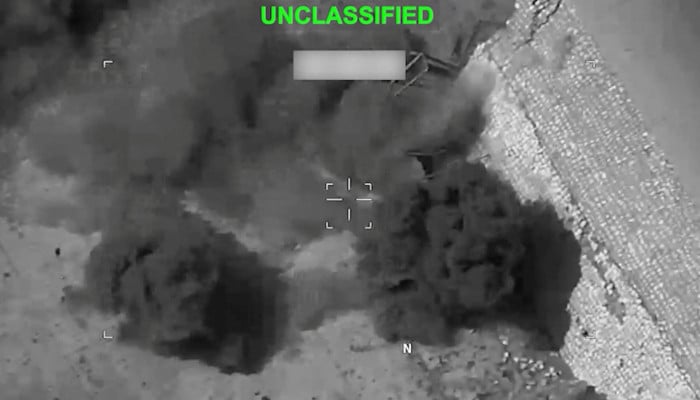
The US military said it ended its latest round of strikes on Iran, saying it hit Iranian military command centers, maritime capabilities, missile and drone launch sites and air defense systems.
The US Central Command made the announcement in a post on social media site X.
After the killing of at least three American soldiers in recent days, the United States launched a new round of strikes against Iran late Monday that it said were “designed to further degrade Iranian military capabilities used to attack commercial shipping” in the strait.
Hours later, the Iranian army said it had targeted US assets in Kuwait and Bahrain, including air defense systems, radar installations and administrative buildings.
“With this radar sweep, the enemy should prepare for even more decisive and powerful waves of drone and missile strikes,” the guards said in a statement carried by the state news agency. IRNA.
US President Donald Trump warned on Monday that Iran would pay “many times over” for every US soldier killed, while Iranian President Masoud Pezeshkian said the conflict had become “a full-scale war”.
Nearly 100 US soldiers have been injured since July 7, the Pentagon said Monday, most with minor concussions.
threat from the Red Sea
The Houthis, meanwhile, threatened a major expansion of the war and announced they would block Saudi ports.
Such a move by the Houthis would jeopardize Riyadh’s ability to bypass the flashpoint Strait of Hormuz for some of its oil exports and have major implications for the global economy.
Saudi Arabia and the Houthis exchanged fire last week for the first time in years and threatened a 2022 ceasefire, but the Yemeni group has largely remained on the sidelines since Israel and the US attacked Iran in late February.
Saudi Arabia strongly condemned the threat posed by what it called the “terrorist Houthi militia” and said it “continues to support the brotherly Yemeni people and their legitimate government”.
The Middle East war resumed after a cease-fire in April and a framework agreement from June collapsed.
Tehran reimposed its blockade of the Strait of Hormuz, and Washington retaliated by again blocking Iran’s ports.
Oil prices rose briefly to a one-month high on Monday before falling slightly early on Tuesday as the foes battle to control the strait through which a fifth of the world’s oil traveled in peacetime.
Although well below its pre-war totals, Saudi Arabia has been able to continue exporting millions of barrels of oil per day through its Red Sea port of Yanbu.
Oil markets have feared for months that the Houthis would return to attacking shipping in the Red Sea and Gulf of Aden – as they did during the Gaza war – and potentially cut off even more crude from global markets.
The Houthis, who have been at war with Riyadh for over a decade, have not said how they will enforce their blockade.
Diplomatic exchanges
In the Strait of Hormuz, the Revolutionary Guards said on Tuesday that two tankers trying to pass through the strait “were hit by explosions, resulting in massive fires that brought them to a halt”.
The UK Maritime Trade Operations Agency (UKMTO) previously reported that an “unknown projectile” hit a tanker off the coast of Oman.
On Tuesday, the UKMTO reported that another tanker off the coast of Oman had been hit by a projectile.
Despite the latest fighting, Iranian Foreign Ministry spokesman Esmaeil Baqaei said diplomatic exchanges with Washington through mediators are ongoing.
Iran’s Interior Minister Eskandar Momeni is in Islamabad on a two-day visit where he will meet with Prime Minister Shehbaz Sharif and Chief of Defense Forces (CDF) Asim Munir, according to the Interior Ministry.
Lebanese President Joseph Aoun is due to meet Trump in Washington on Tuesday as pressure builds for Beirut to disarm Hezbollah, Israel’s key condition, before pulling out of southern Lebanon.