
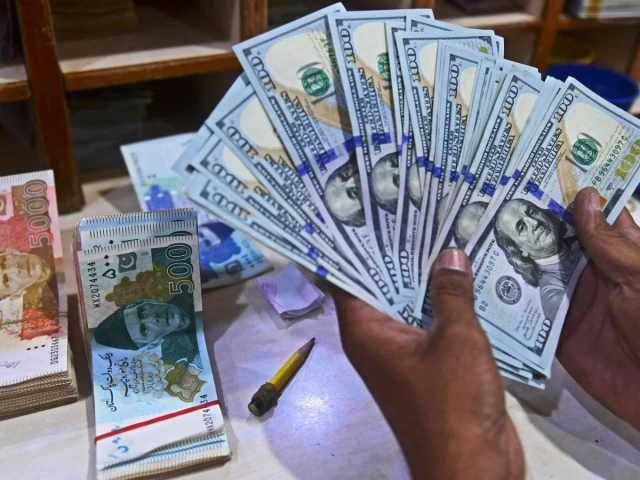
Loan request follows Pakistan’s war diplomacy in Iran, aims to boost reserves, ease pressure on rupee
Pakistan has asked the United States for a $10 billion exchange stabilization facility, according to a source briefed on the matter, which, if approved, could be a lifeline for the cash-strapped South Asian economy.
The request, which is being reported for the first time, follows Pakistan’s role in brokering talks on the Iran war, which raised its diplomatic profile and raised hopes it could seek economic gains from Washington and other partners.
In the request to US Treasury Secretary Scott Bessent, Islamabad is seeking a bilateral exchange stabilization support facility between the US and the Pakistani government worth $10 billion with a term of up to five years.
Read: Prime Minister sees a new era in relations with the United States
The facility, if passed, would bolster Pakistan’s reserves, ease pressure on the rupee and reduce its reliance on multilateral financing, even as Islamabad implements tighter fiscal and monetary policies in line with its International Monetary Fund program.
Pakistan remains under $7 billion IMF discipline that has required politically unpopular tax increases, spending restraint and reforms.
Pakistan’s finance minister did not immediately respond Reuters’ request for comments outside of Asia’s business hours. The U.S. Treasury Department also did not immediately respond to a request for comment.
Currency stabilization facilities are rare backstops from the US Treasury, usually routed through the Exchange Stabilization Fund, which provide dollars, swaps or guarantees to support reserves and stable currencies.
These facilities are distinct from the permanent standing dollar swap lines that the Fed has with some major central banks and act as an international supply line of US dollars to support financial stability.
An Argentina package from 2025 was the first new foreign sovereign currency stabilization facility since Uruguay in 2002, apart from Mexico’s long-standing swap line, which dates to the 1940s and now has a size of $9 billion.
Pakistan narrowly avoided default in 2023 with a $3 billion IMF standby deal and later secured a $7 billion Extended Fund Facility, but its reserves still depend on official financing, rollovers and deposits from China and Saudi Arabia.
That leaves Islamabad exposed to shifts in bilateral aid and IMF disbursement delays, a vulnerability exposed in April when Pakistan returned about $3.5 billion, a fifth of its reserves, to the United Arab Emirates, with Saudi Arabia providing $3 billion in new aid.
Pakistan’s central bank said in January that reserves could return to near their record in 2021 and reach $20 billion by the end of 2026.
Reworking the ties to Washington
A US currency stabilization facility would carry weight as both a liquidity backstop and policy signal, easing pressure on reserves and the Pakistani rupee, while reducing the South Asian country’s reliance on IMF tranches and ad hoc bailouts.
IMF-backed reforms have stabilized the economy at a political cost, including higher taxes, spending restraint and limited room for development or welfare spending.
Global credit rating agency Fitch said in April that Pakistan’s accession to its IMF program has supported the country’s financing capacity, while rebuilt currency buffers provide a cushion against economic shocks from the Middle East conflict.
But there are still deeper limitations. Fitch warned that rising energy costs and potential supply disruptions could severely erode the country’s foreign exchange reserves.
Read: Pakistan-US ties based on common interests, commitment to promote peace: President Zardari
Foreign investment in Pakistan has remained thin, deterred by recurring external crises, political uncertainty, security risks, past restrictions on profit repatriation and a narrow export base, while the country’s credit rating remains deep in speculative levels, keeping borrowing costs high and market access limited.
Pakistan has sought to use its ties to the Trump administration to address some of these issues, with economic cooperation that has so far spanned crypto, real estate and mining.
Pakistan has signed a stablecoin agreement for cross-border payments with an affiliate of World Liberty Financial, the main crypto business of President Donald Trump’s family, pursued a memorandum of understanding to redevelop the shuttered PIA-owned Roosevelt Hotel in New York with the US government, and courted US mining investment, including in Reko Diq, where the US bank has announced $12 billion in export-import.


