
- Pentagon eyes abound with cheap drones over a handful of expensive fighter jets
- Carrier decks may soon be filled with robots that perform eight different combat missions
- The US Navy’s next fighter wing could fly itself from start to finish and back
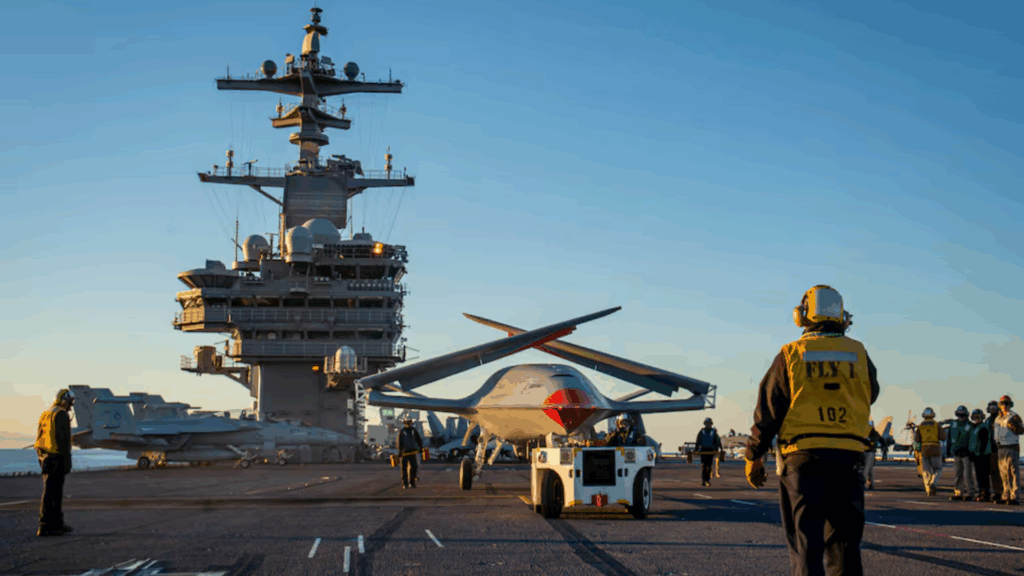
The US Navy has issued a request for information (RFI) to seek a new family of carrier-based drones that will operate alongside manned aircraft while supporting missions across the full range of naval combat operations.
The service wants these systems to fly from Ford-class and Nimitz-class nuclear carriers, while some designs could operate from smaller craft.
Its requirements seek industry proposals for platforms capable of eight missions, including attacks against ships and land targets, anti-submarine warfare, air combat, electronic warfare, intelligence, surveillance and reconnaissance.

Navy seeks autonomous aircraft for eight missions
The aircraft will also support aerial refueling and replenishment missions for naval task forces, creating a broad set of requirements for a single aircraft or connected family of systems.
Strike variants must have a minimum range of 1,000 nautical miles, equivalent to about 1,150 miles.
The service also wants advanced autonomy for carrier operations, mission changes and in-flight threat avoidance.
Proposed systems must support automated aerial refueling and remain compatible with existing unmanned aircraft control systems.
The Navy is seeking “affordable mass, risk-tolerant platforms” capable of addressing current and emerging threats, pointing to affordable aircraft designed to be produced in greater numbers than traditional high-cost fighters.
Future carrier wings could rely on scalable drone fleets
The RFI asks companies to explain how their production methods can be expanded rapidly during a surge while keeping recurring aircraft and maintenance costs within sustainable limits.
Manufacturers must also describe ways to reduce maintenance requirements and use existing fleet supply networks.
The Navy is also open to aircraft that can operate from platforms beyond its main carriers—vertical takeoff and landing UAVs can fly from destroyers, expeditionary bases, and other vessels with appropriate aviation facilities.
“The Navy is interested in new concepts that can operate from any air-capable platform,” the RFI says, including destroyers and mobile naval bases.
This could give fleet commanders more opportunities to deploy autonomous aircraft across different maritime environments.
The Air Wing of the Future Family of Systems is part of the Trump administration’s Golden Fleet expansion plan.
Existing related programs include the MQ-25A Stingray tanker and the Collaborative Combat Aircraft initiative.
The RFI also asks companies to explain planned capital investments and internal research commitments needed to mature their designs.
The Navy’s requirements suggest that the carrier of the future may combine advanced manned aircraft with larger fleets of autonomous systems designed for scale and operational risk tolerance.
Via Defense News

Follow TechRadar on Google News and add us as a preferred source to get our expert news, reviews and opinions in your feeds.


