
- An amateur astronomer has discovered a meteorite crater on Google Maps
- The crater is believed to be 390 million years old
- The find was confirmed when a scientist visited the site and found telltale rock formations
Sometimes I find myself idly browsing Google Maps and marveling at the wonderful places I can spy from a satellite vantage point. Unfortunately, though, I’ve never discovered a 390-million-year-old meteorite crater while enjoying my nerdy pastime—but a clever Canadian has just managed to do just that.
Speaking to The Canadian Press, amateur astronomer Joël Lapointe said he was planning a summer hike in Quebec when he spotted a strange ring-shaped depression in the ground that spans about 15.5 miles across.
The circular pit ignited Lapointe’s Spidey-Senses, but he kept telling himself that it was unlikely to be an actual meteorite crater: “I said to myself, ‘You haven’t discovered anything, Joël, it’s not possible, they must already know about this.'” But when the formation didn’t show up in any of the studied crater databases, he decided to submit his databases.

Although Lapointe discovered the geologic anomaly back in 2023, his hunch wasn’t confirmed to be correct until October 2025. That’s when planetary geologist Gordon Osinski of Canada’s Western University conducted a field study at the site and discovered impact melting of rocks and crushed cones, both rock formations caused by a meteorite impact. The results – which dated the crater as around 390 million years old – are due to be presented at the 88th annual Meteoritical Society Meeting in Germany in August this year.
How to find this old landing site
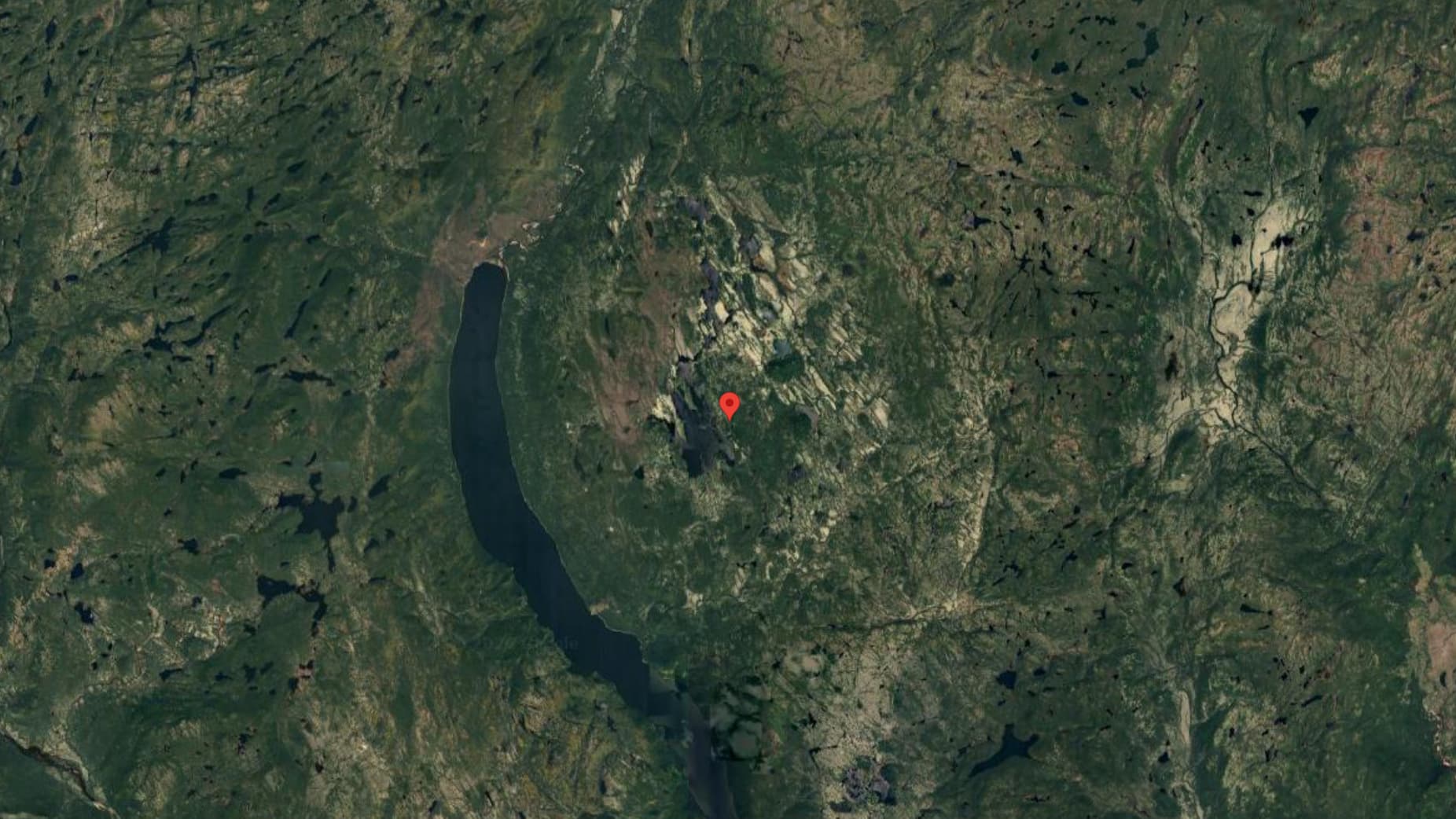
If you want to see the impact crater for yourself, it can be found at the following coordinates: 51°13’57.3″N, 64°39’53.0″W. Zoom out a bit and the circular nature of the crater is clearly visible, with Lake Marsal located in the center.
Delighted by his discovery, Lapointe told Radio Canada that: “It’s not every day that an ordinary citizen finds a 390-million-year-old crater. I encourage everyone not to ignore intuition or an observation, even if it’s not part of your area of expertise.”
He’s not the first person to notice something strange depicted in Google Maps’ extensive imagery. Earlier explorers have found shipwrecks in shallow water and spotted commercial airliners mid-flight, and even what appeared to be a B-2 Spirit stealth bomber, although none of these aircraft can be seen today as Google has updated its satellite images.
Still, Lapointe’s story shows that occasionally scrolling around Google Maps can sometimes lead to impressive discoveries. As Osinski — who often gets false reports of possible craters — put it, “It just has to show, while 9 out of 10 or 99 out of 100 might not be [impact craters]there could always still be the one who will surprise you.”

Follow TechRadar on Google News and add us as a preferred source to get our expert news, reviews and opinions in your feeds.

The best laptops for all budgets


